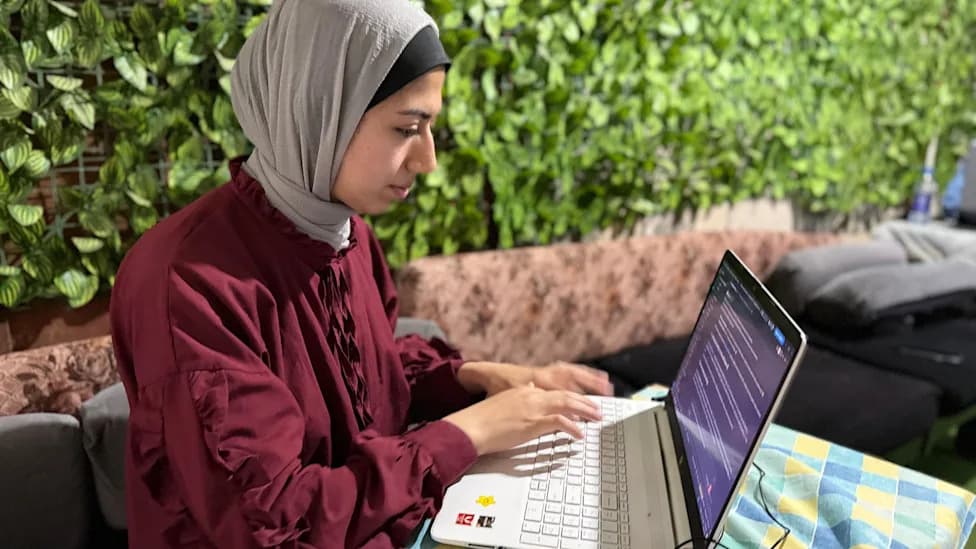
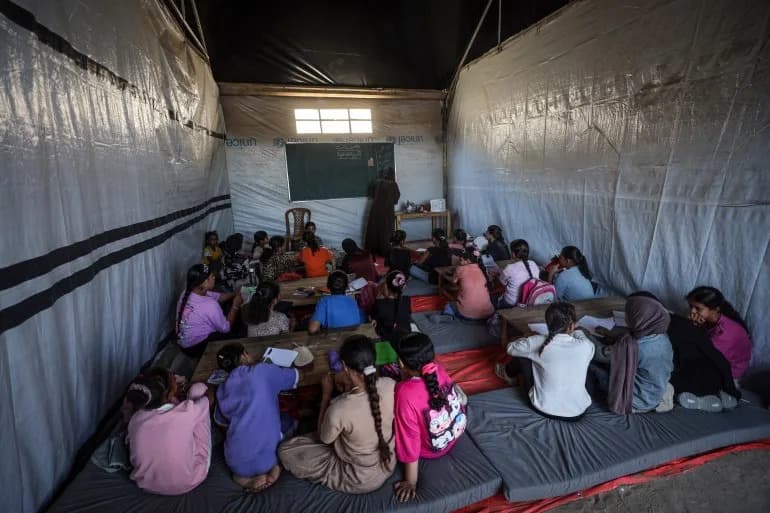
Wearing a headset and working on her laptop, 24-year-old software engineer Walaa Volidis joins a video call with a mentor in Silicon Valley to discuss artificial intelligence. Living in a tent in central Gaza and supporting displaced parents and four younger siblings, she says:
"I was just in a trough, drowning in uncertainty. But deep inside, I made a decision: it will not be the end. I'll keep fighting for my dreams."
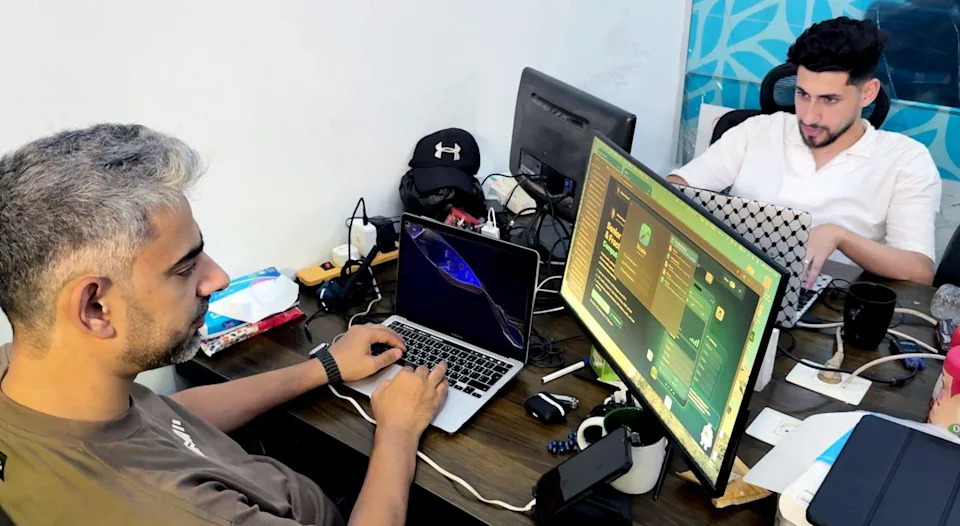
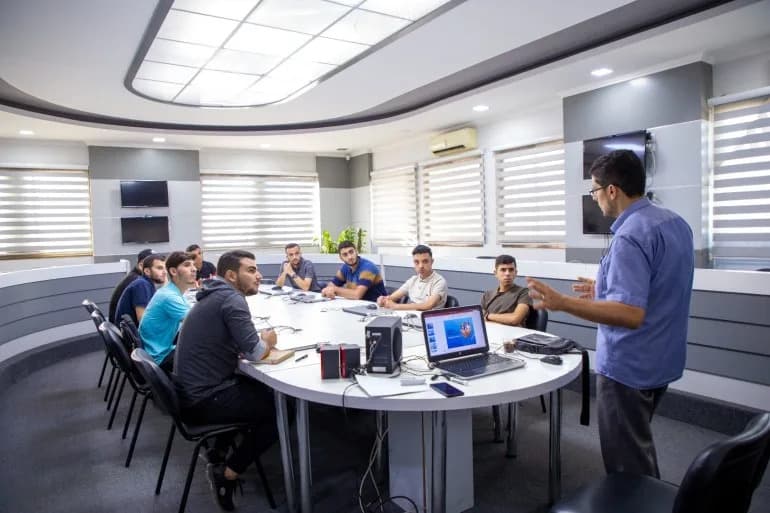
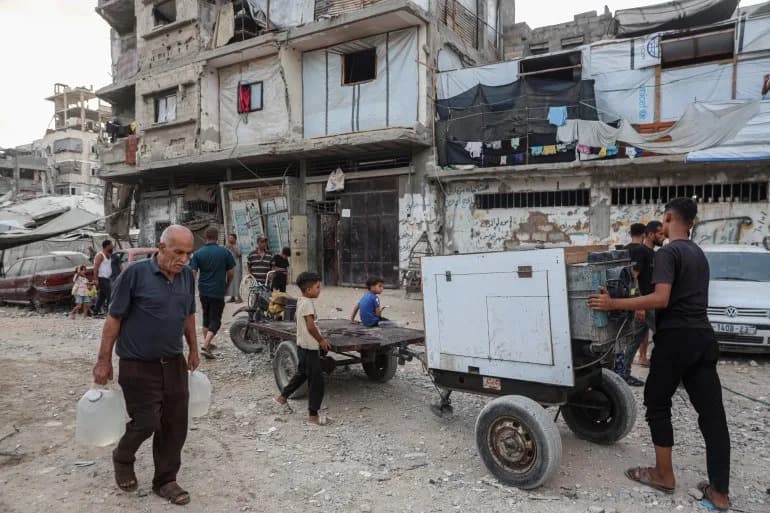
Walaa is one of thousands of Gazans turning to online work and freelancing as one of the few practical ways to earn income amid widespread destruction, the blockade and an economy in collapse. New co-working spaces—powered by generators and solar panels—have sprung up across Gaza to provide internet access and a more stable power supply.
New co-working spaces have been set up across Gaza [BBC]
Work, Resilience and Support
Before the most recent escalation that followed the October 2023 attacks, Gaza had a growing tech sector. Organizations such as Gaza Sky Geeks (founded in 2012 by Google and Mercy Corps) ran incubators, training courses and market-access support. Two of its hubs were later destroyed in the fighting.
International and local NGOs, including Mercy Corps and the Palestinian-Dutch NGO TAP, now help sustain new co-working spaces and connect freelancers with mentors, career coaches and remote employers. For many, remote tech work is described as a "digital lifeline"—a way to earn money without crossing border restrictions.
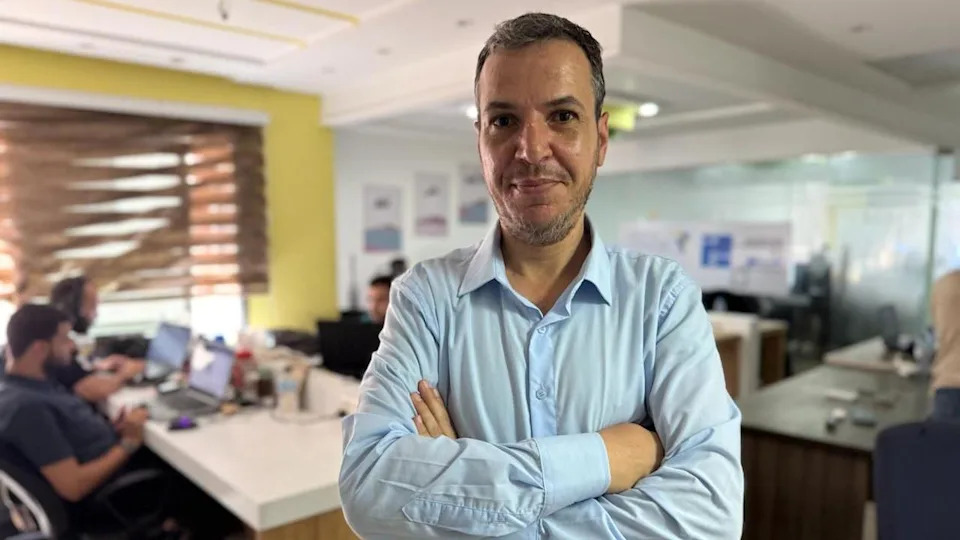
Tarik Zaeem, who has been developing apps, says getting paid remains a challenge [BBC]
Personal Stories
Tarik Zaeem, 44, a former chief technology officer, says he is "starting from scratch" as a freelance developer. From a Gaza City co-working space he has built small apps for clients abroad, sending much of his income to support a wife and three children who are now in Egypt. But receiving payments is difficult: few banks are open, cash is scarce, and many digital payment platforms do not accept users from Gaza.
Tarik and others often rely on relatives overseas to receive funds or use local intermediaries who convert electronic payments to cash for steep fees—sometimes leaving freelancers with only half their original payment. "It's not enough for a good living," he says. "Just the basics."
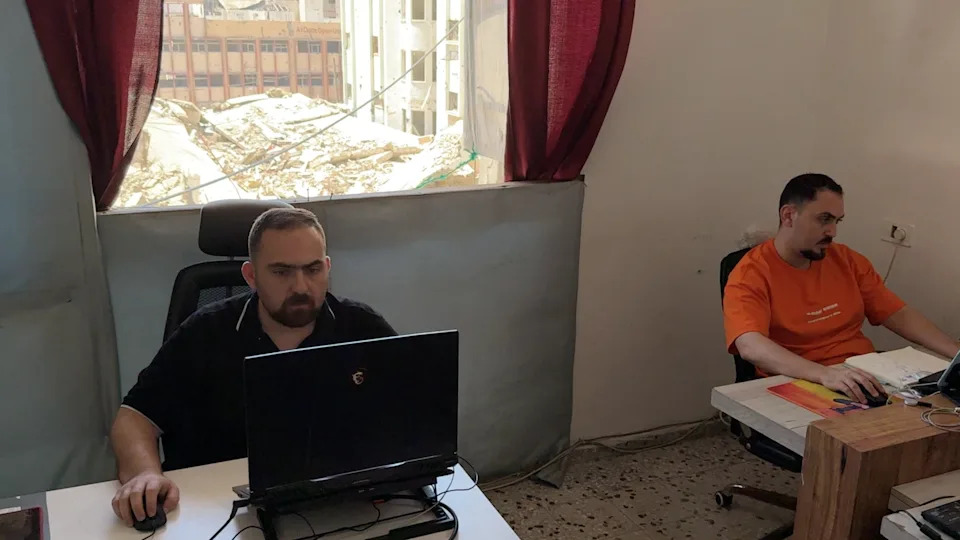
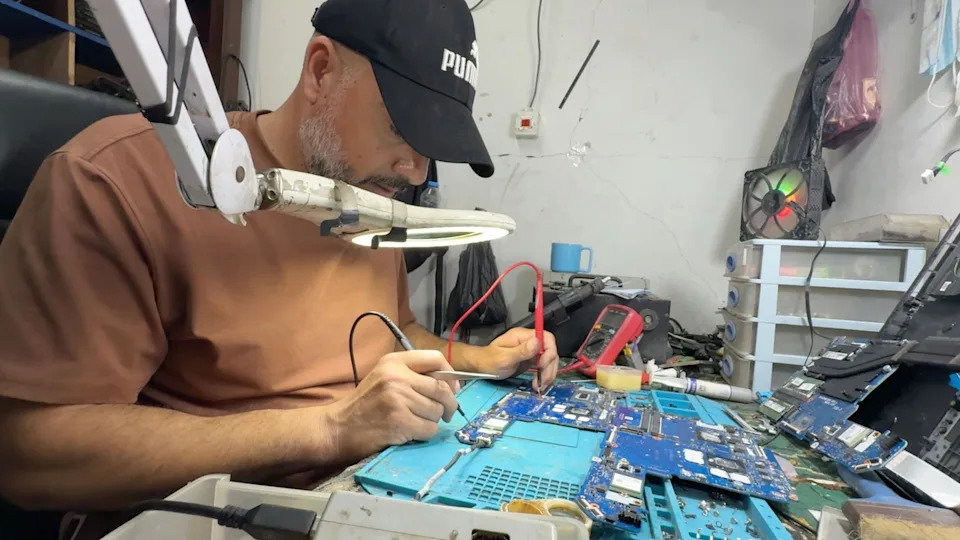
Mahran Bayed, another freelancer, lost his home and office near the ruins of al-Shifa hospital. He now works on mobile apps, websites and advertisements from a tent. "From Gaza, I can collaborate with teams in completely different parts of the world," he says. But practical problems persist: damaged equipment, limited spare parts and the need to carry external monitors when screens are broken.
Infrastructure, Restrictions and Risks
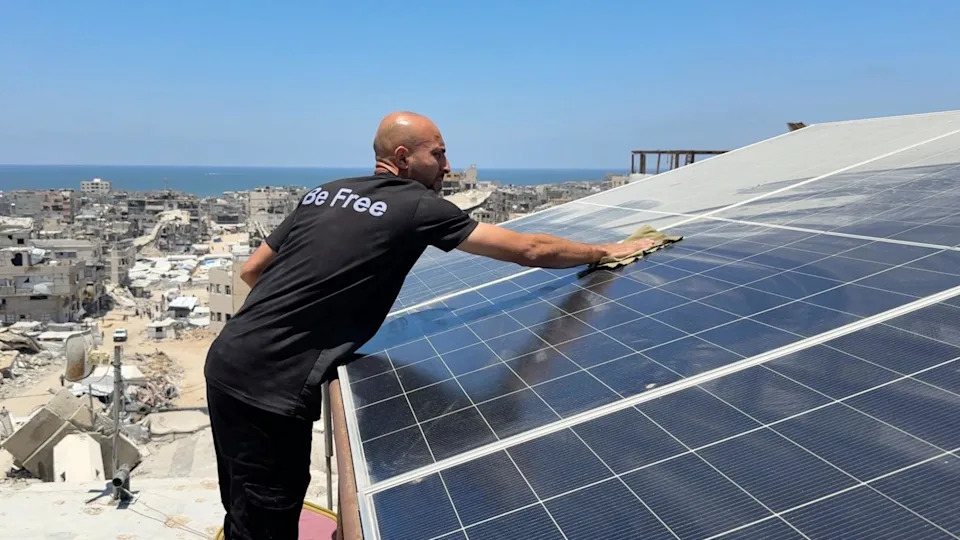
Gaza's power system has suffered near-total collapse and approximately 75% of its telecommunications infrastructure has been damaged or destroyed. Israel's civil administration (COGAT) classifies some computer equipment and spare parts as "dual-use" and restricts imports, limiting local repair options.
Co-working spaces use generators and solar panels to offer better internet connections and a more stable power supply [BBC]
The security situation remains dangerous. Despite temporary pauses in fighting brokered by mediators, strikes continue, and civilian casualties are reported. Gaza's Hamas-run health ministry reports at least 1,250 people killed, including 265 children, since October's truce—a toll the UN regards as credible.
Because of such risks, some Gaza-based teams feel compelled to reassure international clients that projects will be delivered even under extreme circumstances. For many, freelancing is as much about dignity and purpose as it is about income. Walaa, who recently secured a full-time job with a Dubai-based firm through TAP's support, says her priorities are to improve life for her siblings and obtain medical evacuation and treatment for her injured sister.
Workshops do their best to repair computers with spare parts from damaged devices [BBC]
Outlook
Their stories offer a modest but meaningful glimpse of resilience: a tech community striving to sustain itself and contribute to a possible recovery if access, payments and infrastructure can be restored. For now, online work remains a fragile but vital lifeline for many Gazans.
Additional reporting by Malak Hassouneh and John Murphy.