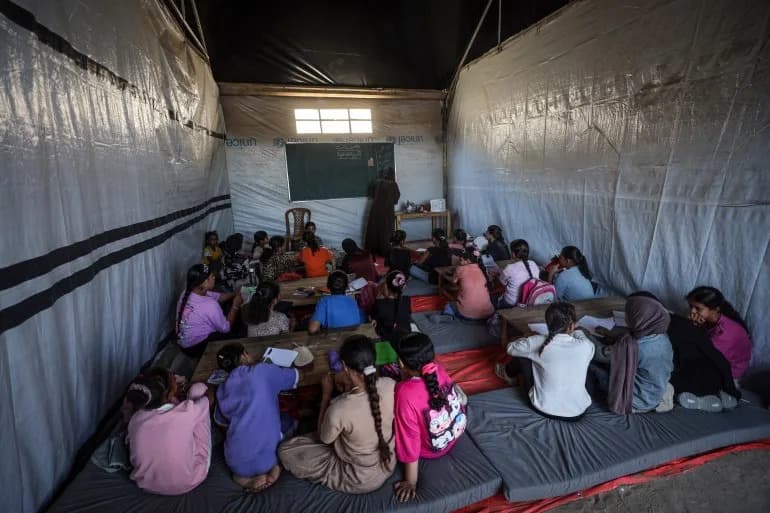
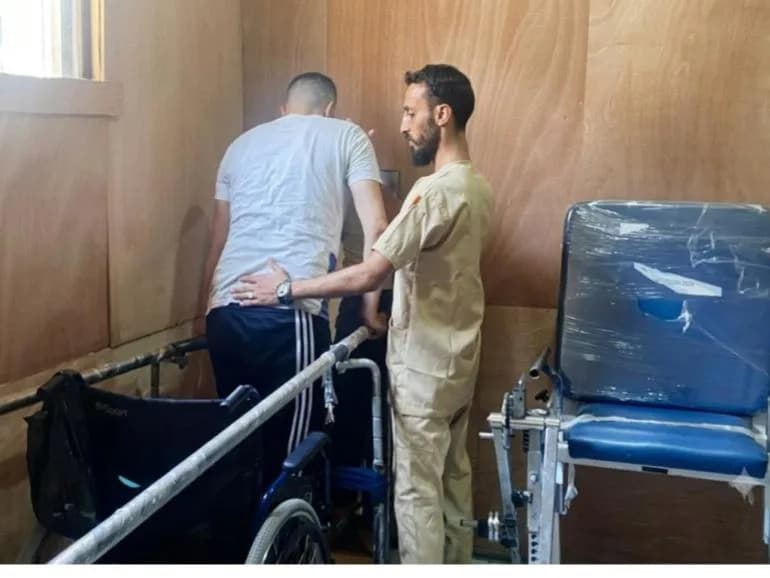
In Deir el-Balah, Gaza, students at the Next Gen robotics project are learning electronics, sensors and programming using basic parts and Arduino boards. Incubators, schools and training centres that once supported Gaza’s tech ecosystem were heavily damaged during the conflict, with estimated education losses of about $4 billion. Despite equipment shortages, infrastructure damage and a brain drain, educators and motivated students continue hands-on training that could help rebuild the technology sector after the war.
Lacking Equipment but Not Ambition: Gaza Students Keep Learning Robotics
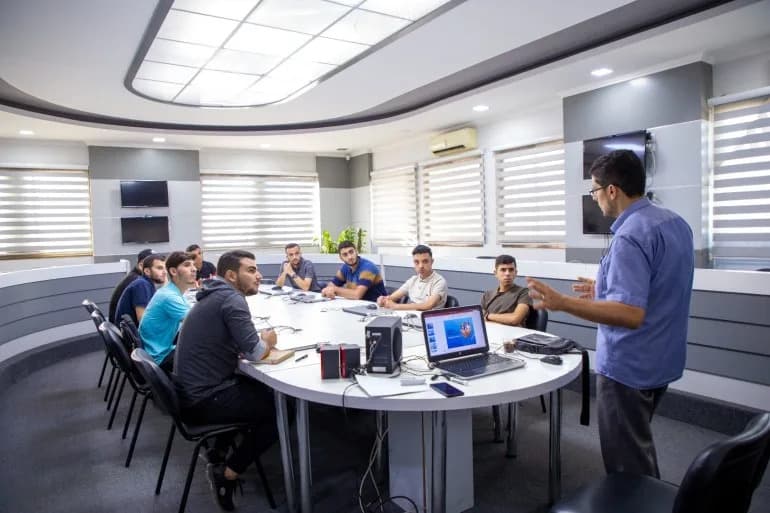
A view of a technology incubator in Gaza before the war, where students received training in technology and innovation [Iyad Al-Qatrawi/Al Jazeera]
Deir el-Balah, Gaza — A handful of circuit boards, some wires and a few electronic components are enough to bring a group of curious students together in central Gaza to learn the basics of robotics and early-warning systems.
At the Next Gen Team: Rising Robotics Engineer Project in Deir el-Balah, pupils study how to connect sensors to alarm systems, learn how motors and drive units function, and get hands-on experience programming with Arduino controllers and other simple electronics.
From Classroom Prototypes to Life-Saving Ideas
The projects these students build could develop into practical tools: early detection of gas leaks and fires, or robotic aides to help rescue workers reach people trapped under rubble. Beyond those immediate applications, the training exposes young people to scientific and technical disciplines that help them keep pace with global technological advances.
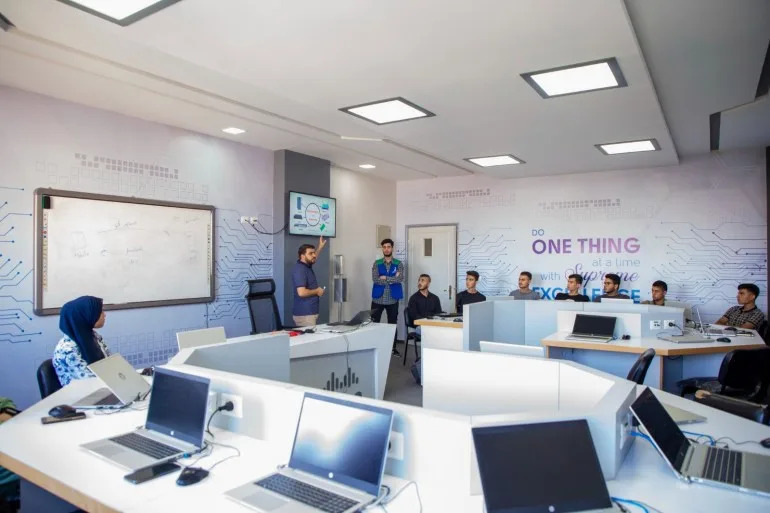
A view of a technology incubator in Gaza prior to the war, which provided an environment for training, incubating tech projects, and supporting students in the fields of technology and innovation [Iyad Al-Qatrawi/Al Jazeera]
Learning Amid Severe Constraints
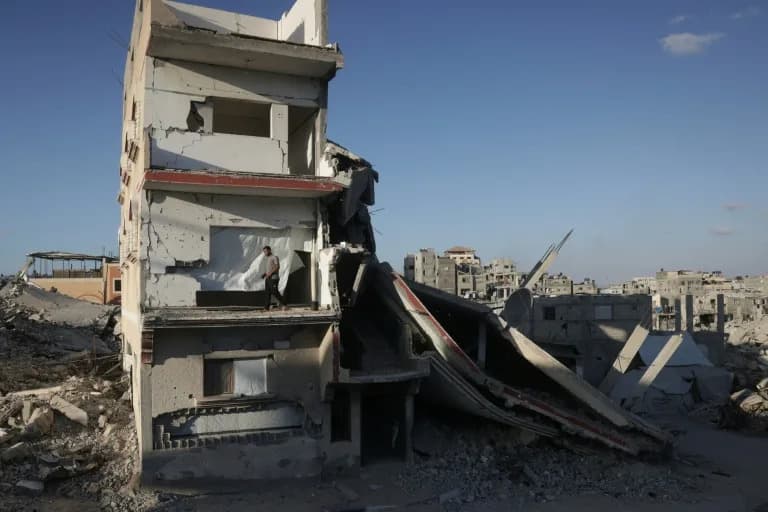
Before the war, Gaza’s students had access to schools, universities, incubators and training programmes that supported technology education. Much of that ecosystem has been damaged or destroyed during the conflict, leaving few facilities, scarce equipment and frequent power outages.
“We have capabilities and aspirations that we want to develop, and we try to take advantage of every available opportunity for learning and training,”
Hamza and other students use improvised kits and donated components to prototype sensors and alarms. Trainers say the shortage of devices and intermittent electricity forces students to become creative problem-solvers, but it also limits how far projects can progress.
Wider Damage to Gaza’s Tech Ecosystem
Incubators and training centres that once supported startups and connected graduates to foreign markets have been severely disrupted. Bahaa al-Masri, head of training for the Early Warning Systems and Robotics Project, says those spaces were crucial for turning ideas into prototypes and ventures.
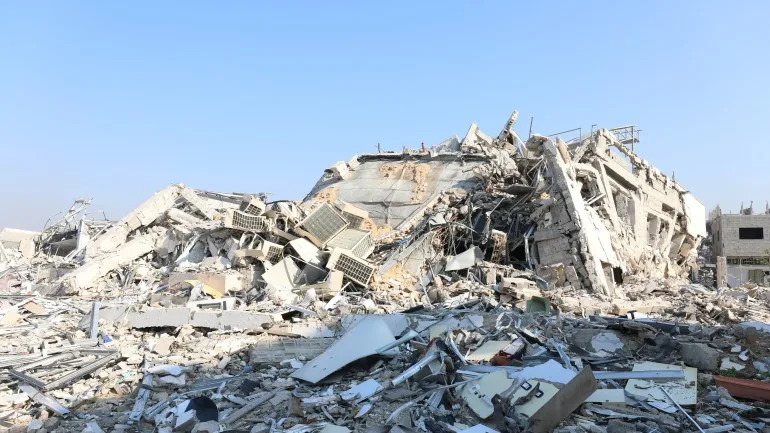
UCAS Technology Incubator, one of the most prominent incubators of the University College of Applied Sciences in Gaza, was destroyed during the war, as part of extensive damage to the institutions and structure of the technology and digitisation sector in the Strip [Iyad Al-Qatrawi/Al Jazeera]
Technology experts and economists report steep material and infrastructure challenges: prices for computers, servers, routers and cabling have surged amid import restrictions; digital and power networks have been damaged; and many skilled professionals have left the territory.
Reported Losses and Impact
Preliminary figures released by the Government Media Office in Gaza estimate direct losses to the education sector at approximately $4 billion. Authorities say 17 higher education institutions have been completely or partially destroyed since October 2023, interrupting studies for large numbers of students. The same sources report significant human losses among students, teachers and academics.
Ahmad Abu Qamar, an economic affairs specialist, estimates Gaza's IT industry is operating at less than 25% of pre-war capacity, with more than 70% of IT companies fully or partially halted and roughly 30,000 IT professionals losing jobs. Technology incubators that have resumed operations are functioning far below previous capacity.
Resilience and the Road Ahead
Despite the damage, a cadre of trainers and students continues to work, preserving technical skills and ambitions that could help rebuild Gaza’s technology sector in the future. Experts underscore that restoring education facilities, digital infrastructure and access to equipment will be essential to revive innovation and economic opportunities.
What’s needed: reliable power and internet, affordable access to hardware and components, functional incubators, and incentives to retain or attract skilled professionals back to Gaza. Trainers say that with these supports, the determination and talent seen in classrooms today could form the basis of a long-term recovery.
Help us improve.