The ICRC-supported communal ovens in Gaza allow displaced families to bake dough for free and provide short-term paid work for a small number of women. At Cairo School, six ovens serve about 220 households, while across Gaza the programme supports 179 ovens that produced 9.2 million loaves from January to June, helping roughly 44,000 people. Rising fuel costs, widespread unemployment and ongoing displacement mean demand for these ovens continues to grow.
Communal Ovens Keep Displaced Gaza Families Fed as Fuel and Jobs Dry Up
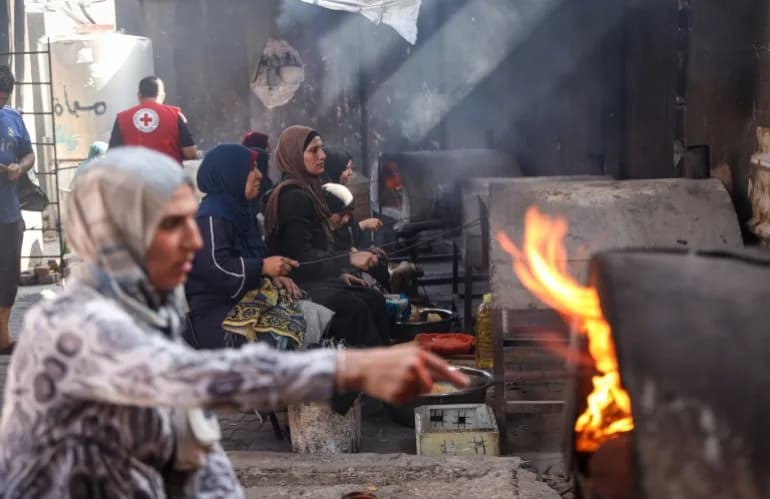
Displaced women turn to communal ovens to bake bread as the cost of cooking fuel and firewood continues to rise, sometimes costing more than the food itself [Abdelhakim Abu Riash/Al Jazeera]
Every morning in Gaza City, 31-year-old Azza Ashour mixes and stretches dough for her five children, then carries it to a communal oven at the school where her family has been sheltering for about a year. With no regular income and a husband detained since May 2024, Azza relies on the oven to turn a small amount of dough into meals for the day.
"One piece of dough can keep my children going for breakfast, lunch and dinner," she said.
Azza's family, originally from Beit Hanoun in northern Gaza—an area badly damaged during the war—was displaced south before settling at Cairo School in western Gaza City, which now serves as a displacement centre.
How the Communal Ovens Work
The oven at Cairo School is part of an International Committee of the Red Cross (ICRC) programme that supports communal ovens in schools and shelters across Gaza. The ICRC pays for the ovens and the workers' wages; families prepare their dough and bring it to be baked between 7am and noon. Each oven can produce up to 200 loaves a day.
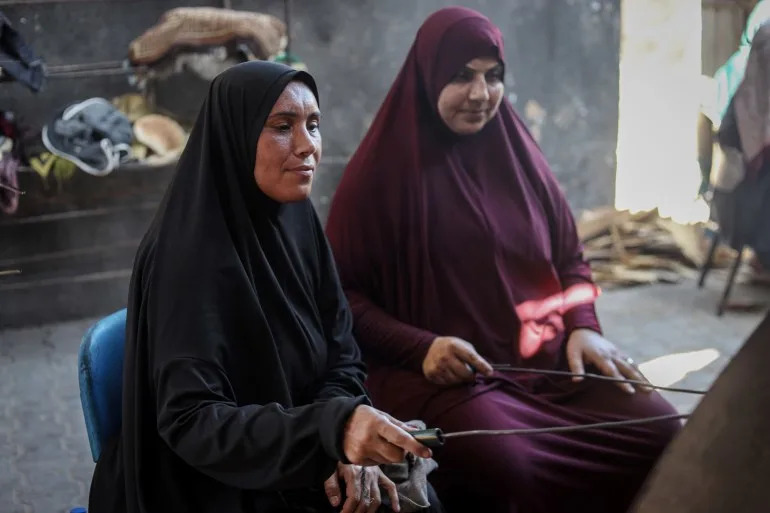
Randa Adwan works at a communal oven at a school shelter in Gaza, baking bread for displaced families [Abdelhakim Abu Riash/Al Jazeera]
At the Cairo School shelter, about 220 households live permanently and six ovens operate there. Nearby communities also use the ovens for free baking.
Women Baking and Earning
Near where Azza collects her bread, 38-year-old Randa Adwan wakes before dawn to prepare dough for her children and then works a morning shift at the oven. A mother of seven with a bachelor's degree in education, Randa never expected to be a baker, but limited employment options have pushed many displaced people into any available paid work.
"It is tiring. I go home and sleep. My hands hurt, my back hurts, I have headaches. It is exhausting," Randa said.
Bakers are chosen by lottery for one-month placements because demand exceeds available roles. Randa earns 70 shekels (about $23) a day, income she uses to buy basic needs for her children.
Scale and Impact
Across Gaza, the ICRC supports 179 communal ovens. From January to June, those ovens produced 9.2 million loaves, reaching roughly 44,000 people. Matthew Manguet, the ICRC's Livelihoods Manager, said the ovens respond to a basic need: many displaced people lack space or fuel to cook and have limited purchasing power in costly local markets.
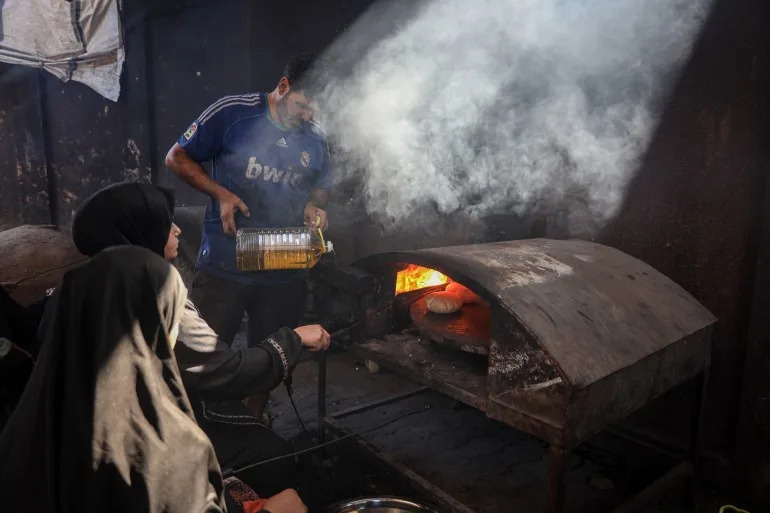
The communal oven burns firewood, sometimes mixed with used cooking oil, to help fuel the flames and keep the oven hot [Abdelhakim Abu Riash/Al Jazeera]
"For people that have no place to stay, they have no purchasing power to buy necessities in the market," Manguet said. "Even the goods that are available in the market are quite costly, so they cannot afford them."
The ovens typically burn firewood and sometimes recycled cooking oil to reach baking temperatures. Rising fuel and firewood prices, combined with widespread unemployment—Manguet estimated more than 80% of people in Gaza have no job—mean demand for communal baking is growing. The ICRC says it is expanding the number of ovens as displacement continues.
For families like Azza's, who receive occasional canned-food deliveries from the World Food Programme, the oven can determine whether limited food becomes a meal. Before accessing the communal oven, Azza said her family could spend around 15 shekels (roughly $5) a day on bread.
Randa returns each afternoon to her tent and children, stretching the modest earnings from baking to cover essentials. "Any initiative that helps improve our lives means a lot to us. Life is very difficult and displacement is painful," she said.
The communal ovens offer a targeted, practical relief—free baking and short-term paid work—but organisers acknowledge the programme is only one small response amid a much larger humanitarian crisis.
Help us improve.