Robert Peck, 67, has added the United States government to his lawsuit alleging First and Fourth Amendment violations after he filmed two masked immigration agents in Scarborough on Jan. 22. The filing consolidates a June Maine Civil Rights Act lawsuit with a January notice of claim and now invokes the Federal Tort Claims Act. Peck's attorney says the agents misapplied a federal statute in an effort to chill protected observation and speech. The agents remain listed as John Doe 1 and John Doe 2; their names will be disclosed under a confidentiality order.
Maine Man Who Filmed Masked Immigration Agents Adds U.S. Government To Lawsuit Over First and Fourth Amendment Claims
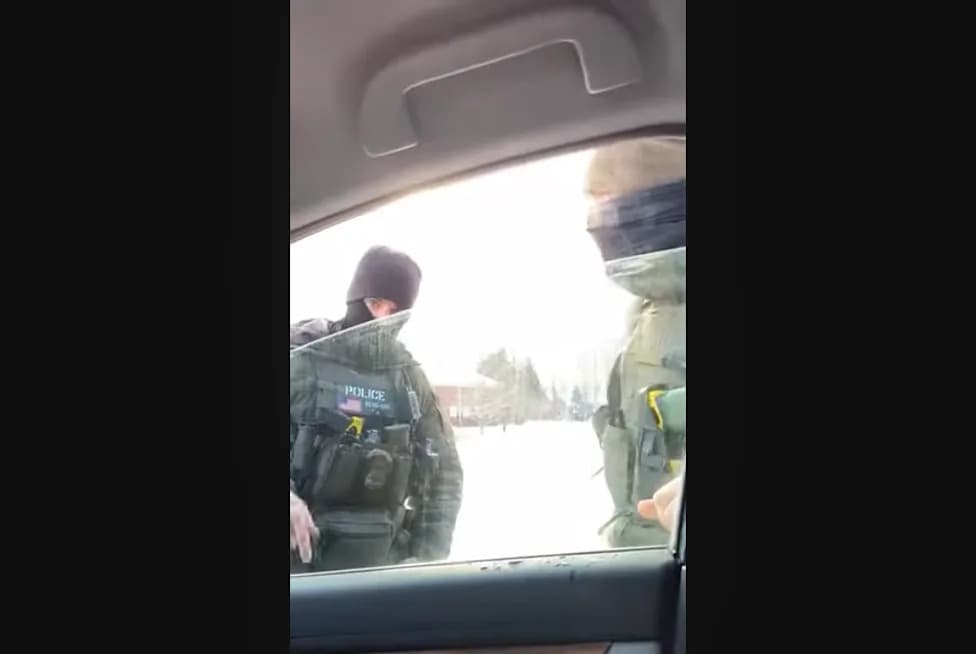
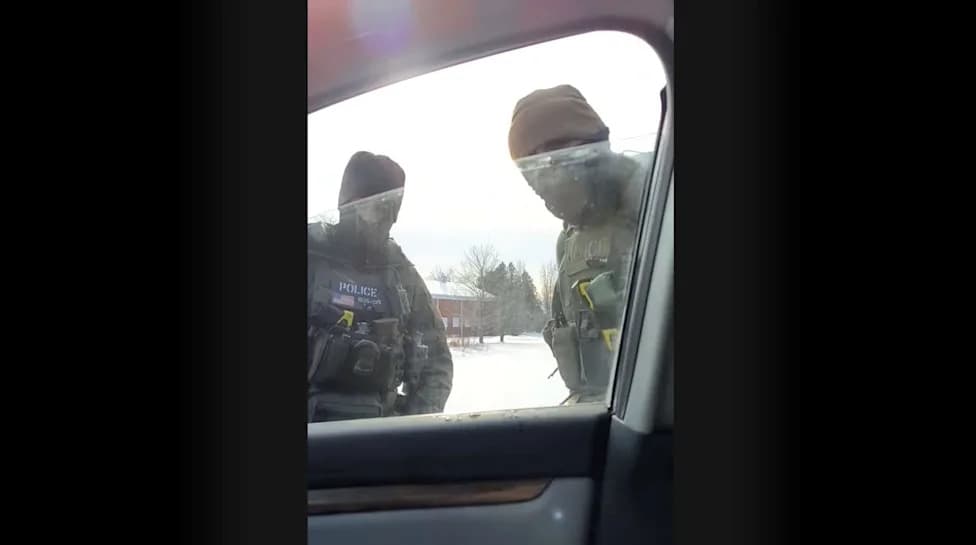
The federal suit against the United States and two unnamed agents, pictured here, combines a lawsuit Peck initiated in June and a legal notice of claim that he filed in January.
South Portland resident Robert Peck, 67, has amended his case to name the United States government, alleging that federal immigration agents violated his First and Fourth Amendment rights during an immigration-enforcement surge in January. The new federal filing consolidates the Maine Civil Rights Act suit Peck filed in June with a notice of claim he submitted in January and invokes the Federal Tort Claims Act.
Peck says that on Jan. 22 he recorded two masked agents approaching his vehicle after he followed them on a public road in Scarborough while maintaining a safe distance. According to Peck, the agents told him he was breaking a law that prohibits forcibly interfering with law-enforcement activity and threatened to pull him from his car and arrest him if he continued to follow them.
Peck's attorney, David Webbert,, argues his client was exercising a constitutional right to observe federal agents carrying out public duties. In the court filing, Webbert contends the agents misapplied the statute in a way that amounts to an effort to "chill and punish protected free speech by falsely claiming that this statute makes it a crime for Americans merely to observe the public activities of federal agents."
"We brought this case not only to vindicate Mr. Peck's rights but to establish that the federal government can be held accountable when agents misuse the law to intimidate citizens observing public activity," Webbert said in court papers.
Last week the ACLU of Maine filed separate legal notices of claim on behalf of several people who were arrested during the same enforcement actions, The Portland Press Herald reported. Under the federal notice process, the government has six months to respond or settle before plaintiffs may convert those notices into federal lawsuits — a window Peck navigated by first filing his own notice and now consolidating it into a complaint.
The consolidated complaint lists the two agents as John Doe 1 and John Doe 2. Webbert said the federal government has agreed to disclose the agents' names so they can be served, but that the information will remain subject to a confidentiality order while the case proceeds.
What Comes Next: The addition of the United States as a defendant moves the matter into federal court procedures under the Federal Tort Claims Act. Peck's lawsuit seeks to clarify the limits of enforcement conduct and to create precedent on whether observing and recording federal agents in public is constitutionally protected.
Help us improve.