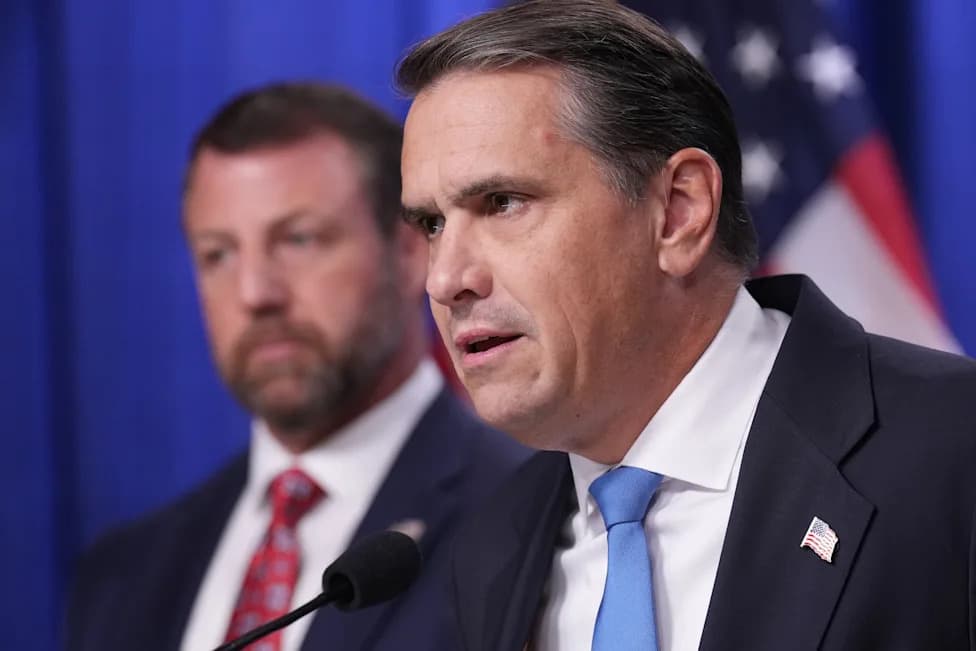
President Trump released dozens of "declassified" files after a July 16 primetime address to argue U.S. elections are insecure. The documents include a CIA memo reporting Chinese targeting of Joe Biden's 2020 campaign and FBI notes on fraudulent voter-registration forms in Muskegon, Mich., none of which show processed fraudulent votes. Voting-rights groups say the records document isolated issues and intelligence cautions but do not substantiate claims of widespread, coordinated election fraud ahead of the 2026 midterms.
Trump’s 'Declassified' Files Fail To Bolster Primetime Claims Ahead Of 2026 Midterms
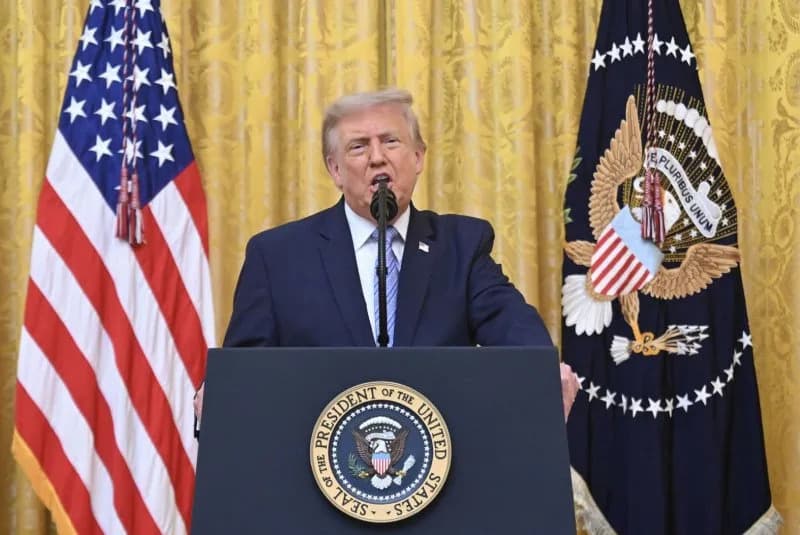
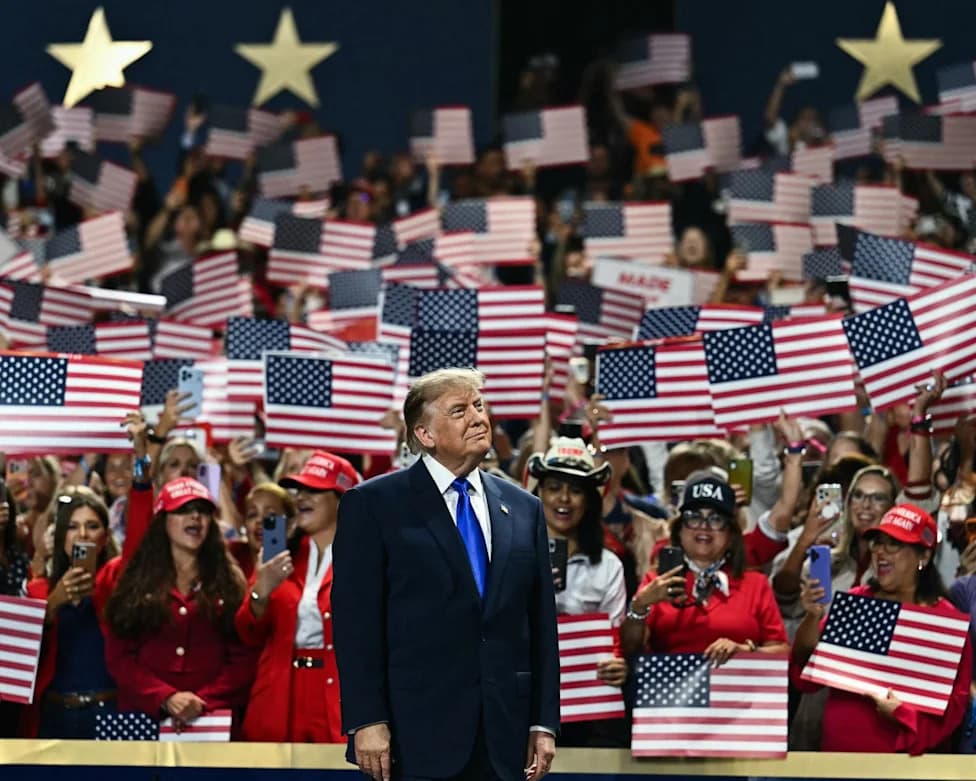
President Donald Trump delivers an address on election security from the East Room of the White House in Washington, D.C., on July 16. Pool Photo by Saul Loeb/UPI
President Donald Trump used a July 16 primetime address and a contemporaneous White House upload of so-called "declassified" documents to argue that U.S. elections are vulnerable ahead of the 2026 midterm elections. The files posted online include a mix of heavily redacted intelligence reports, internal FBI notes and email exchanges — many of which provide limited new evidence to support broad claims of systemic fraud.
Key Documents And What They Say
Among the materials is a labeled "CIA Wire Memo Summer 2020" that warned Chinese state-sponsored cyber actors were targeting then-candidate Joe Biden's campaign to gather intelligence. The memo explicitly stated this activity appeared aimed at Biden's campaign and concluded China did not at that time intend to covertly interfere to sway the election — though it noted the activity could enable future operations if Beijing chose to act.
"As the 2020 election approaches, the IC has detected Chinese state-sponsored cyber actors targeting the former Vice President's presidential campaign... The IC assesses that China does not currently intend to covertly interfere or try to sway the outcome of the election..."
Another document from the FBI's Albany, N.Y., field office alleged that Chinese actors used U.S. user data from TikTok to manufacture fraudulent driver's licenses intended for distribution to "tens of thousands" of sympathetic individuals, which the report claimed could enable illegal mail-in voting. The field report cautioned, however, that the information had not been fully vetted by U.S. intelligence and identified practical problems with the allegation — for example, TikTok account creation does not require a mailing address.
Muskegon, Michigan: Registration Irregularities
FBI records on a 2020 voter-registration drive in Muskegon, Mich., show city clerks flagged irregularities in a batch of forms delivered during a canvassing effort. Between 8,000 and 10,000 forms were submitted to the clerk's office as part of the drive; 42 applications were forwarded to local police and additional forms were rejected after they failed to match state records. Investigators concluded some fraudulent registration forms had been created but none were processed and no votes were cast using those fake registrations. The probe indicated canvassers likely falsified forms to inflate their registration counts and increase pay.
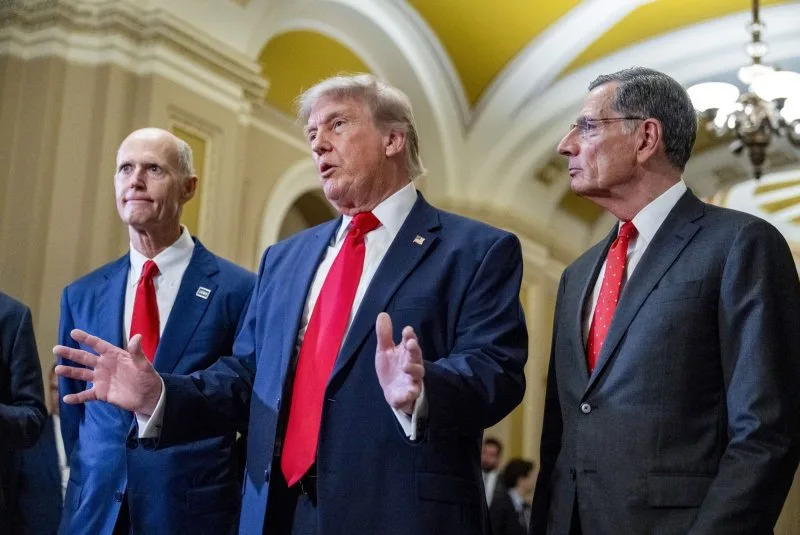
Sen. Rick Scott, R-Fla., and Sen. John Barrasso, R-Wy, look on as President Donald Trump speaks after attending a closed-door lunch with the Republican Senate Steering Committee at the U.S. Capitol in Washington, D.C., on June 24. Earlier in the day, Trump cancelled the signing of the 21st Century ROAD to Housing Act until his SAVE America Act, which would impose strict voter ID and proof-of-citizenship requirements in federal elections, is passed. File Photo by Daniel Heuer/UPI
"[Redacted] thought people might be forging voter signatures because the younger employees would return with a lot of signed registration forms and she would only have three or four for the entire week," reads a Dec. 20, 2023, investigative note.
Responses From Advocates, Experts And Courts
Voting-rights groups and election-security experts pushed back against the implication that the materials prove widespread vulnerabilities. Andrea Hailey, CEO of Vote.org, said voter fraud is "exceedingly rare" and argued that U.S. elections already include transparency and safeguards. The Heritage Foundation — a conservative group influential in shaping some Republican election-policy proposals — identified roughly 100 substantiated fraud cases from 1999 to 2024, a tiny fraction of total votes during that period.
After the 2020 election, Trump and allies filed lawsuits in multiple states seeking to overturn results; judges across the country repeatedly rejected those claims for lack of evidence, including rulings by Trump-appointed jurists. Molly McGrath of the ACLU said the administration's message appears aimed at sowing doubt ahead of the midterms and potentially suppressing turnout. The ACLU said it is intervening in litigation, conducting voter outreach in all 50 states, and preparing to defend voting rights where needed.
What It Means Going Forward
While some uploaded documents describe legitimate concerns and isolated instances of wrongdoing or intelligence collection, they do not provide evidence of a coordinated, nationwide effort to subvert U.S. elections or to overturn outcomes. The president urged Congress to pass the Save America Act, which would impose documentary proof-of-citizenship requirements for federal elections; Congress has authority over federal election rules but state election administration remains largely a state responsibility, and most states bar last-minute changes within 30 days of Election Day.
Bottom line: the posted files include noteworthy details but fall short of substantiating the sweeping claims made in the primetime address. Election-security experts and advocates warn the rhetoric risks undermining public confidence and potentially depressing turnout unless countered with clear information, transparency and legal safeguards.
Help us improve.