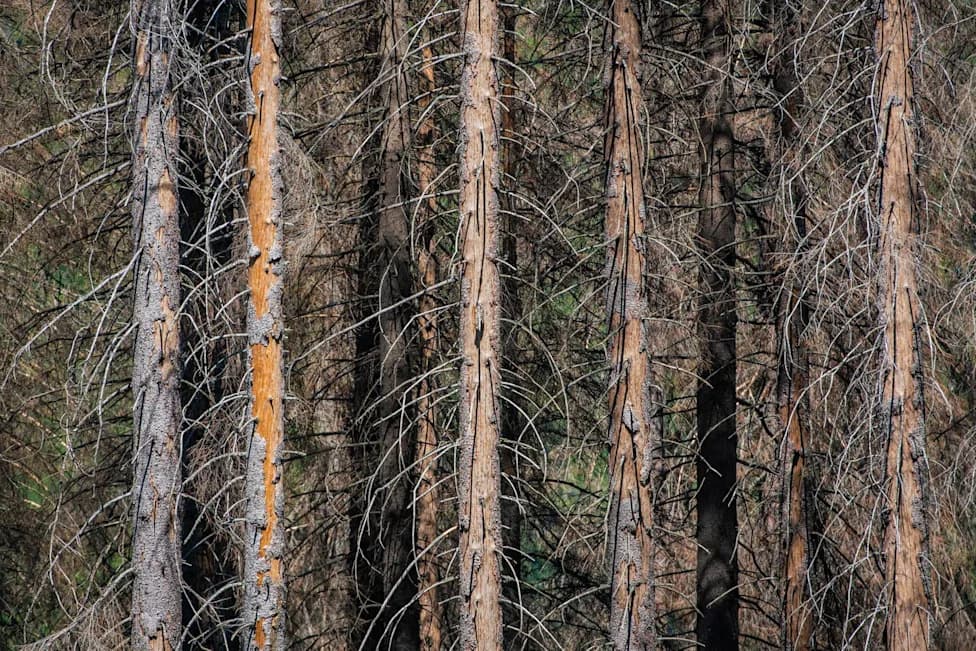
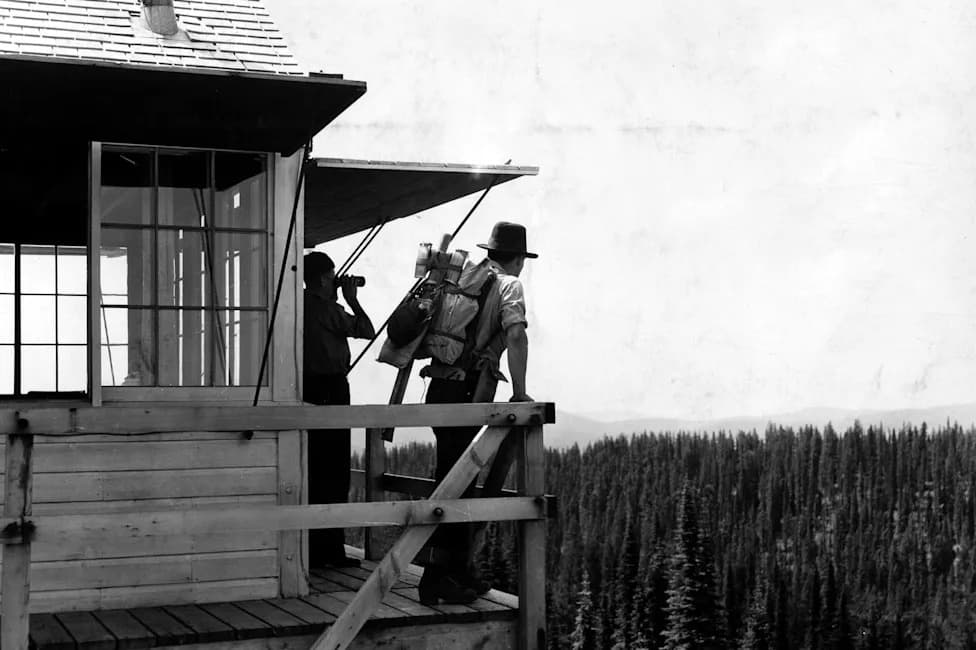
New research in Forest Ecology and Management shows contiguous trembling aspen (Populus tremuloides) stands burn less intensely than conifer forests and are more than twice as likely to be found at wildfire perimeters. Using Canadian species maps and satellite fire data — including 2023’s record season — researchers found aspen-rich stands reduce daily burned area and slow fire spread, even before full leaf-out. Experts say preserving or planting deep hardwood stands (about 100–300 m) and favoring mixed forests over conifer monocultures could strengthen community defenses against severe wildfires.
Aspen Groves Act as Natural Firebreaks: Study Finds Trembling Aspen Slow Wildfire Spread
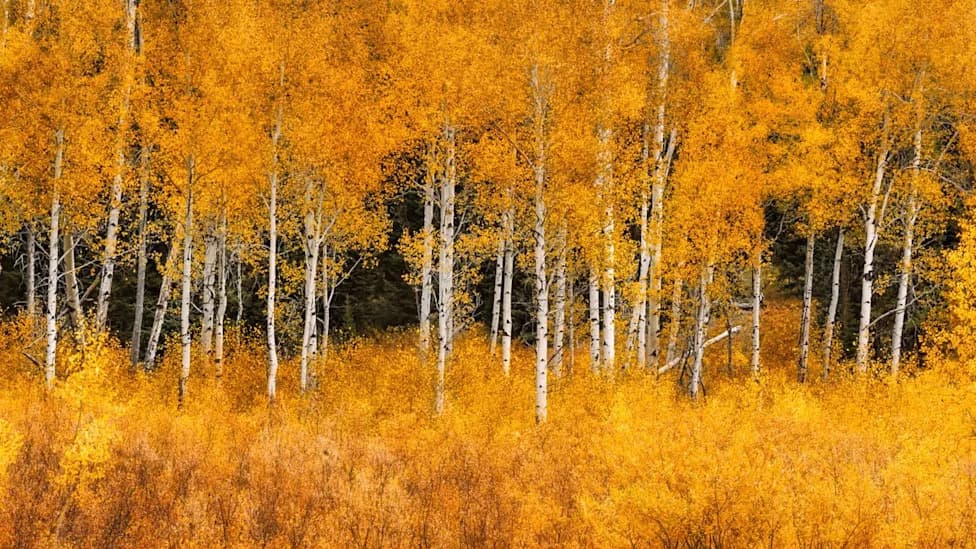
A grove of aspen trees.
Aspen stands can help stop wildfires in their tracks, new research shows. A study published June 15 in Forest Ecology and Management found that contiguous groves of trembling aspen (Populus tremuloides) burn less intensely than nearby conifer forests and are disproportionately found along wildfire perimeters — suggesting they act as natural buffers against spreading flames.
Credit: Matt Anderson Photography via Getty Images
Study Design and Key Findings
Flavie Pelletier, a doctoral researcher at McGill University, combined newly generated maps of dominant tree species across Canada with satellite records of wildfires from three recent years, including Canada’s record-breaking 2023 season. She compared which species occurred inside burned areas versus along fire edges.
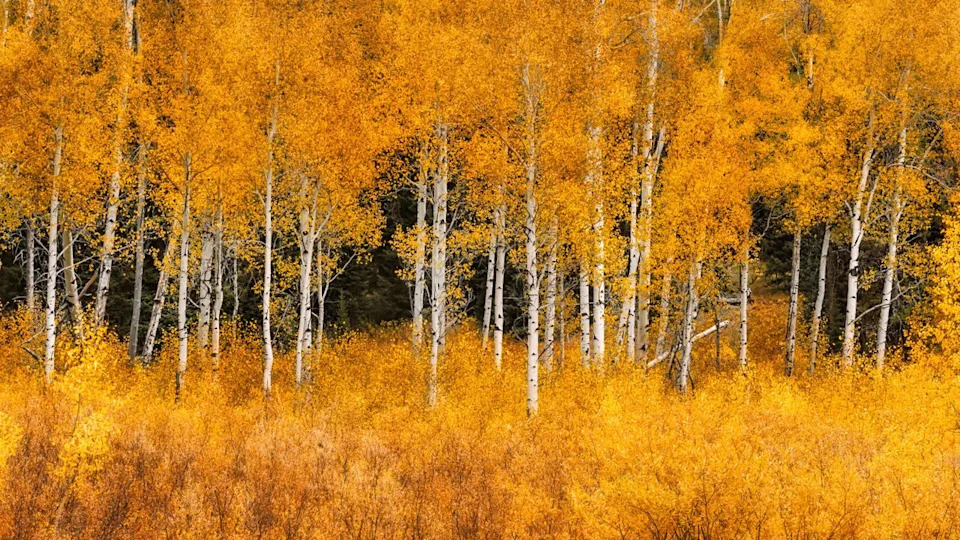
A grove of aspen trees in Grand Teton National Park. | Credit: Matt Anderson Photography via Getty Images
The analysis showed that trembling aspen were more than twice as common at fire perimeters as inside burned interiors, while conifers such as spruce and pine appeared about equally at edges and interiors. Areas with higher proportions of aspen also experienced smaller daily burned areas during active fires — evidence that these stands slow fire progression. The buffering effect persisted even in spring months before aspens had fully leafed out.
Why Aspens Resist Fire
Researchers point to several likely mechanisms:
• Aspen leaves and the understory beneath them hold higher moisture than many conifer-dominated stands.
• Aspens lack the highly flammable resins typical of many conifers.
• The vertical arrangement and lower canopy height in aspen stands make it harder for flames to climb and spread from tree to tree.
Implications for Fire Management and Forestry
Forest management specialists say the findings back long-standing empirical knowledge from Indigenous peoples and foresters that deciduous stands burn less readily. Anthony Taylor of the University of New Brunswick noted the study’s value in quantifying this effect using large, real-fire datasets.
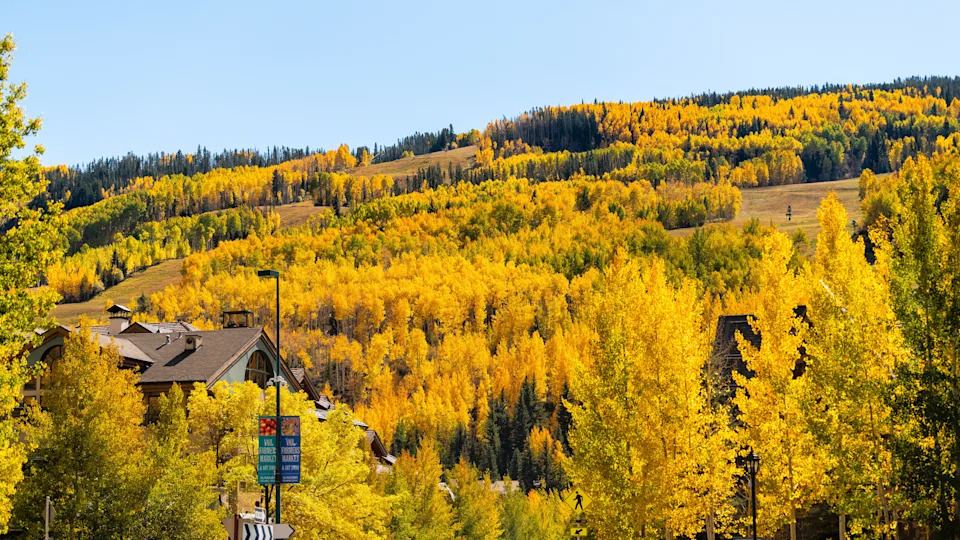
Aspen trees in Vail Colorado. | Credit: Getty Images
Practically, the research supports creating or preserving deep stands of hardwoods — not just a single row of trees — as protective buffers around vulnerable communities. Experts estimate effective stand depths of roughly 100–300 meters (300–1,000 feet) are likely needed to reduce the chance of flames blowing over the top.
Policy and Industry Considerations
Pelletier also highlighted a common forestry practice that may worsen wildfire risk: some timber operations use glyphosate herbicide to remove aspens and other hardwoods so they can establish conifer monocultures, which are typically more valuable for timber markets but also more flammable. She argues that maintaining mixed and hardwood stands would reduce long-term fire losses even if it slightly reduces short-term timber value.
Taylor agreed, saying regions with large forestry sectors should promote more mixed forests and reduce large-scale softwood monocultures to increase landscape resilience to wildfire and better reflect preindustrial forest composition.
What This Means for Communities
Planting or conserving continuous stands of aspen and other deciduous trees around towns and infrastructure can be a complementary approach to traditional fire defenses such as fuel treatments and firebreaks. While not a standalone solution, aspens can form an effective part of a multi-layered fire-risk reduction strategy.
Bottom line: The study provides robust, data-driven evidence that aspen-dominated stands reduce fire intensity and slow spread, reinforcing calls for mixed-wood forestry and strategic planting to enhance wildfire resilience.
Help us improve.