The Iran-linked campaign and the war in Ukraine are beginning to overlap, raising the risk that regional clashes will merge into a broader international crisis. A Ukrainian strike on an Iranian cargo ship in the Caspian Sea was followed days later by drone attacks on LNG tankers off Egypt's Mediterranean coast, prompting Saudi Arabia to lead a 14-country coalition to protect Red Sea shipping. Analysts warn the convergence threatens global energy routes, could push up gas and insurance costs, and may draw more countries into the conflict.
Mega‑War Risk: Iran-Linked Attacks and the Ukraine Conflict Begin to Converge, Threatening Global Shipping and Energy
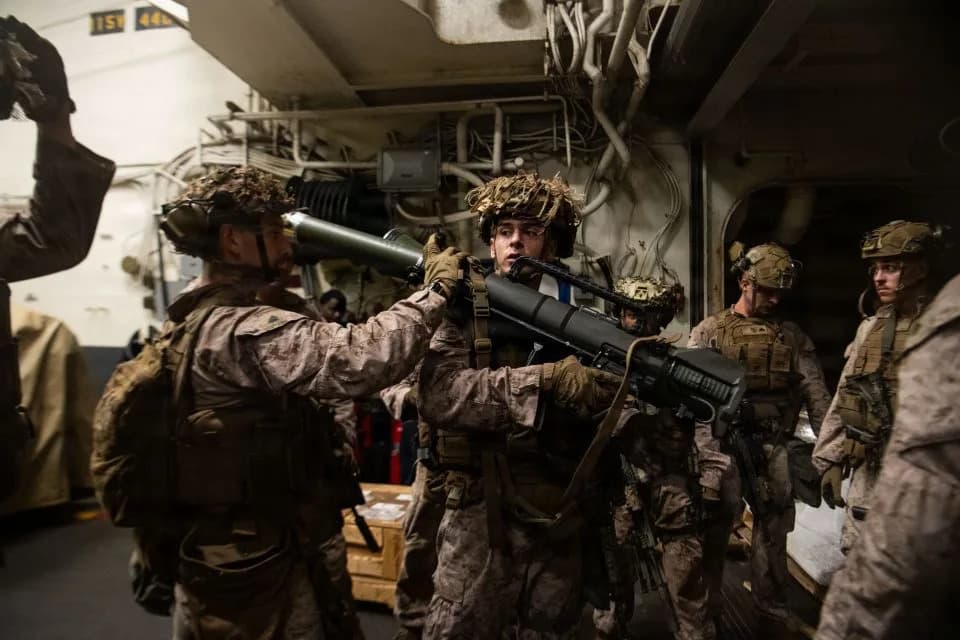
U.S. Marines assigned to Battalion Landing Team 3/5, 11th Marine Expeditionary Unit (MEU), conduct weapons drills on a Multi Role-Anti Armor Personnel Weapons System (MAAWS) in the hanger bay of Wasp-class amphibious assault ship USS Boxer (LHD 4), July 8, 2026.
Conflicts tied to Iran and Ukraine are increasingly intersecting and expanding, raising the prospect that what began as regional confrontations could be evolving into a broader international crisis that threatens global trade and energy flows.
Last weekend, Kyiv said it struck an Iranian cargo vessel in the Caspian Sea that it accused of ferrying military supplies from Iran to Russia. Tehran denies direct involvement in Russia's war with Ukraine, even as Kyiv and many Western officials say Iran has supplied drones to Moscow.
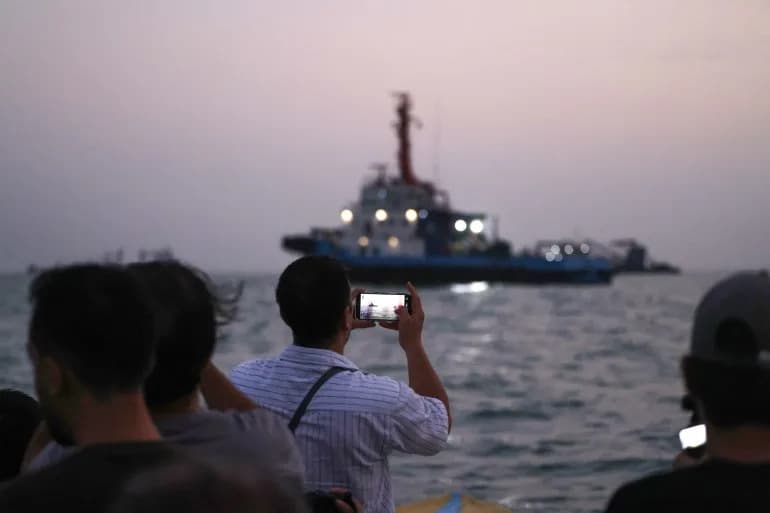
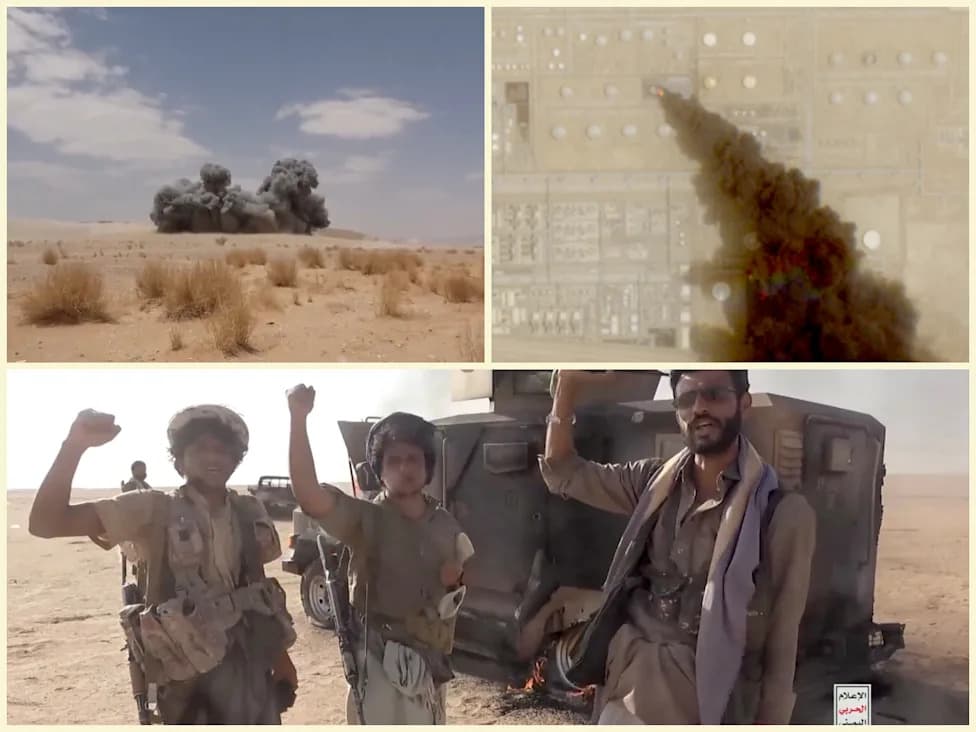
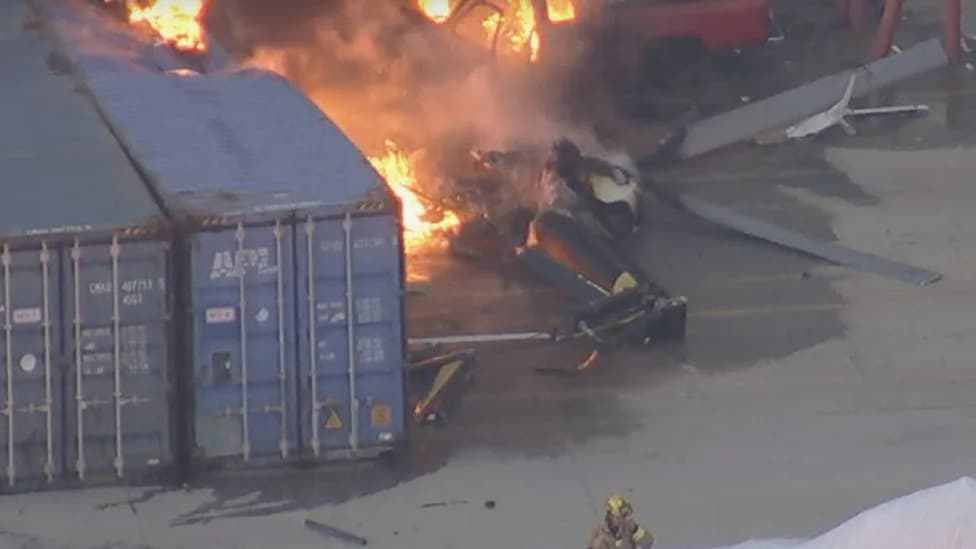
Within days of the Caspian incident, drones struck liquefied natural gas (LNG) tankers at a port on Egypt's Mediterranean coast — the first time Egypt has been directly targeted in the campaign tied to Iran — putting the Suez corridor and Red Sea routes under greater pressure and raising the prospect of higher shipping and insurance costs.
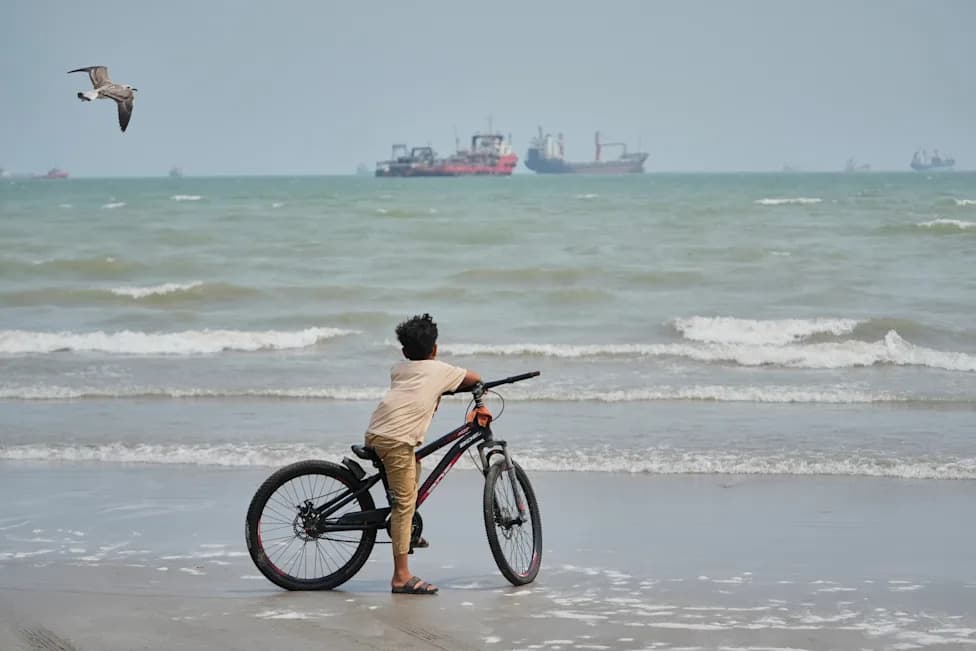
Saudi Arabia responded by announcing a multinational naval coalition to protect shipping through the Red Sea after Iran-aligned Houthi rebels began attacking vessels transiting the Bab el-Mandeb Strait. Riyadh said 14 countries offered support for the initiative, naming Turkey, Egypt, Pakistan, Nigeria and several other Arab and African partners.
Analysts See Crosscurrents
Dan Alamariu, chief geopolitical strategist at Alpine Macro, warned that Iran and its proxies have struck or threatened nearly every country in the region since the campaign began in February. "Egypt was the largest one still untouched, and it had worked to stay that way, keeping open relations with both Washington and Tehran," he wrote. "Neutrality did not exempt it." Alamariu cautioned that attacks in the Mediterranean could push up European gas prices and raise shipping and insurance costs.
"The Iran and Ukraine wars may be connecting. A Ukrainian strike in the Caspian Sea was followed within days by burning gas ships on the Mediterranean. It may not be coincidental; there is a tail risk of some convergence between the two conflicts." — Dan Alamariu, Alpine Macro
Hamidreza Azizi, an Iran specialist at the German think tank SWP Berlin, outlined several possible readings of Kyiv's strike. One interpretation is that Ukraine sought to demonstrate its value to the United States by acting beyond its immediate frontlines. Another is that the U.S. and Israel sought to pressure Iran indirectly through Kyiv to avoid triggering direct retaliation. A third possibility is that the strike responded to Houthi threats against ships in the Bab el-Mandeb Strait. The Financial Times reported Tehran speculated the attack might be intended to signal vulnerabilities along Iran's Caspian coast.
Ukraine has already deepened its security role in the Middle East: in March it signed a security cooperation agreement with Saudi Arabia to share expertise on defending against Iranian-designed drones, and President Volodymyr Zelensky has pursued similar arrangements with the United Arab Emirates and Qatar.
U.S. Marines assigned to Battalion Landing Team 3/5, 11th Marine Expeditionary Unit (MEU), conducted weapons drills with a Multi-Role Anti-Armor Weapons System (MAAWS) in the hangar bay of the Wasp-class amphibious assault ship USS Boxer (LHD 4) on July 8, 2026.
Calls To Internationalize And A Wider Map Of Conflict
Former U.S. Defense Secretary Mark Esper argued on Bloomberg TV that the campaign tied to Iran should be internationalized, involving allies in Asia and Europe and neighboring countries such as Turkey, Armenia and Azerbaijan. "We have to globalize this conflict because it's affecting international commerce," he said, urging tougher measures including broader sanctions.
Russia, too, has widened the geographic scope of its operations: recent weeks saw Russian drones strike near Romania and a Russian missile land in Poland, violating NATO airspace. The Center for European Policy Analysis said these incursions suggest Russia's "shadow war" against NATO — which has backed Ukraine — is moving southward after hybrid attacks were recorded in northern and central Europe last year.
Energy expert Daniel Yergin, vice chairman at S&P Global, told CNBC the fighting linked to Iran is expanding both geographically and geopolitically. "Think about all the seas — the Persian Gulf, the Red Sea, the Mediterranean, the Black Sea, the Baltic Sea, the Caspian Sea — these have all become arenas for oil war," he said.
Implications
The overlapping crises raise several immediate risks: disruption to global energy supplies, higher freight and insurance costs, pressure on gas prices in Europe, and a widening diplomatic and military response that could draw in more states. Analysts warn a sustained convergence of the Iran-linked campaign and the war in Ukraine could amplify economic and security shocks well beyond their original theaters.
What To Watch: further strikes on commercial shipping, the evolution of the Saudi-led Red Sea coalition, any escalation between Iran and Western powers, and continued Russian actions near NATO borders.
Help us improve.