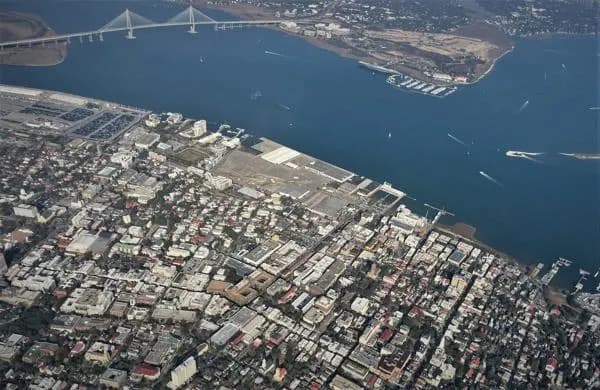
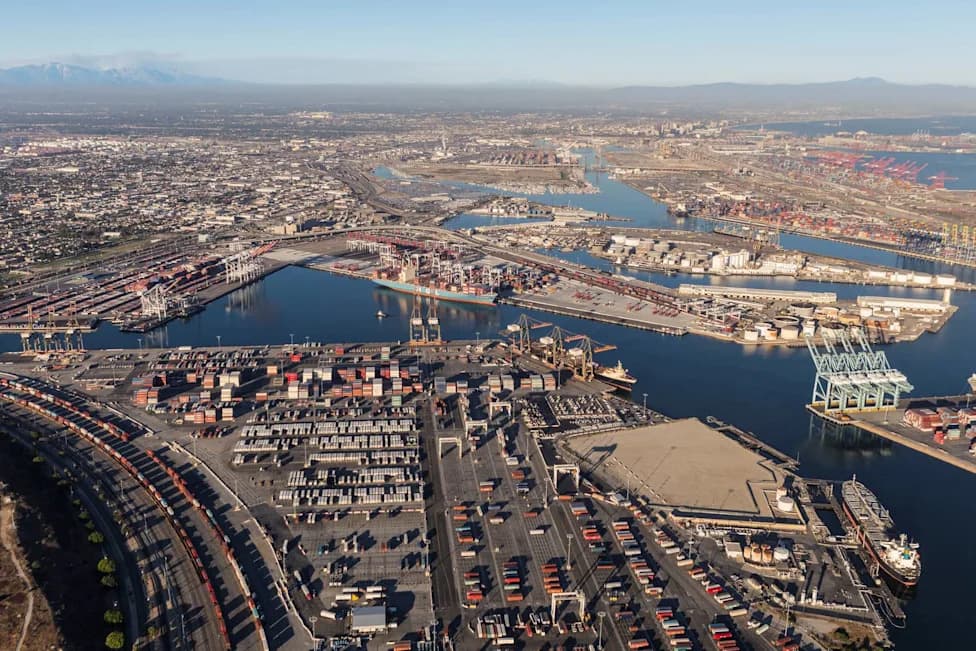
The Hugh K. Leatherman Terminal in North Charleston was placed on indefinite idle effective Aug. 1 after the S.C. State Port Authority announced a cost-cutting pause in late June. All imported containers have been cleared from the 286-acre, union-run facility; future ship calls will be routed to Wando Welch and North Charleston. Built for up to 700,000 containers and costing roughly $1.0–$1.2 billion, Leatherman handled under 5% of SPA volume last year and was hampered by higher operating costs and a labor dispute resolved by the U.S. Supreme Court in early 2024.
Charleston’s $1B Leatherman Terminal Placed On Indefinite Idle After Underperforming
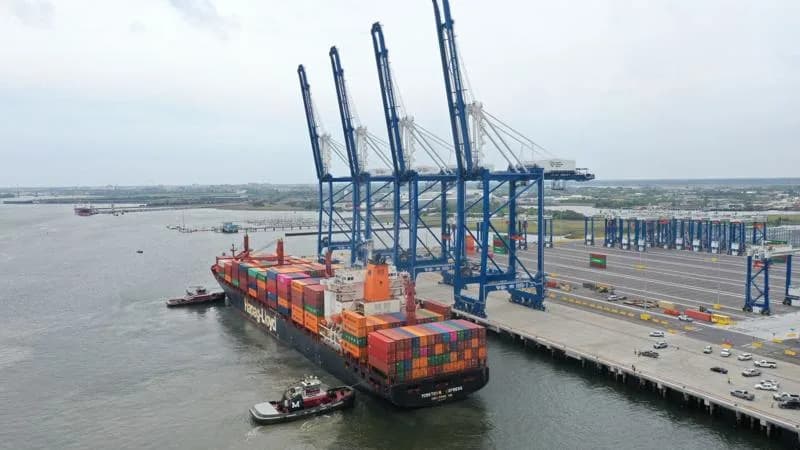
Yorktown Express was the first ship to visit the Port of Charleston's new Leatherman Terminal (above) on April 9, 2021. File/Provided
Five years, four months and one day after it opened, the Port of Charleston’s newest and most expensive container terminal has been placed on indefinite idle. The union-operated Hugh K. Leatherman Terminal suspended container operations effective Aug. 1 after the S.C. State Port Authority (SPA) announced a wind-down in late June as part of cost-cutting measures amid a global shipping slowdown.
What Happened
A SPA spokesperson confirmed all imported containers have been removed from the 286-acre facility. Future vessel calls that might have used Leatherman will be redirected to the port authority’s Wando Welch and North Charleston terminals while cranes and other equipment at Leatherman are kept maintained but not actively used.
Why It Matters
Built on the south end of the former Navy base in North Charleston and named for the late state lawmaker Hugh K. Leatherman, the terminal opened on March 31, 2021. The first full cargo vessel arrived about 10 days later. The first phase of the project cost roughly $1.0–$1.2 billion and was billed as the first new U.S. container terminal in more than a decade.
Despite that investment, Leatherman has fallen short of expectations. Designed to handle up to 700,000 containers a year, the terminal accounted for less than 5% of SPA’s total volume last year. High operating costs and a protracted labor dispute discouraged many ocean carriers from using the facility.
Labor Dispute And Costs
The International Longshoremen’s Association (ILA) argued that a new labor contract required its members, rather than SPA employees, to operate Leatherman’s cranes and equipment. The dispute reached the U.S. Supreme Court, which ruled in favor of the ILA in early 2024. Leatherman is now operated entirely by union labor.
Lawmakers and oversight officials have scrutinized the terminal’s unique cost structure, which is higher than the port’s other container terminals. To help offset those expenses, the SPA began charging a "labor model cost structure" fee in late 2024 that adds nearly $18 to the handling cost of each container moved across its docks.
Recent Activity And Outlook
The last vessel to berth at Leatherman while it was active was the MSC Phoenix, the largest U.S.-flagged container ship, which used the berth briefly for repairs. SPA CEO Micah Mallace said when the pause was announced that there is no set timeline for reopening and that restarting operations will depend on business conditions improving.
"Obviously, we want to reopen it quickly. That'll mean business is moving in the right direction," Mallace said.
State Sen. Larry Grooms, chairman of the port oversight commission, said the authority has contracts that need amendment after the temporary shutdown. Longtime ILA official Kenny Riley did not respond to multiple requests for comment on the pause or its impact on dockworkers.
Bottom Line
Leatherman’s idling underscores the challenges of large infrastructure projects when labor, cost structures and market demand diverge. The facility will remain maintained but inactive until traffic and finances justify a restart.
Help us improve.