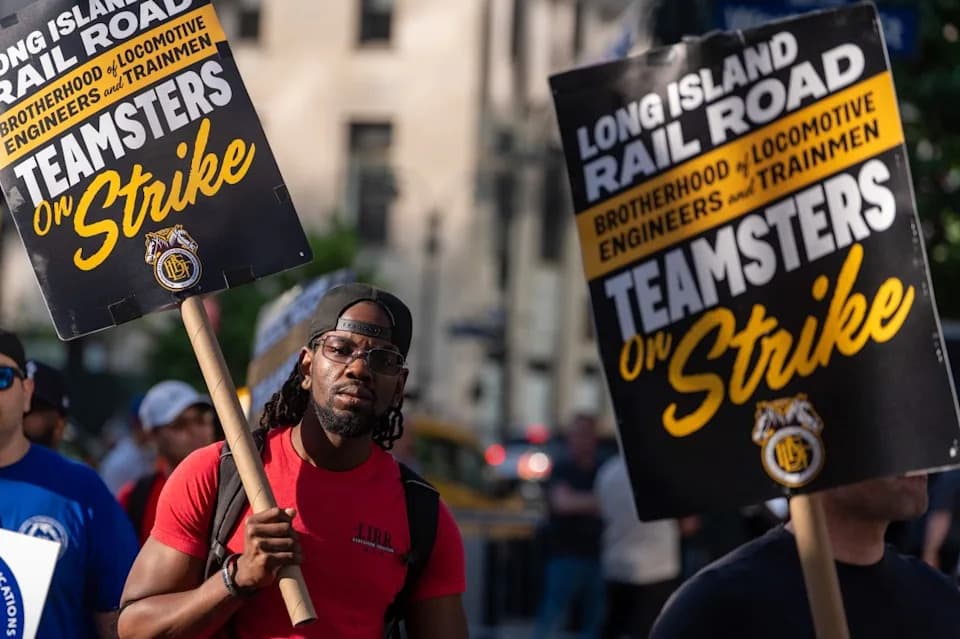
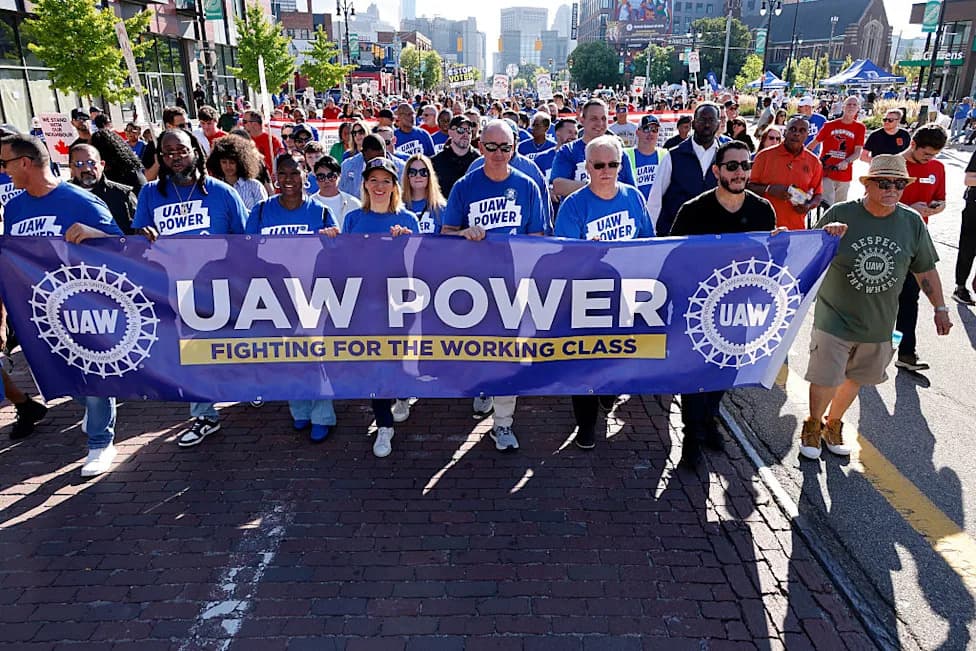
Thousands attended Wilmington's Labor Day parade and rally to protest job losses and rising costs, with longshoreman Jesse Munoz saying automation eliminated about 2,000 jobs over roughly 15 years. Union representation rose by 463,000 workers in 2025, nudging overall union density to 10.0%, but private-sector density remained low at 5.9%. Speakers urged policymakers to provide stronger protections, retraining and safer transitions as technology reshapes the economy.
Thousands Rally in Wilmington on Labor Day as Port Workers Warn Automation Is Eliminating Jobs
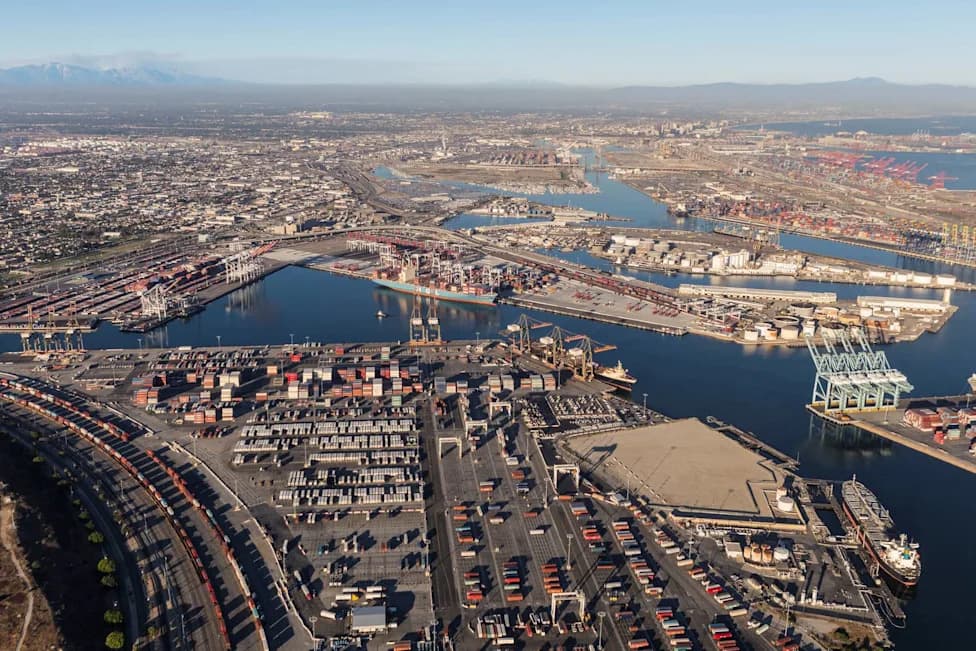
Photo Credit: iStock
Thousands of union members and their families filled the streets of Wilmington for the Labor Day parade, turning a traditional celebration into a show of concern about automation, rising living costs and the future of good-paying jobs in the region.
According to the Los Angeles Times, the parade and an accompanying rally drew port workers, tradespeople, teachers, performers and grocery employees as elected officials circulated through the crowd. For many attendees, the holiday gathering felt less like a celebration and more like a warning about a future they see as increasingly precarious and unaffordable.
Workers Say Automation Has Cut Thousands of Jobs
Jesse Munoz, a 63-year-old longshoreman and member of International Longshore and Warehouse Union (ILWU) Local 13, told the Times that automation has eliminated roughly 2,000 jobs over about 15 years.
"The concern is the future," Munoz said. "I have a son that's on a list to become a casual worker, which is a worker that will accumulate his hours, and then hopefully within time become a regular member of the union. But the future is not as promising as we would like it to be."
Modest Union Gains, But Private Sector Still Vulnerable
Despite those anxieties, union representation saw modest gains nationwide. Citing data compiled by the pro-labor American Prospect, the Times reported that 463,000 more workers were represented by unions in 2025, nudging overall union density from 9.9% to 10.0%. Those gains were concentrated in public employment, while private-sector union density remained at 5.9% — the sector most exposed to automation and outsourcing.
Speakers warned that the disappearance of well‑paid union work can erode neighborhood stability: tax revenue falls, pensions shrink and long-time residents can be priced out of the communities they built.
"If you eliminate the workforce, you eliminate taxes. You eliminate pensions," Munoz said.
Housing, Safety and New Kinds of Work
Affordability — especially housing — came up repeatedly. A master carpenter told the Times, "We build the houses, but we can't buy them," noting that a Norwalk home his father bought in 1977 for under $50,000 would now be worth nearly $1 million.
The Times also reported that ILWU Local 56, the ship scalers union, took on wildfire cleanup and hazardous-waste removal related to the Lineage warehouse fire in Boyle Heights. Union leaders said that shift raised safety concerns even as members look for ways to advance within the trade.
Calls For Policy Action
Speakers framed the challenges as policy issues, arguing that workers need stronger protections, retraining programs and safer transition plans as technology reshapes the economy. Local officials pledged support.
Los Angeles Mayor Karen Bass: "L.A. is a labor city, and I am there with you 100%."
Los Angeles City Council Member Nithya Raman: "Automation, AI, are taking away jobs all over this country, and it is up to us to step up and fight back, and that is why I'm here to stand alongside the workers of this country."
Mark Ramos, chair of the Los Angeles County Democratic Party and president of the United Food and Commercial Workers International Union Western States Council and UFCW Local 1428, highlighted ongoing fights over technologies such as self-serve checkouts and how to make them work fairly for employees who oversee them.
Wider Context
Workers beyond Los Angeles are pressing similar demands: protections for jobs displaced by automation, safer transition strategies, and a voice in how technology is deployed. The article cited other trends — factory employees at Tesla reporting cuts to hours and mandatory time off, Canadian unions seeking to address climate change without sacrificing blue-collar jobs, and local opposition in Selma to a data center sited near land many view as sacred to civil rights history — to illustrate the national and international dimensions of the debate.
What’s clear: labor leaders say policy choices now will determine whether technology becomes an opportunity shared broadly or a source of deeper economic insecurity for working communities.
Help us improve.