Rep. Ro Khanna says policies he calls "Trumponomics"—including the war in Iran, broad tariffs and tax cuts for the wealthy—are adding about $3,500 a year to the average American family's expenses. He estimated roughly $1,000 of that increase comes from higher health-care costs tied to reduced Medicaid support. Prominent Democrats and economists, including Bernie Sanders, Gov. J.B. Pritzker and Moody's Mark Zandi, echoed concerns about rising prices, weaker growth and elevated recession risks.
Ro Khanna: 'Trumponomics' Is Costing American Families $3,500 a Year
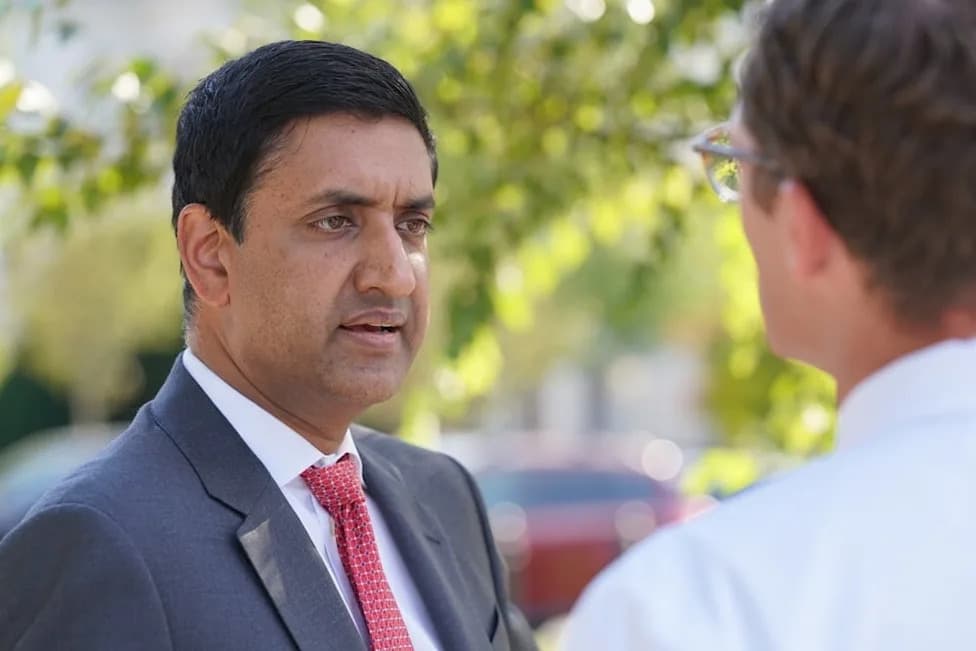
Ro Khanna Slams Trump’s Tariffs, Iran Policy and Tax Breaks— Says 'Trumponomics' Is Hitting American Families With $3,500 More in Annual Costs
Rep. Ro Khanna (D-Calif.) accused President Donald Trump on July 29, 2026, of imposing roughly $3,500 in additional annual costs on the average American family, citing the U.S. war in Iran, broad tariffs and tax cuts that benefited higher earners. Khanna posted the claim on X (formerly Twitter) and shared a short video outlining how each factor contributes to higher household expenses.
What Khanna Said
"American families are paying $3,500 more a year because of Trump's war in Iran, his blanket tariffs, and his tax breaks for the wealthy," Khanna wrote, adding that these policies have raised costs for food, gas and consumer goods.
In the video, Khanna argued that geopolitical tensions around Iran have pushed up fuel and food prices, while sweeping tariffs increase retail prices across many product categories. He also said recent tax breaks for wealthy Americans reduced federal support for programs such as Medicaid, contributing to higher out-of-pocket health-care costs—an impact he estimated at roughly $1,000 per household.
Responses and Wider Context
Other Democratic leaders and economists echoed or expanded on Khanna's concerns. Sen. Bernie Sanders (I-Vt.) disputed President Trump's description of the economy as "amazing," pointing to rising grocery bills, households living paycheck to paycheck, gaps in coverage and increasing homelessness. Gov. J.B. Pritzker (D-Ill.) criticized administration spending priorities, arguing that some projects tied to the White House were prioritized over programs like Medicaid and SNAP.
Economist Justin Wolfers described recent tax legislation as "populism with an asterisk," saying some provisions that benefit workers are temporary while tax cuts favoring the wealthy are permanent. Mark Zandi, chief economist at Moody's Analytics, warned that inflation, slowing growth, declining household savings and geopolitical uncertainty related to the Israel-Iran situation raise recession risks if disruptions continue.
Reporting Note
Khanna's $3,500 figure is his assessment based on the combined effects he cited. Independent verification of the exact dollar amount would require detailed modeling and attribution by nonpartisan economic analysts. This article focuses on the statements and reactions of lawmakers and economists; sponsored promotional material that appeared in the original publication has been omitted.
Help us improve.