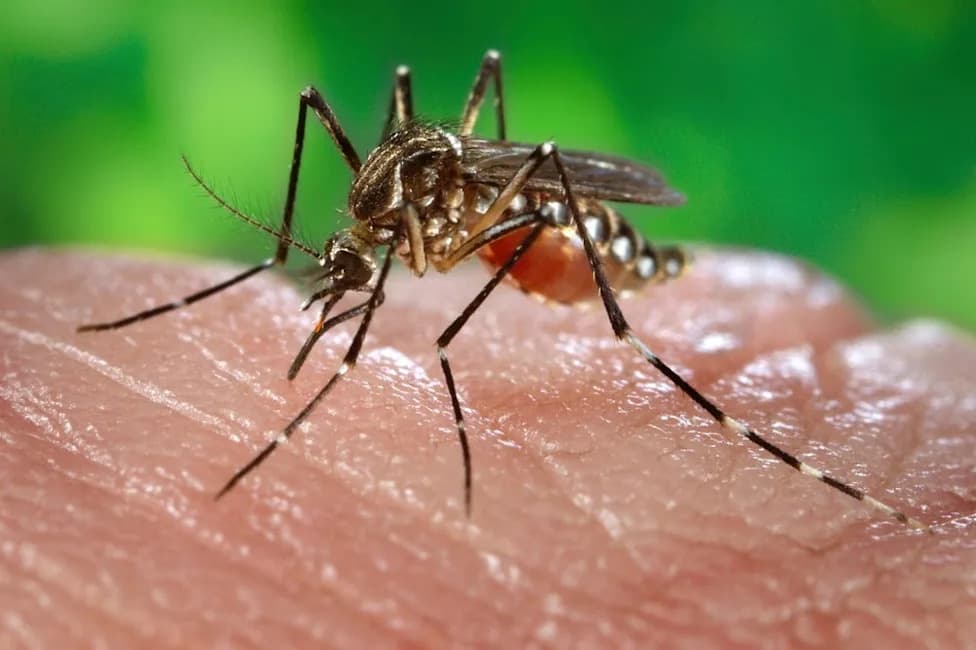
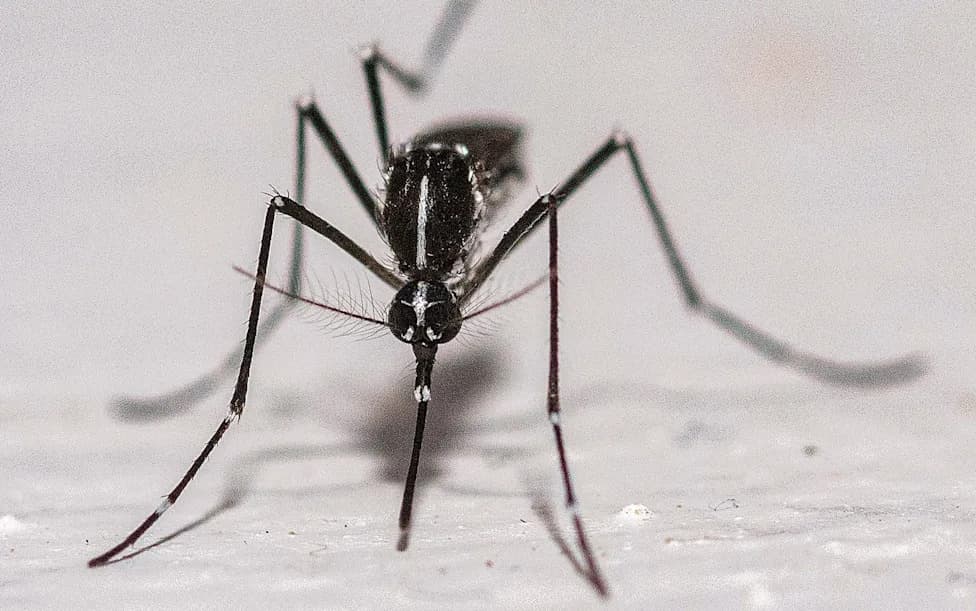
A laboratory study in India found that Aedes aegypti can rapidly boost detoxifying enzymes after exposure to the insecticide α‑cypermethrin, with β‑esterase activity rising more than 21‑fold. Mortality at the diagnostic dose was 97.91%, a high but potentially early indicator of emerging resistance. The study — published in Frontiers in Tropical Diseases and based on a lab‑bred population — urges biochemical surveillance, insecticide rotation, use of synergists, and stronger non‑chemical controls. Field monitoring is needed to see if these signals appear in wild mosquito populations.
Early Biochemical Warning: Indian Aedes aegypti Show Signs of Developing Resistance to α‑Cypermethrin

Photo Credit: Chetan Kashyap
Researchers warn that Aedes aegypti mosquitoes in India are showing early biochemical changes that could signal the beginning of resistance to a commonly used insecticide, α‑cypermethrin.
Key Findings
A laboratory study published in Frontiers in Tropical Diseases reports that a population of lab‑bred Indian Aedes aegypti sharply increased production of detoxifying enzymes after exposure to the recommended diagnostic dose of α‑cypermethrin. At that dose, 97.91% of mosquitoes were killed — a high mortality rate, but one the authors interpret as a potential early sign that resistance is emerging.
Biochemical Responses
The investigators measured activity in five detoxification enzyme families. The largest response was in β‑esterase, which rose by more than 21‑fold after exposure and was identified as the strongest protective mechanism in this experiment. Cytochrome P450 enzymes (CYP450) and glutathione S‑transferases (GST) also showed increased activity, though to a lesser degree.
“When an insecticide enters a mosquito's body, it activates a cellular alarm system that ramps up production of defensive proteins,” said senior author Dr. Sarita Kumar, Department of Zoology, University of Delhi.
Implications for Vector Control
These biochemical shifts matter because public‑health vector control relies on a limited suite of insecticides. If mosquito populations evolve faster detoxification, authorities may face growing difficulty suppressing Aedes aegypti, the primary vector for dengue, Zika and other viral diseases. The researchers emphasize this as a warning sign — not proof that α‑cypermethrin has failed in the field.
Recommended Actions
The study authors and public‑health experts recommend several preemptive responses: rotate insecticides to avoid constant selection pressure on a single compound; use synergists or inhibitors that block detoxification enzymes; increase biochemical and field surveillance for early markers of resistance; and strengthen non‑chemical measures such as biological controls and breeding‑site elimination.
Limitations
The findings come from a single lab‑bred mosquito population measured at one time point. Resistance patterns in wild populations may differ depending on local insecticide history, environmental conditions, and control practices. The authors call for expanded field surveillance to determine whether these biochemical changes are appearing more broadly.
Bottom line: The study provides molecular evidence of early resistance mechanisms that public‑health programs can monitor and manage now to help preserve the effectiveness of α‑cypermethrin and other insecticides.
Help us improve.