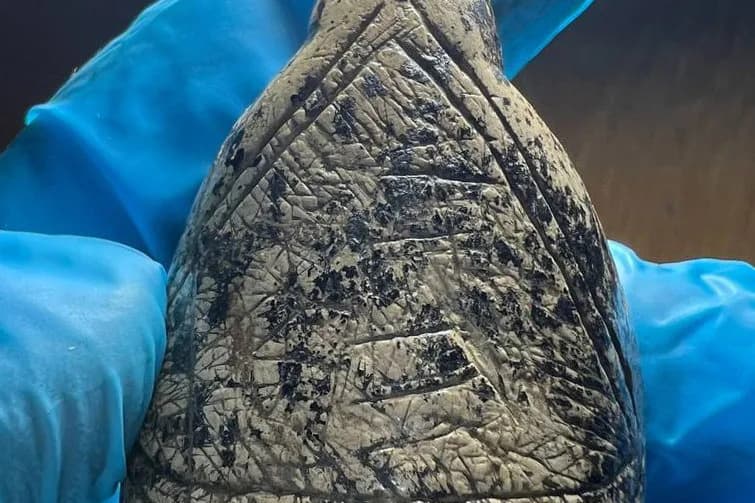
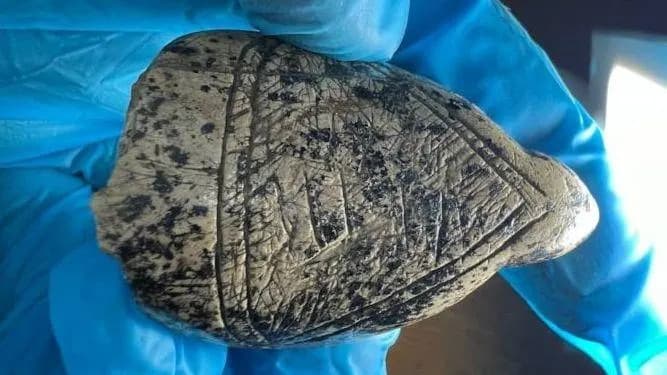
Two thumbnail-sized bird figurines carved from mammoth ivory were discovered in 2025 at the Hohle Fels cave in Germany, in an archaeological layer dated to about 40,000 years ago. The finds increase Hohle Fels bird carvings to three and join other Aurignacian-era art such as the Venus of Hohle Fels. One carving likely depicts a brooding ptarmigan while the other shows spread wings that may indicate flight or courtship. The pieces are on display at the Museum of Prehistory and Ice Age Art in Blaubeuren through April 4, 2027.
Tiny But Highly Detailed: 40,000-Year-Old Thumbnail Bird Figurines Carved From Mammoth Ivory Unearthed at Hohle Fels
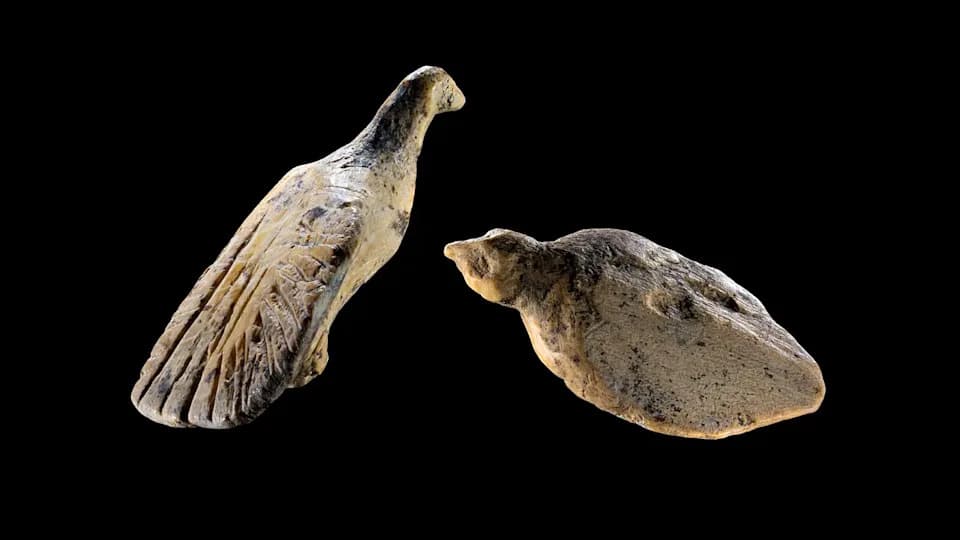
Archaeologists recently found two bird figurines carved from ivory at the famous prehistoric cave site of Hohle Fels in Germany. | Credit: Ralf Ehmann / University of Tübingen
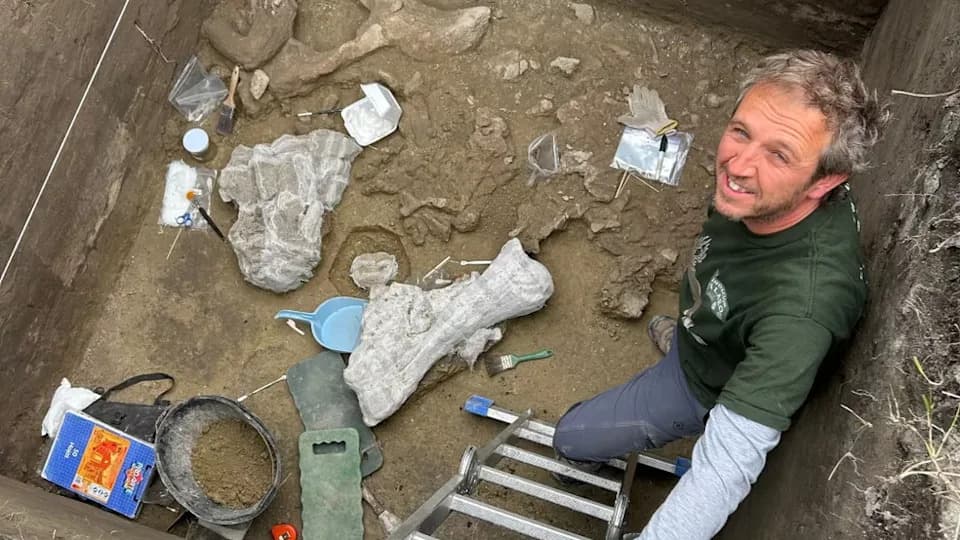
Archaeologists working at the renowned Hohle Fels cave in southwestern Germany have uncovered two thumbnail-sized bird figurines carved from mammoth ivory, adding fresh evidence of sophisticated artistic skills among early modern humans roughly 40,000 years ago.
The miniature sculptures were recovered in 2025, found about 5 feet (1.5 meters) apart within the same archaeological layer dated to approximately 40,000 years old. They raise the total number of bird carvings from Hohle Fels to three, joining a small water bird discovered at the site in 2001.
Hohle Fels was occupied by early Homo sapiens during the Aurignacian period (about 43,000–28,000 years ago). That era marks a dramatic expansion of symbolic and material culture in Europe, including the earliest known musical instruments, personal ornaments, and small figurative sculptures such as the famous 41,000-year-old Venus of Hohle Fels.
Although each new bird is roughly the size of a thumbnail, they are finely worked rather than crude shapes. Nicholas Conard, director of excavations at Hohle Fels, has emphasized the precision of the carving: the pieces capture specific anatomical and behavioral details that allow specialists to propose likely species and actions.
"The figurines demonstrate that the earliest artists were skilled ivory-carvers, who could depict delicate motifs in miniature form," said Nicholas Conard of the University of Tübingen.
One carving appears to lie low, in a brooding posture over eggs, a pose suggestive of a ptarmigan — a game bird related to grouse — whose bones have been found in the cave deposits. The second bird displays spread wings, which may indicate flight or a courtship display; experts suggest it could be another ptarmigan or possibly a bird of prey.
Hohle Fels stands out among Ice Age cave sites for its bird figurines, which may reflect the close observation of local wildlife by its inhabitants. Stefanie Kölbl, managing director of the Museum of Prehistory and Ice Age Art in Blaubeuren, noted how birds and their hollow bones played roles in daily and ritual life at the time.
"Our region and landscape have always been the home of a vast range of birds. Their calls signaled warnings, and the residents often used hollow bird bones and mammoth ivory to make flutes that produced magical sounds," said Stefanie Kölbl.
The newly discovered carvings are on display at the Museum of Prehistory and Ice Age Art in Blaubeuren, Germany, through April 4, 2027. Researchers say the finds raise intriguing questions about the symbolic life of Aurignacian people: the objects could have served as personal talismans, group identifiers, teaching aids, or elements in performance and ritual.
Ongoing analysis of form, wear patterns, and context may clarify how these tiny works were made and used, and what they reveal about artistic practice and social life among early modern humans in Europe.
Help us improve.