Microscopic study of 18 mammoth‑ivory "Venus" figurines from Mizyn, northern Ukraine (~18,000 years old) reveals that Ice Age carvers deliberately used Schreger and Owen tusk growth lines to organise engraved designs. Researchers relied on high‑resolution 3D scans because wartime access to Kyiv collections was restricted. The findings uncover a 1,000–3,000‑year hiatus in figurine production that aligns with the Last Glacial Maximum and point to a distinct Eastern European artistic reappearance around 18,000 years ago.
Mammoth Tusk Growth Lines Guided Ice Age 'Venus' Carvings, New Study Finds
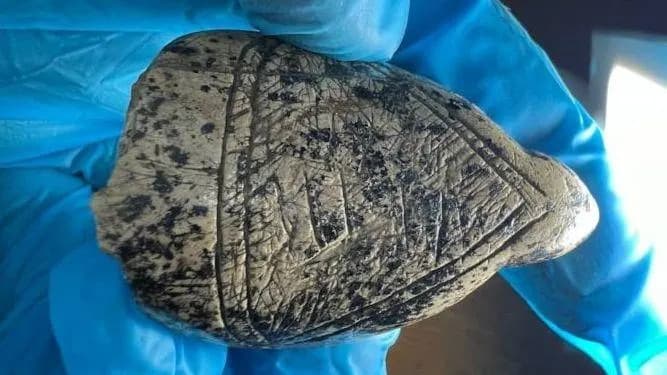
The research looked at 18 "Venus" models discovered in Ukraine and thought to be 18,000 years old [University of York]
Researchers say the engraved designs on Ice Age female figurines — the so‑called "Venus" models — were deliberately structured around the natural growth patterns of mammoth tusks. A microscopic analysis of 18 ivory figures from Mizyn in northern Ukraine suggests Palaeolithic carvers observed and used internal tusk lines to organise surface ornamentation and decoration.
Study Details
The team analysed 18 mammoth‑ivory figurines dated to roughly 18,000 years ago. Specialists from the University of York, the University of Stavanger (Norway) and the National Museum of the History of Ukraine carried out the study. Because wartime restrictions limited access to the Kyiv collections, researchers relied on high‑resolution 3D digital scans combined with microscopic surface analysis to examine the artworks in detail.
What They Found
Analysts identified Schreger and Owen lines — the characteristic internal growth rings of proboscidean tusks — intentionally incorporated into the engraved patterns of the Mizyn figures. The evidence indicates that carvers exploited these natural lines as compositional guides rather than treating the ivory as a neutral blank surface.
"This discovery offers an extraordinary window into how Palaeolithic peoples perceived and engaged with their material world," said Dr Aimée Little of the University of York. "Identifying visual evidence of how mammoths were integrated into artistic traditions, both through the use of their ivory and the deliberate inscription of its natural patterns, represents a genuine breakthrough in our understanding of prehistoric art and material culture."
The researchers also detected a substantial regional pause in figurine production — an apparent hiatus of about 1,000–3,000 years across Europe that coincides with the Last Glacial Maximum, the coldest phase of the last Ice Age. When figurine making resumed around 18,000 years ago, it appears to have re‑emerged earlier in Eastern Europe with stylistic traits not replicated in contemporary Western European examples.
Dr Andrew Needham (University of York) noted that while Western European figurines later featured abstracted female forms, "none reproduced the internal tusk patterns seen at Mizyn," suggesting Eastern European artists developed a distinct artistic trajectory rather than merely following western trends.
Why It Matters
The study enriches our understanding of Palaeolithic cognition and aesthetics by showing how material properties — here, the visible internal structure of mammoth ivory — actively shaped artistic decisions. It also highlights the value of digital scanning and micro‑analysis for studying fragile or inaccessible collections, and it reframes questions about cultural exchange and regional innovation during and after the Last Glacial Maximum.
Help us improve.