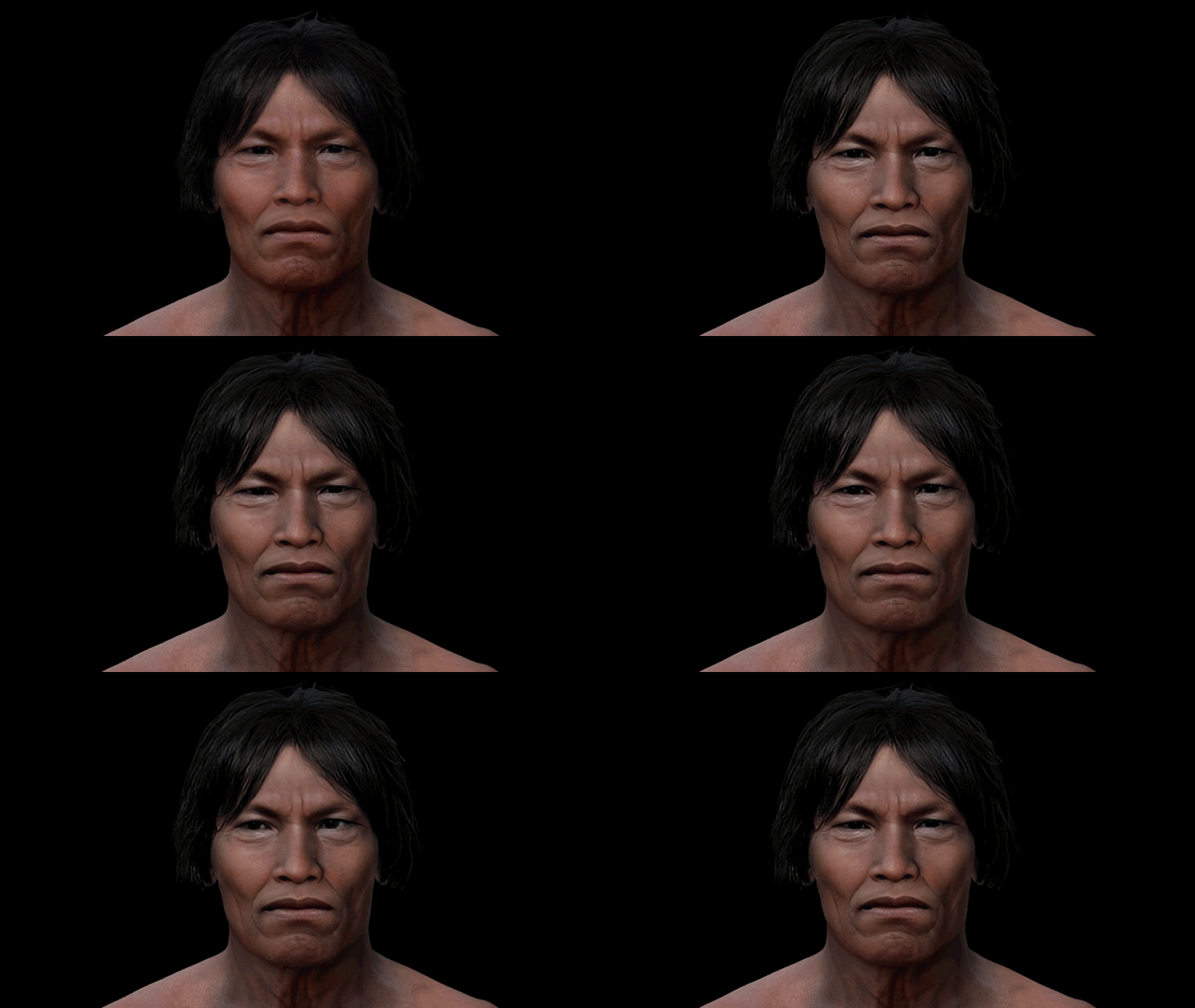
Researchers used a 3D model of a 315,000-year-old Jebel Irhoud skull and African anatomical datasets to digitally reconstruct a face of an early Homo sapiens. Two versions were produced: a greyscale anatomical rendering and a full‑colour bust with plausible dark skin and hair. Estimated cranial capacity was about 1,230 cm3, nearly identical to modern adult averages, and excavations at the site have yielded tools, evidence of fire and butchered animal bones.
Earliest Homo sapiens Face Recreated From 315,000‑Year‑Old Skull — Remarkably Modern Features
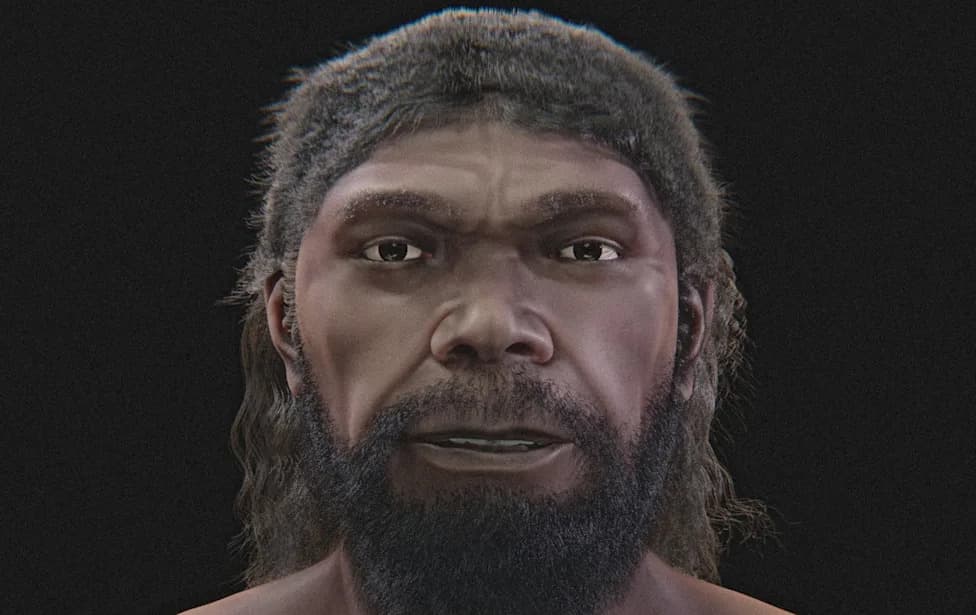
Dress him in modern clothes and he'd fit right in today, said one of the researchers - MDPI.com/Heritage journal
Scientists have digitally reconstructed the face of one of the oldest known Homo sapiens from a skull unearthed at Jebel Irhoud in western Morocco, dated to about 315,000 years ago.
How The Reconstruction Was Made
An international team began with a high-resolution 3D model of the Jebel Irhoud skull produced by the Max Planck Institute for Evolutionary Anthropology. Forensic facial reconstruction expert Cicero Moraes led the soft-tissue build-up, using anatomical datasets drawn from contemporary African populations to guide muscles, skin thickness and other facial features.
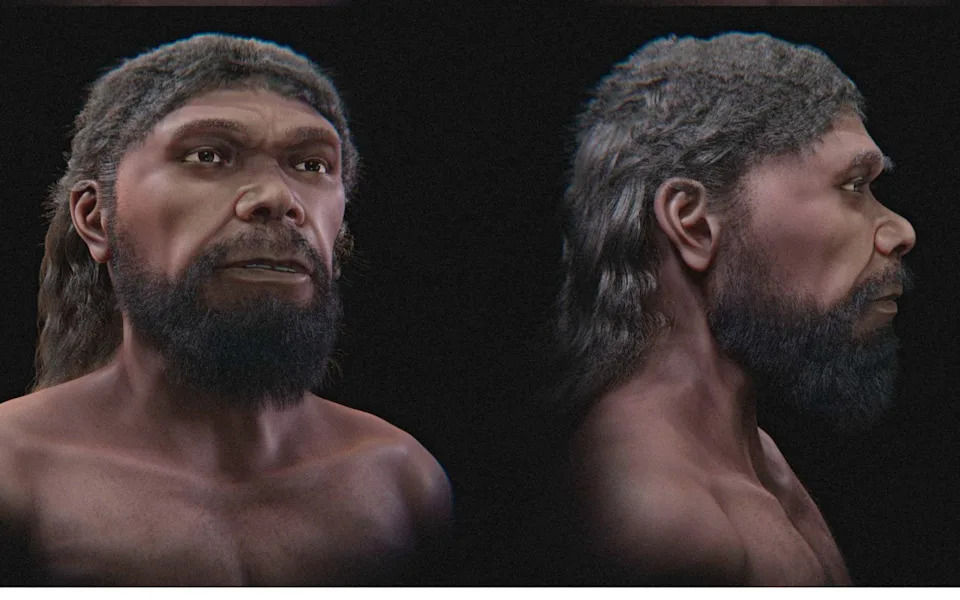
The skull used in the recreation is one of a select few found at a site in Morocco - MDPI.com/Heritage journal
What The Face Shows
The researchers produced two renderings: a greyscale anatomical version that emphasizes bone and soft-tissue relationships, and a full‑colour bust depicting dark skin, hair and a beard — traits deemed plausible for a person living in North Africa 315,000 years ago. The team stresses that the bones do not preserve skin, hair or eye colour; those choices were informed by regional and comparative evidence.
'If he were dressed in modern clothes in the middle of a crowd, he would likely pass unnoticed at first glance,' said Cicero Moraes. 'Only on closer inspection would subtle differences appear, such as a stronger brow and greater forward projection of the face.' — Cicero Moraes
Anatomy And Brain Size
Compared with many modern humans, the reconstruction shows modest differences: a broader nose, a somewhat more prominent chin and a larger cranial circumference. Calculations of cranial capacity gave about 1,230 cm3, nearly identical to the modern adult male average commonly cited as ~1,234 cm3, suggesting overall brain volume has changed little in the past 300,000 years.
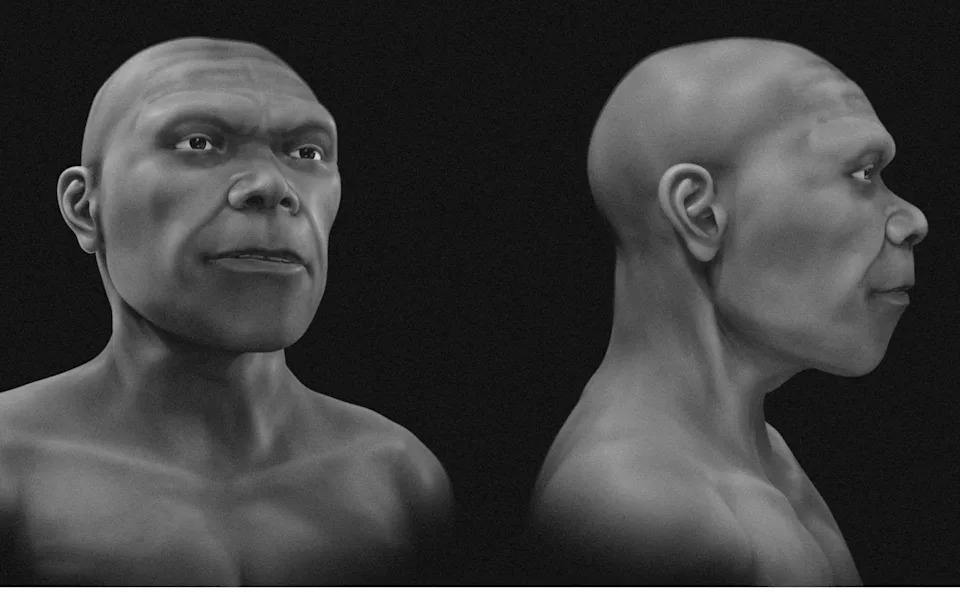
A greyscale version of the face, without hair and beard, was produced - MDPI.com/Heritage journal
Context And Caveats
Jebel Irhoud has yielded 22 hominin bones representing at least five individuals (three adults, an adolescent and a child). Excavations also produced stone tools such as scrapers, flakes and piercers, evidence for use of fire, and animal bones with cut marks indicating butchery of species including wildebeest, gazelle and zebra, as well as remains consistent with consumption of ostrich eggs.
The authors caution that no soft-tissue remains of Homo sapiens of this age are known, so muscle arrangements or soft features could differ from modern humans. However, the skull imposes anatomical constraints on musculature and tissue depth, making major departures from the reconstruction unlikely.
The reconstruction and analyses are published in the journal Heritage (MDPI).
Help us improve.