The Mining Remediation Authority reports that a central area of Coalsnaughton has subsided by up to 0.6m (about 2ft) since 2018, triggering the evacuation of 256 residents from four streets. An eight-week investigation linked the movement most likely to historical coal mining and found that a 2008 grouting programme provided only partial mitigation. The MRA used CCTV, ground-penetrating radar and boreholes to reach its conclusions and will carry out further studies to plan remedial work. Residents will be advised of options in the coming weeks, which may include purchase of properties under the Coal Mining Subsidence Act 1991.
Nearly 2ft Of Ground Has Sunk In Former Mining Village — 256 People Evacuated, MRA Finds
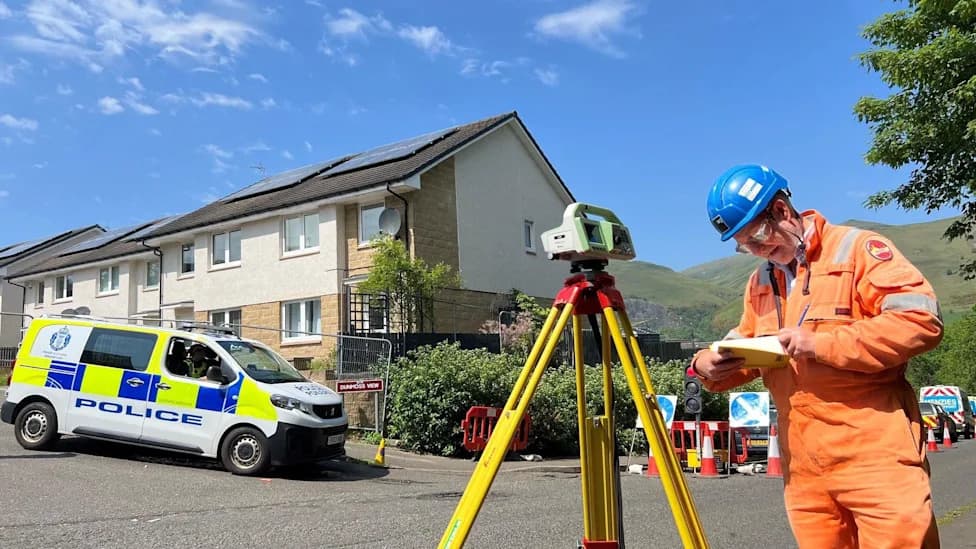
An eight-week investigation into the cause of the ground movement was carried out by the Mining Remediation Authority [BBC]
A new report from the Mining Remediation Authority (MRA) has found that a large central area of the former mining village of Coalsnaughton, Clackmannanshire, has subsided by up to 0.6m (about 1.9–2.0ft/60cm) since 2018. The discovery prompted the evacuation of 256 residents from four streets after ground movement was first detected in May.
Investigation And Key Findings
An eight-week inquiry by the MRA concluded that the most likely primary cause is subsidence related to historical coal mining beneath the site. The authority identified several worked or potentially worked coal seams beneath the area and raised concerns that a 2008 grouting programme provided only partial mitigation.
"The evidence reviewed indicates that the most probable primary cause is subsidence linked to historical coal mining beneath the site," the MRA report states.
The 2008 works — carried out by a third party and intended to make the ground safe for housing — involved grouting with a cement and pulverised fuel ash mix to treat abandoned mine workings and a shaft. The MRA's review of prior records suggests that "only very limited grout, if any, was taken into the ground at most borehole locations," raising doubts about how effectively deeper or shallow seams were stabilised.
Other Causes Considered
The MRA and technical specialists examined alternative explanations, including shallow infrastructure failure, shallow landsliding, near-surface bedrock slip and broader geological movement, but judged these less likely given the current data.
How The Site Was Assessed
The investigation used multiple techniques: CCTV inspection of surface drainage, ground-penetrating radar (GPR) surveys and boreholes drilled to depths of up to 21m (about 68.8ft). Survey data comparing surface levels from 2018 to May this year showed a central area of the site had subsided by as much as 0.6m.
[BBC]
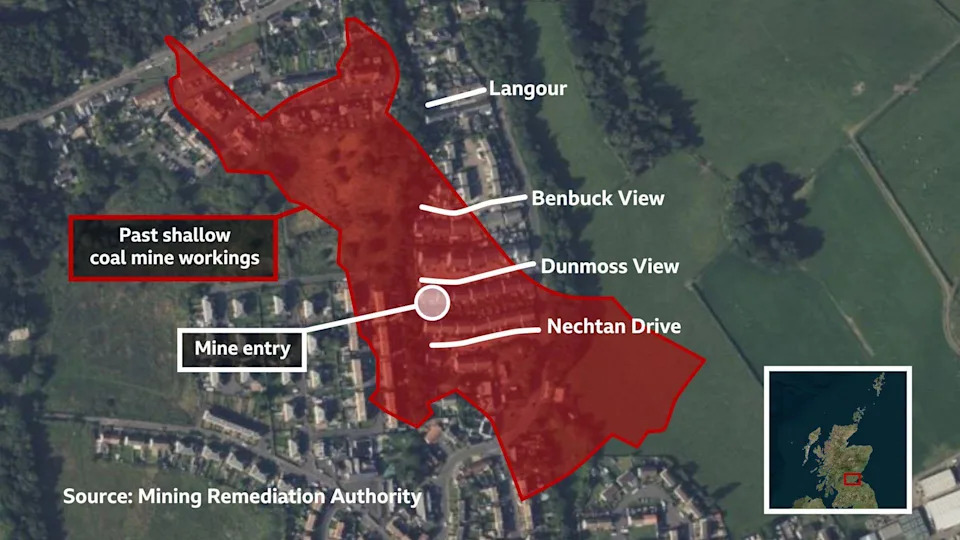
The primary subsidence zone includes most properties on Benbuck View and the northern row of Dunmoss View, though the report notes collateral impacts beyond that area cannot be ruled out. The four evacuated streets were Benbuck View, Dunmoss View, Nechtan Drive and Langour.
Next Steps For Residents
The MRA said further investigations will be carried out in the coming weeks to define remedial options and next steps. Under the Coal Mining Subsidence Act 1991, the UK government has a duty to remedy damage caused by coal mining subsidence; households will be informed in the coming weeks and months about their specific options, which may include purchase of homes at full market value.
In the short term, affected residents are being housed in temporary accommodation, including housing association properties, Airbnbs and student residences in Stirling. Many families have described the experience as traumatic, using terms such as "we'll never return" and saying they were "uprooted in an instant."
What Remains Uncertain
The MRA concluded that, "on the balance of probabilities," historical coal mining subsidence is the most probable primary cause, but it recommended further study to understand any secondary effects and to plan targeted remedial works. Key uncertainties include the depth and effectiveness of the 2008 grouting and whether deeper seams require treatment.
The MRA has pledged to communicate updates to residents as investigations progress and to work toward safe, long-term solutions.
Help us improve.