A major international analysis of responses from more than 200,000 people across 22 countries finds that the feeling of being financially worse off than peers — called relative deprivation — is associated with lower well-being across nearly every part of life.
The Study
Researchers used data from the Global Flourishing Study, which surveyed adults aged 18 through 65+ in 22 countries. The findings, published in Social Science & Medicine, examine how subjective income comparisons relate to multiple measures of well-being.
What Was Measured
Well-being was assessed in six domains, each scored from 0 to 10:
- Happiness and life satisfaction
- Mental and physical health
- Meaning and purpose
- Character and values
- Close relationships
- Financial stability
Relative deprivation was defined as how much less a person earns compared with others of similar age and education in the same country — capturing the subjective sense of being financially worse off than one's peers.
Key Findings
The study found consistent associations between higher relative deprivation and lower scores across all six well-being domains. These links remained after accounting for actual income and were still visible when participants were re-assessed one year later.
Higher levels of relative deprivation were linked to lower scores in all six areas of well-being, even after taking actual income into account, a study found. Bodo Marks/dpa
In practical terms, two people with the same salary can report very different levels of happiness, health and social connection depending on how their earnings compare to those around them.
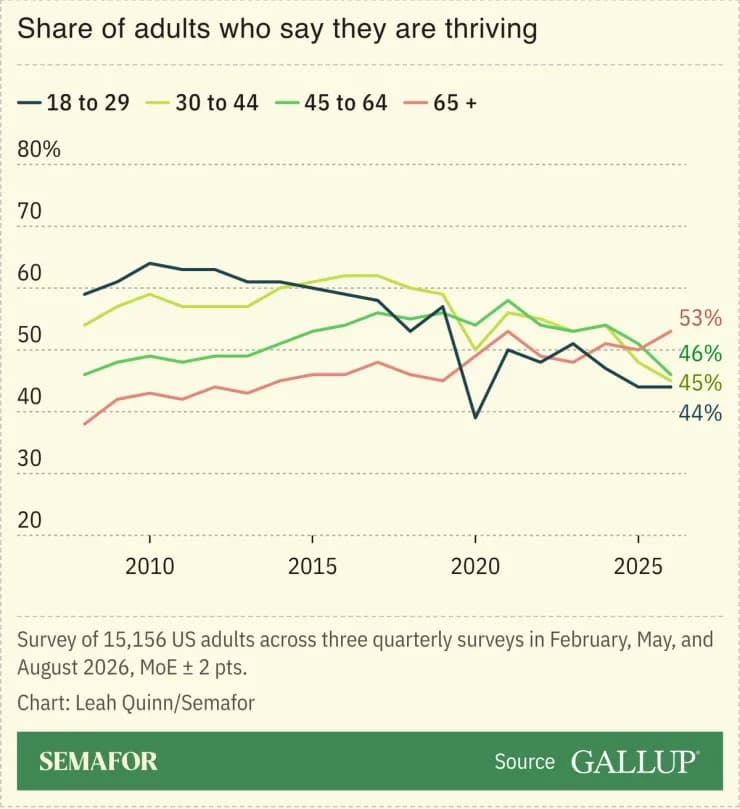
Age and gender differences emerged: the effects were strongest among young adults, particularly young women, while older adults — especially older men — appeared less affected. The researchers could not fully explain these differences, though the pattern held across the countries studied.
Why It Matters
The authors suggest that feeling left behind may heighten stress and negative emotions, undermining thoughtful decision-making, integrity and the pursuit of long-term goals.
Because these associations persist independent of actual income, addressing social comparisons and perceptions of inequality may be important for public mental health and social policy, alongside economic measures.
Limitations
The analysis identifies robust associations but cannot prove causation. The mechanisms behind age and gender differences remain unclear and warrant further research.
Bottom Line
Perceptions of where you stand financially relative to peers — not just your actual earnings — appear to shape happiness, health, relationships and values across countries. Reducing harmful social comparisons could be an overlooked lever for improving well-being.