The latest Gallup poll finds only 44% of adults 18–29 and 45% of adults 30–44 say they are "thriving," both down since the pandemic and with young adults 20 points below the 2010 high. The 45–64 cohort is at 46%, matching the 2008 low, while those 65+ report record-high thriving levels largely tied to economic satisfaction. Analysts point to rising depression and pandemic-era disruptions as key contributors, a trend with implications ahead of the midterm elections.
Gallup: Fewer Young Americans Say They're 'Thriving' As Generational Gaps Widen Ahead Of Midterms
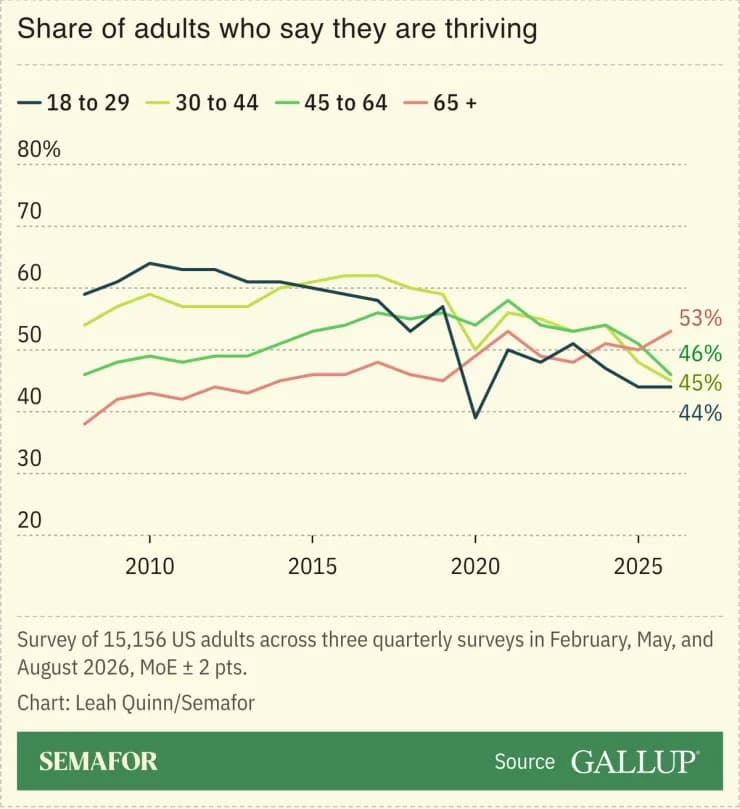
Chart showing share of adults who say they are thriving
New Gallup polling shows a noticeable drop in the share of younger Americans who describe themselves as "thriving," while middle-age adults also report historically low levels of wellbeing. The shifts underscore rising dissatisfaction across key age groups as the nation heads into the midterm elections.
Young Adults. Only 44% of adults ages 18–29 say they are thriving, according to Gallup — a decline of 20 percentage points from the survey’s high in 2010. Adults ages 30–44 are similarly down, with 45% reporting they are thriving; both groups have seen the largest declines since the COVID-19 pandemic.
Mental-Health And Other Factors. Analysts link these drops to rising rates of depression and other stressors affecting mental and emotional wellbeing, including economic uncertainty, social isolation and pandemic-related disruptions.
Middle Age And Older Adults. The share of adults ages 45–64 who say they are thriving stands at 46%, matching the low recorded during the 2008 financial crisis. In sharp contrast, adults 65 and older are more likely than ever to report thriving, a trend that appears largely driven by higher satisfaction with their economic situation and retirement security.
What It Means
These generational contrasts highlight shifting priorities and vulnerabilities across age groups and may influence political attitudes and turnout in the upcoming midterms. Policymakers and community leaders looking to address wellbeing may focus on mental-health resources, economic supports and targeted outreach to younger and middle-aged adults.
Source: Gallup polling, reported by Morgan Chalfant.
Help us improve.