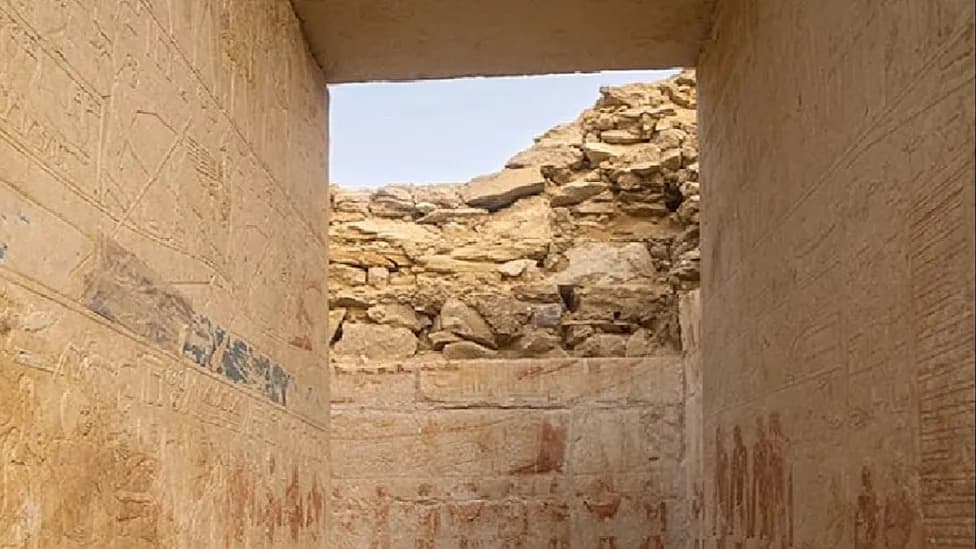
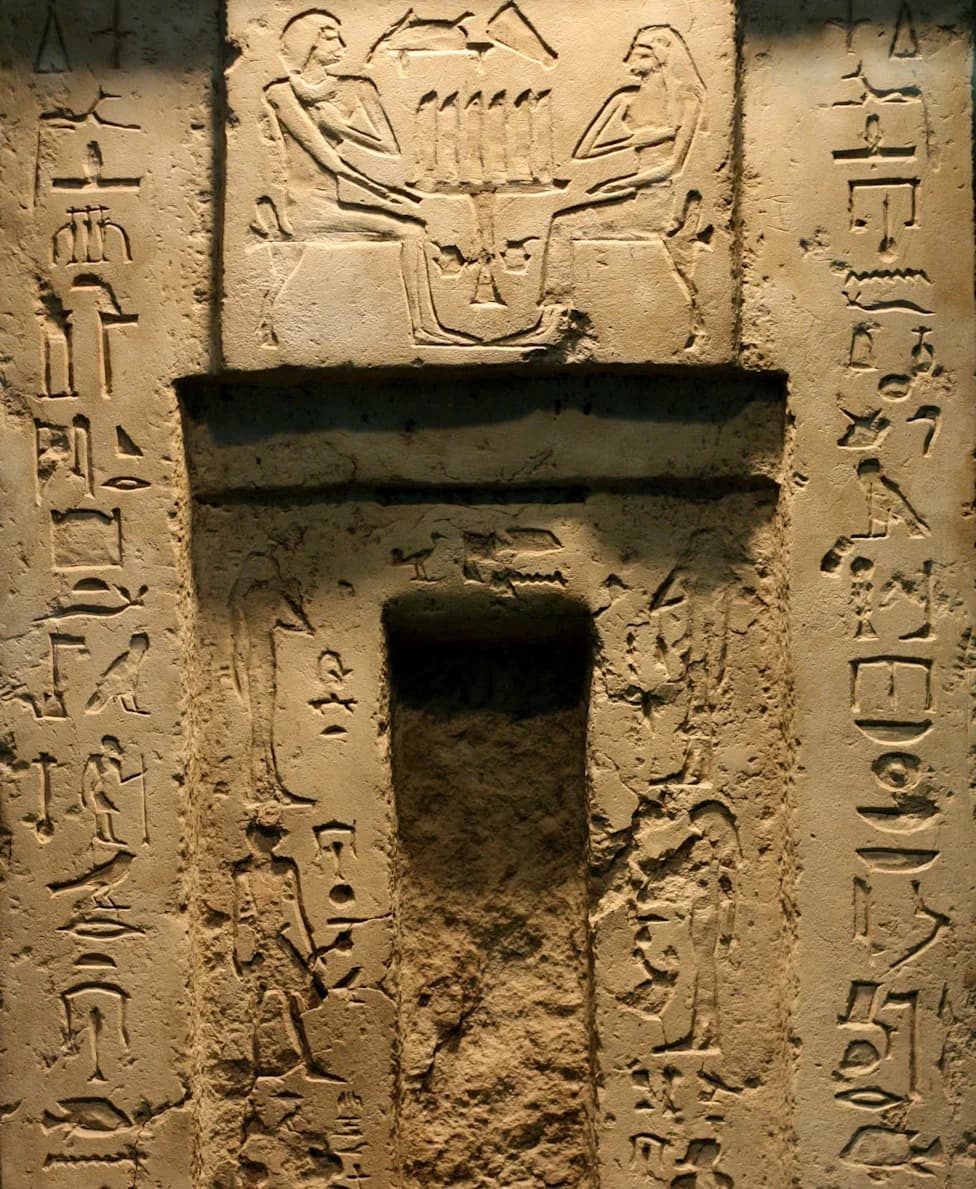
The reexamination of unmarked mummies from Dahshur using modern bioarchaeology shows four princesses—likely daughters of Amenemhat II—displayed skeletal markers of trained fighters. Findings include pronounced upper-body muscle attachments, healed fractures, and functional weapons such as an ornate dagger. Published in Frontiers in Environmental Archaeology, the study challenges the idea that weapons buried with royal women were merely symbolic.
4,000-Year-Old Dahshur Mummies Reveal Four Previously Unknown Warrior Princesses
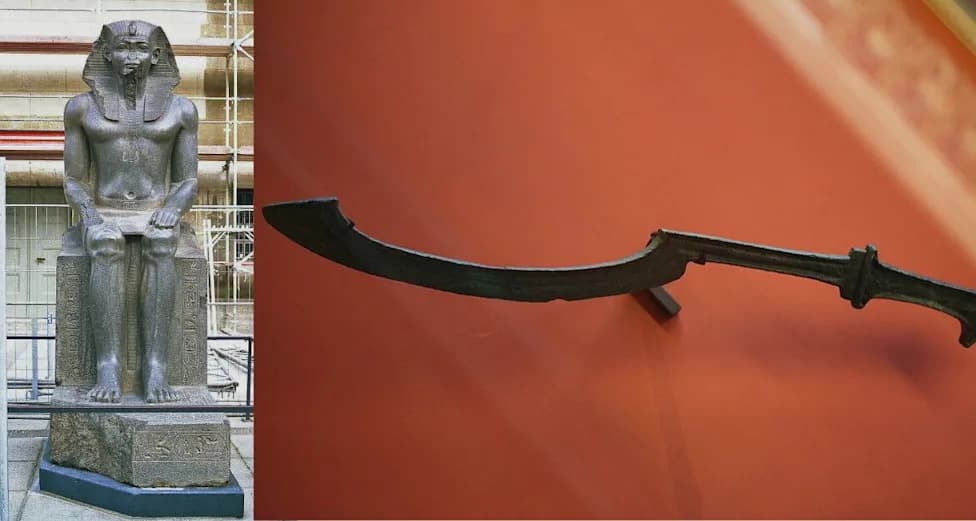
Colossal statue of Amenemhat II at the Pergammon Museum in Berlin, and a khopesh, or ancient Egyptian sword, pictured at the Department of Egyptian Antiquities of the Louvre.
New bioarchaeological analysis of mummies rediscovered in the Egyptian Museum's basement reveals that four royal sisters from Dahshur—likely daughters of 12th Dynasty pharaoh Amenemhat II—were trained fighters rather than passive aristocrats.
Background
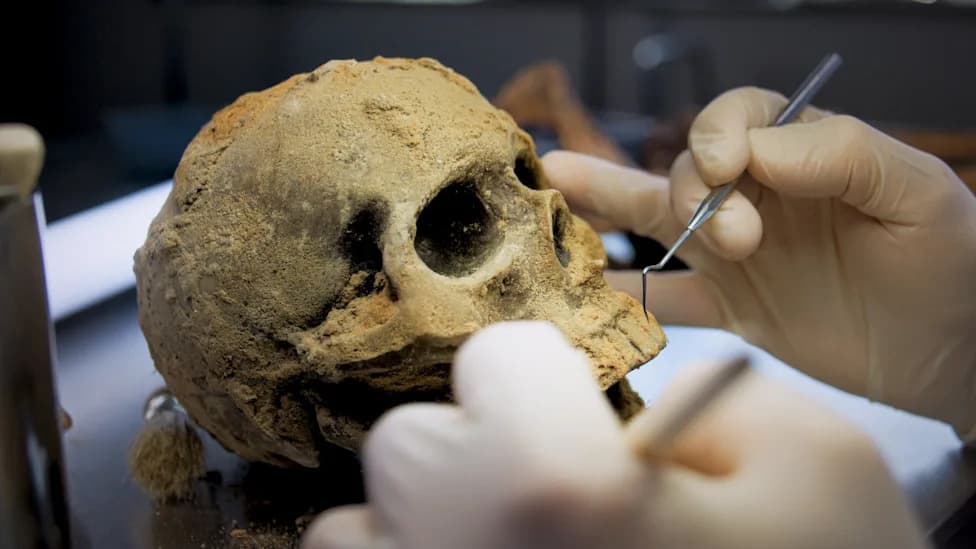
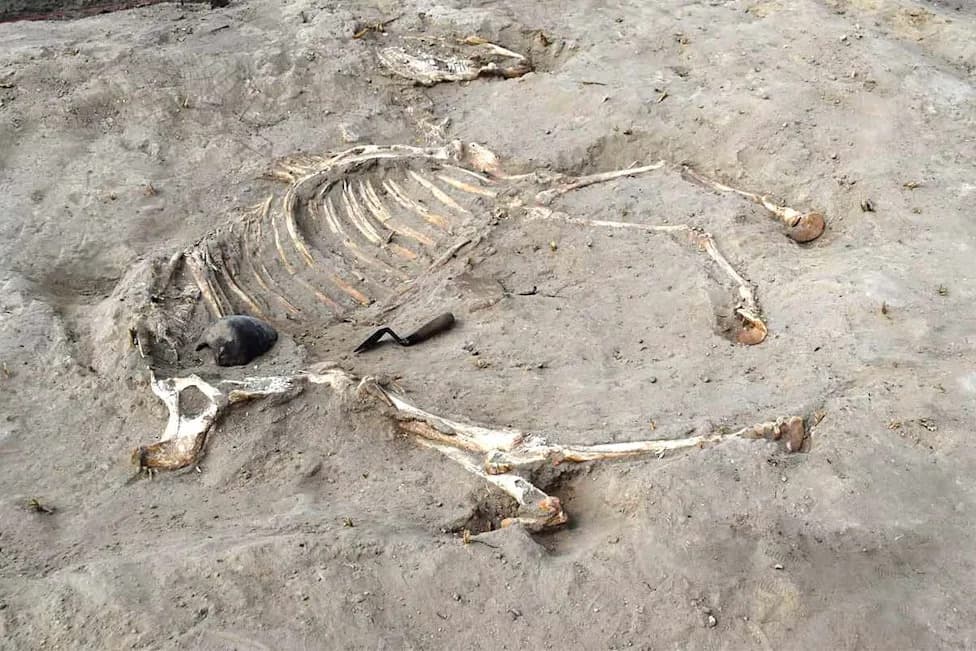
Archaeological material excavated at Dahshur in 1894–1895 was catalogued, but six mummified individuals were later misplaced and stored unmarked in the Egyptian Museum in Cairo. More than a century after their discovery, museum staff located these unlabelled remains and invited a reanalysis using modern techniques.
New Analysis and Findings
A team from the University of Beni-Suef, led by bioarchaeologist Zeinab Hashesh, reexamined four of the mummies using contemporary bioarchaeological methods. The study, published in Frontiers in Environmental Archaeology, attributes the remains to princesses Ita, Khenmet, Itaweret and a likely sister, Sathathormeryt, who are believed to be daughters of Amenemhat II.
Instead of the gracile skeletons expected for sheltered royal women, the researchers found pronounced muscle and ligament attachment sites in the upper bodies—markers consistent with repetitive, high-intensity use of the arms. The pattern of skeletal changes corresponds to activities such as repeatedly drawing heavy bowstrings, steadying impact weapons and gripping sword or dagger handles.
Specific findings include skeletal markers indicating that Princess Itaweret (estimated age at death: 20–34) was a skilled archer and bore healed fractures, while Princess Ita showed robust upper-body attachments consistent with using maces or other heavy weapons; an ornate dagger was interred with her. Together, the evidence points to regular martial training, hunting, or other physically demanding activities rather than purely ceremonial association with weapons.
Significance and Context
These results challenge the longstanding assumption that weapons found in royal burials were merely symbolic grave goods. Instead, the graves reflect lived experience: the weapons appear to be functional implements connected to the women’s activities in life.
While the sample is small and additional study is required to generalize across ancient Egypt, the study broadens our understanding of royal women’s roles in the 12th Dynasty and underscores how modern methods can overturn historical assumptions formed from incomplete evidence.
“History is not fixed in stone.” Rediscoveries like these remind us that reexamining old collections with new tools can transform what we thought we knew about the past.
Help us improve.