Ken Martin, the DNC chair, has faced widespread criticism over poor fundraising and several embarrassing incidents, including a $29,000 theft and a reported HR complaint. Despite the backlash, he is unlikely to be removed before the midterms because the DNC's voting membership — including all 50 state party chairs — supports him and national leaders want to avoid a disruptive leadership fight. The DSCC launched a $40 million program to help state parties amid DNC shortfalls, and the committee approved a 2028 primary calendar that begins in South Carolina.
Why the Embattled DNC Chair Will Probably Stay — For Now
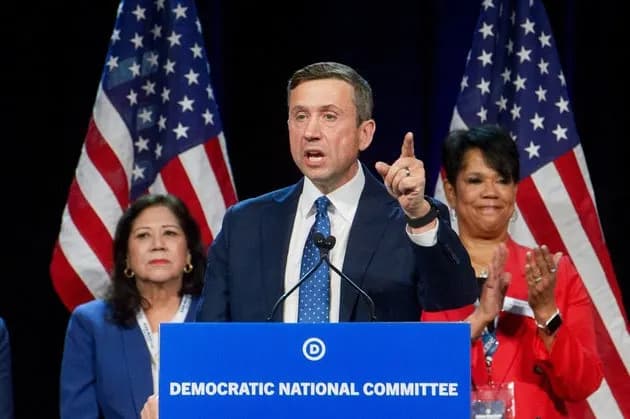
The only Democrats in America who seem happy with DNC Chair Ken Martin's performance are the DNC members who chose him. via Associated Press
Democratic National Committee Chair Ken Martin has drawn sharp criticism across the party for weak fundraising and a string of embarrassing incidents, yet he is likely to remain in his post through the midterms. The DNC is reportedly more than $2 million in debt, the committee lost $29,000 to a scam, and the party even listed its Capitol Hill headquarters as collateral on a loan. Additional reports allege a phone-throwing incident that prompted an HR complaint and internal allegations of plotting against senior staff.
Why Removal Is Unlikely Before The Midterms
Two practical realities help explain why calls for Martin's ouster have not gained steam. First, the DNC's formal voting membership — including all 50 state party chairs — remains largely supportive because much of the incoming money has been quickly routed to state parties. Many state leaders credit those investments with recent special-election wins. Second, the small group of national leaders with the power to force a leadership change view a contested replacement as too disruptive so close to the midterms.
"There are fewer than 100 days before the midterms, and we're going to oust the chair of the DNC, pick a new person to lead it and make the committee functional before people start casting ballots? It would be a fool's errand," a Democratic strategist close to party leaders said on condition of anonymity.
Operational Impacts And Compensating Moves
Major campaigns have largely adjusted to limited DNC support and no longer count on direct transfers to coordinated field operations. For example, the Democratic Senatorial Campaign Committee (DSCC) did not receive its usual DNC transfer this year and instead rolled out a $40 million program to assist state parties directly.
Last week the DNC approved an early-state lineup for the 2028 presidential primary calendar that places South Carolina first, followed by Nevada, New Hampshire, New Mexico, Michigan and Virginia. Martin took a relatively hands-off role on the decision, which helped soothe many constituencies, though New Hampshire officials remain upset about their state’s longstanding first-in-the-nation claim.
Outlook And Stakes
Critics question whether Martin has the gravitas to manage complex 2028 fights over debate schedules, donor outreach and primary administration. Supporters point out he was elected to a four-year term in 2025 and will not face immediate reelection after the midterms; they say strong Democratic results in November would cement his position. Opponents worry that a midterm victory would quiet dissent and allow Martin to remain in place through the 2028 presidential nominating process.
Whatever happens, many observers say Martin needs to improve outreach to major donors and shore up relationships with national operatives if he hopes to broaden support beyond the DNC's voting membership.
Help us improve.