The Indian grey hornbill has returned to Gujarat’s Gir after disappearing in the 1950s–60s and has now bred for the fourth consecutive year since reintroduction. About 40 birds were released between 2021 and 2023, and researchers report early signs the population may become self-sustaining. Because hornbills require large, connected forests and serve as major long-distance seed dispersers, their comeback signals improving forest health driven by habitat restoration, monitoring and community engagement.
Indian Grey Hornbills Rebound in Gujarat’s Gir After 60 Years — What Their Return Means
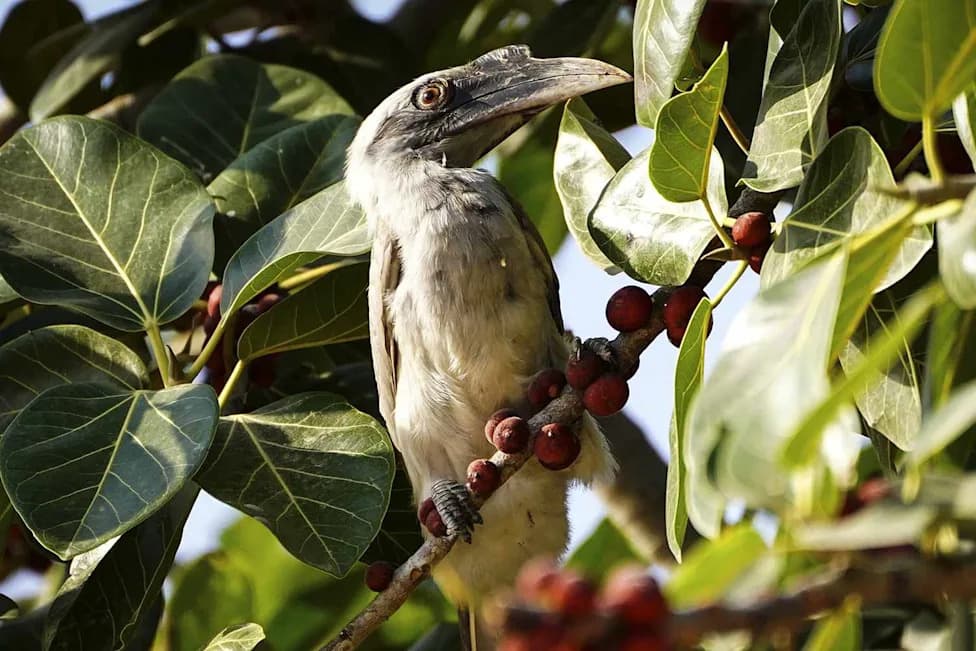
PUSHKAR, INDIA - OCTOBER 15: An Indian Grey Hornbill perches in a tree in Pushkar, India on October 15, 2022. (Photo by Stringer/Anadolu Agency via Getty Images)Credit: Stringer/Anadolu Agency via Getty
A rare forest gardener returns: After roughly six decades away, Indian grey hornbills (Ocyceros birostris) have begun breeding again in Gujarat’s Gir landscape following a coordinated reintroduction and habitat-recovery programme.
Conservation teams released about 40 hornbills in phased reintroductions between 2021 and 2023. According to reports from local conservation organisations and media, these birds have bred successfully in Gir for the fourth consecutive year, and researchers now see early signs the population may become self-sustaining.
Why this matters: Hornbills are highly selective about their habitat. They need mature, connected forests with very large native trees that provide deep cavities for nesting, plus a continuous supply of fruiting trees across seasons. Because of these exacting needs, scientists call hornbills an indicator species: their presence signals that a forest still has the structure, diversity and connectivity required to support a broad range of wildlife.
Forest farmers: Hornbills are sometimes called the “farmers of the forest.” Most feed on large fruits such as figs and other big-seeded berries that smaller birds cannot carry. After swallowing fruit, hornbills can transport and deposit seeds several miles away—by dropping or regurgitation—helping new trees establish and sustaining natural forest regeneration. Studies identify hornbills as among the most important long-distance seed dispersers in tropical forests.
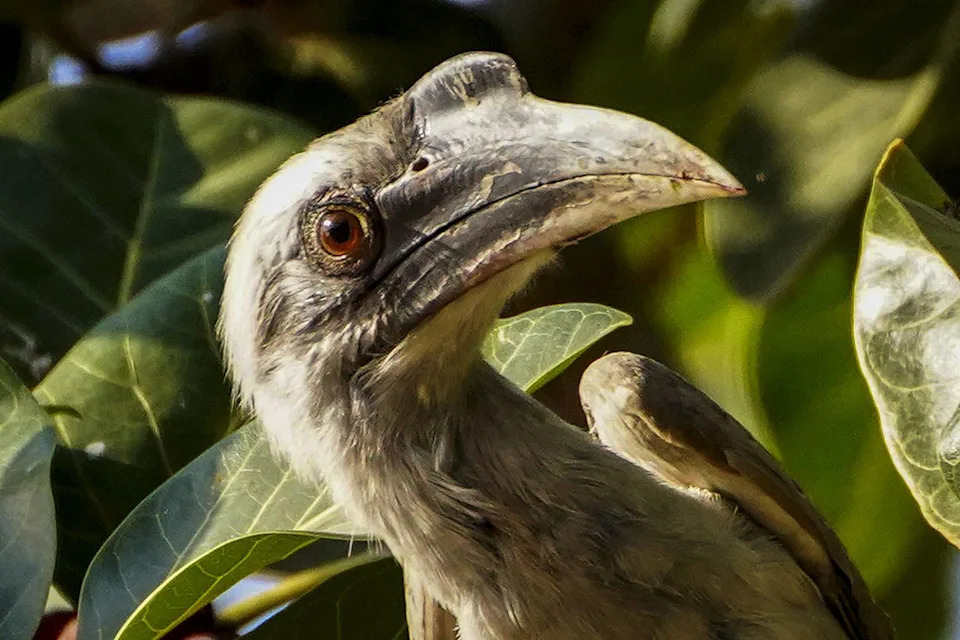
PUSHKAR, INDIA - OCTOBER 15: An Indian Grey Hornbill perches in a tree in Pushkar, India on October 15, 2022. (Photo by Stringer/Anadolu Agency via Getty Images)Credit: Stringer/Anadolu Agency via Getty
Specialised breeding behaviour: Hornbill breeding depends on old trees. The female seals herself inside a tree cavity with a mixture of mud, fruit pulp and droppings, leaving only a narrow slit through which the male feeds her and the chicks. The female remains inside for weeks; if a nesting tree is felled during that time, an entire breeding attempt is lost.
Conservation strategy in Gir: The Gir programme combined multiple measures beyond bird release: habitat restoration, protection of large nesting trees, movement and breeding monitoring, and active engagement with local communities and forest staff. This integrated approach created the conditions that allowed released birds to establish territories and reproduce.
Broader significance: The hornbill comeback demonstrates that restoring mature, connected forest habitat can revive critical ecosystem functions—like long-distance seed dispersal—and that well-planned reintroduction, monitoring and community partnership can succeed even after decades of absence.
Ongoing work: Researchers and forest managers emphasize the need to protect large trees and forest corridors, continue monitoring nesting success and maintain local stewardship to ensure this promising recovery translates into a stable, self-sustaining population.
Sources: conservation reports and regional coverage of the Gir reintroduction programme, including reporting by The Better India and People.
Help us improve.