The short-eared dog—long called the Amazon’s “ghost dog”—appears in 4,635 camera-trap images (about 594 independent encounters) recorded from 2001–2024 across lowland Bolivia and Peru. Camera-trap data show the species is mainly diurnal (most active 6:00 AM–12:00 PM) and prefers intact, upland forest away from rivers, which helps explain its rarity in human observations. Estimated density from the study suggests the species may be more abundant than previously thought, but habitat fragmentation threatens its future and underscores the need to protect large connected forest tracts.
4,635 Camera-Trap Photos Unmask the Amazon’s 'Ghost Dog' — Short-Eared Dog More Common Than Thought
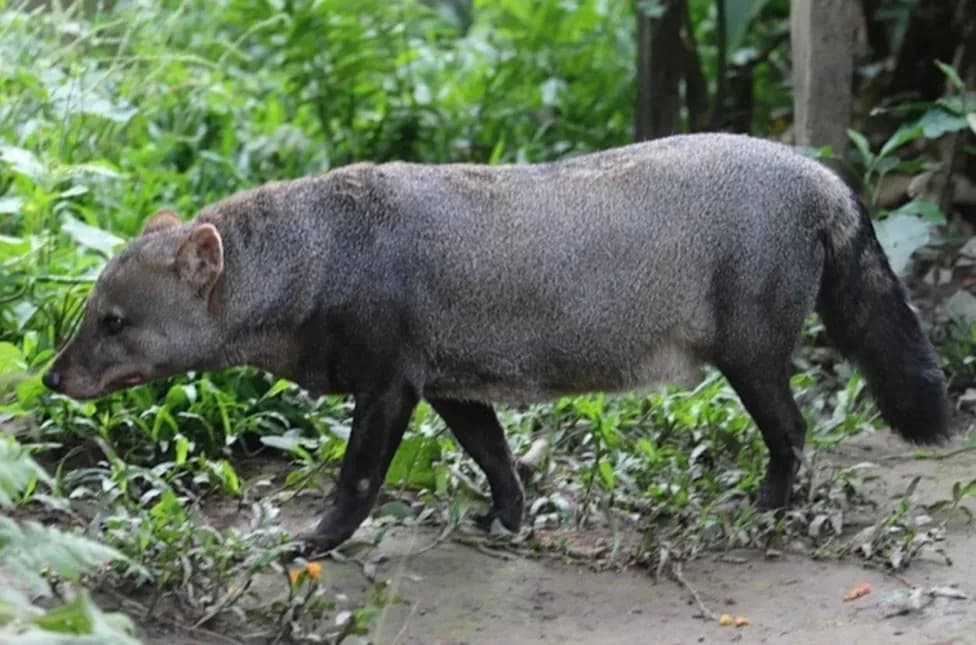
Short-eared dog© Igor de le Vingne, CC BY-SA 4.0 , via Wikimedia Commons
The Amazon basin holds roughly 10% of the planet’s described wildlife, yet many of its species remain poorly known. After 25 years of non-invasive monitoring, researchers have pulled back the veil on one of the rainforest’s most secretive mammals: the short-eared dog, long nicknamed the “ghost dog.”
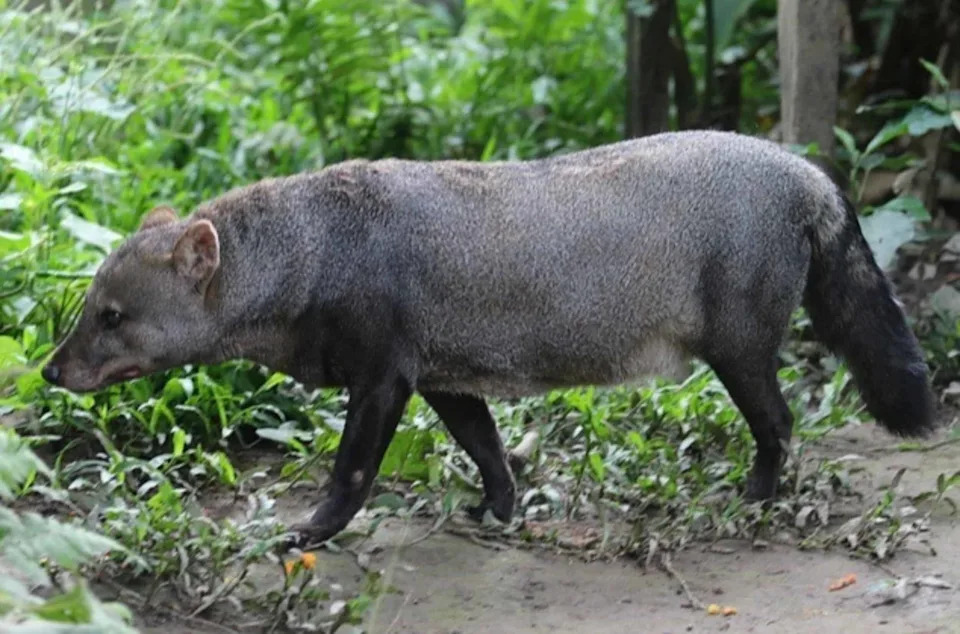
Short-eared dogs have made their presence known over the last 25 years on camera traps.©Igor de le Vingne, CC BY-SA 4.0 , via Wikimedia Commons –Original
Study Overview
A study published in Neotropical Biology and Conservation reports that 34 camera-trap stations placed across lowland Bolivia and Peru between 2001 and 2024 recorded 4,635 photographs of short-eared dogs. Researchers interpret those images as roughly 594 independent encounters with camera traps. The stations were originally baited with scent lures intended to attract jaguars and ocelots; instead, the short-eared dog appeared repeatedly.

Short-eared dogs are rarely seen because their habitat is so dense and untouched by humans.©Mark Green/Shutterstock.com
What the Photos Tell Us
The short-eared dog (Atelocynus microtis) is a small Amazonian canid with a foxlike head, short rounded ears, a bushy tail, short dark fur (brown to gray), and partially webbed feet. Until now, most biological information came from just a few specimens and sparse field observations. The large photographic record collected over two decades provides new insights into its behavior, distribution, and habitat preferences.

Camera-trap images reveal that there are more short-eared dogs than previously anticipated.©Igor de le Vingne, CC BY-SA 4.0 , via Wikimedia Commons –Original
Activity Pattern
Contrary to prior assumptions that the species was nocturnal or crepuscular, camera-trap data show the short-eared dog is mainly active during daylight, with most detections between 6:00 AM and 12:00 PM and the fewest at night.
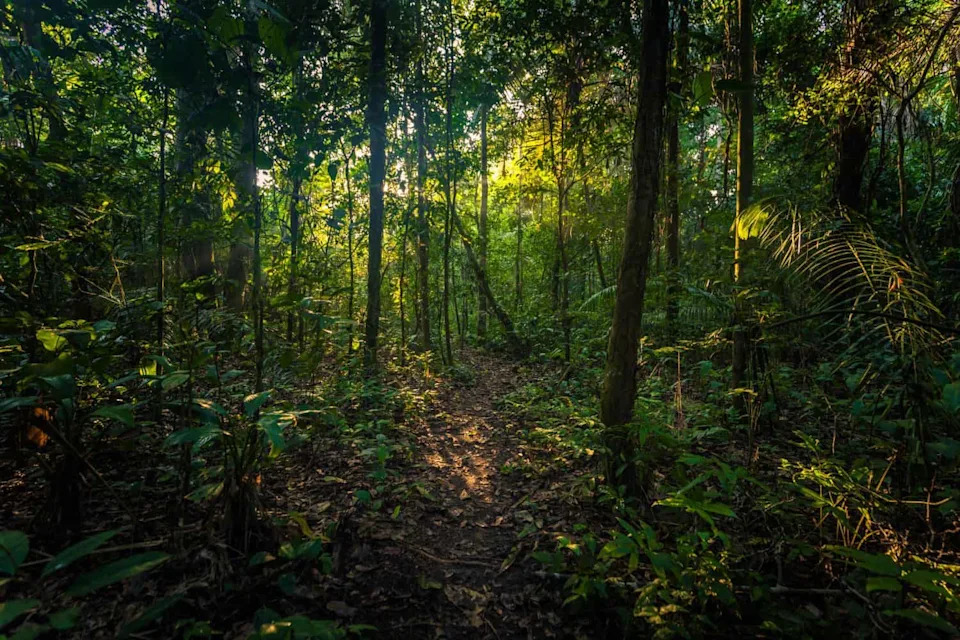
Only healthy, non-fragmented ecosystems are home to short-eared dogs.©RPBaiao/Shutterstock.com
Habitat And Distribution
Short-eared dogs favor intact, upland (non-riparian) Amazonian forests and tend to avoid river corridors. This preference for remote, connected forest explains why they are rarely seen by people and why direct field sightings have been so uncommon.
Population Insights And Limitations
From the camera-trap observations, researchers estimate a sample-area density equivalent to roughly 15 short-eared dogs across about 40 square miles in the surveyed regions. While camera images cannot produce a precise census, this density suggests the species may be more abundant in intact forest tracts than previously believed—potentially outnumbering jaguars in sampled areas, though remaining less common than ocelots.
"The most surprising aspect of the results was that despite being an almost mythical beast, short-eared dogs are much more abundant than we had imagined," said Robert Wallace of the Wildlife Conservation Society, lead author of the study.
Ecological Role And Conservation Implications
Short-eared dogs are omnivores and likely contribute to seed dispersal in lowland forests. They may help spread economically and ecologically important species like Brazil nut trees. As mesopredators, they also help regulate prey populations and contribute to healthy ecosystem function.
Because short-eared dogs require large, well-connected tracts of intact forest and avoid fragmented landscapes, ongoing deforestation and habitat fragmentation pose major threats. Some projections in the study warn of substantial population declines—one estimate cited a possible ~30% reduction by 2027 under continued habitat loss—underscoring the urgency of protecting large connected Amazonian forests.
Takeaway
The 4,635 camera-trap photos collected over 2001–2024 transform our understanding of a once-mythical species: the short-eared dog is elusive because of where it lives, not necessarily because it is vanishingly rare. The new photographic record offers a powerful baseline for future research and a strong argument for conserving intact Amazonian forest to safeguard this species and the ecosystems it signals.
Help us improve.