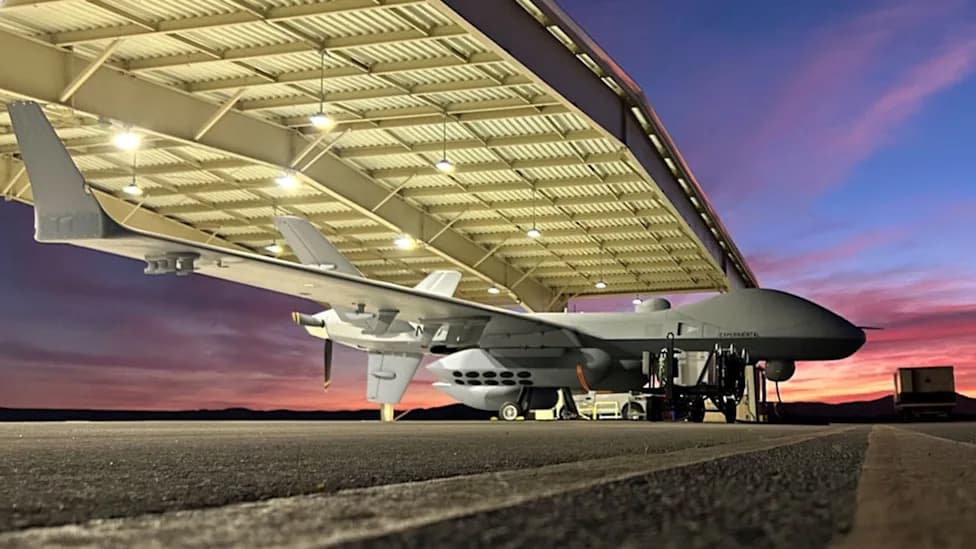
Gen. Kevin Schneider, commander of PACAF, said close U.S.-Australian collaboration on Boeing's MQ-28 Ghost Bat — showcased at Exercise Valiant Shield 2026 — is informing U.S. Collaborative Combat Aircraft (CCA) work. The Experimental Operations Unit at Nellis AFB is integrating lessons into CCA development, and shared command-and-control architectures could allow U.S. pilots to task Australian MQ-28s in the future. Schneider stressed the need for a balanced force mix, Agile Combat Employment concepts and deeper allied interoperability across the Indo-Pacific.
U.S.-Australia Drone Ties Deepen: PACAF Says U.S. Pilots Could Eventually Task Australian MQ-28 'Ghost Bat'
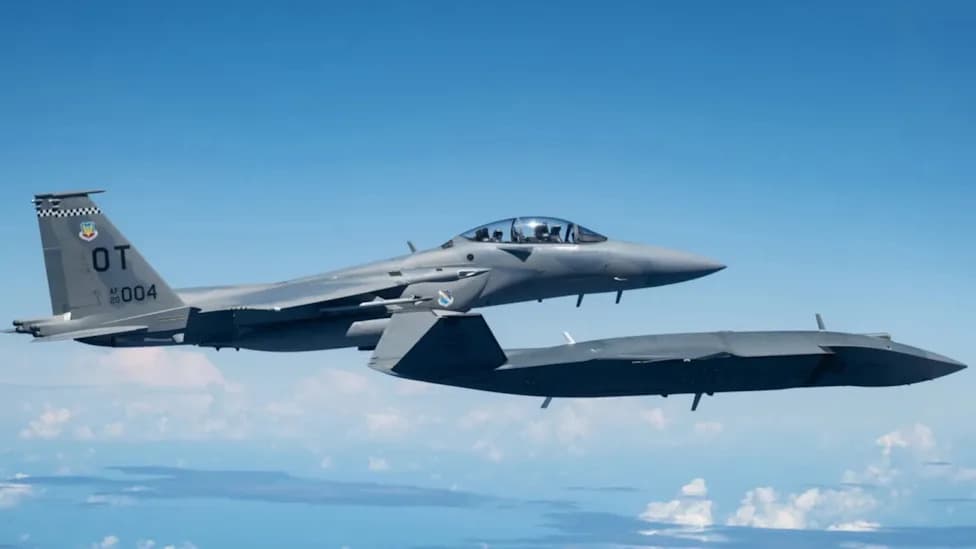
The U.S. Air Force is "threaded in tight" with the work Australians are doing with the MQ-28 Ghost Bat uncrewed aircraft, according to the service's top officer in the Pacific.
The U.S. Air Force and the Royal Australian Air Force (RAAF) are deepening technical and operational ties around Boeing's MQ-28 Ghost Bat, and those links could one day let American personnel task Australian drones, Gen. Kevin Schneider, head of Pacific Air Forces (PACAF), said during a Mitchell Institute event.
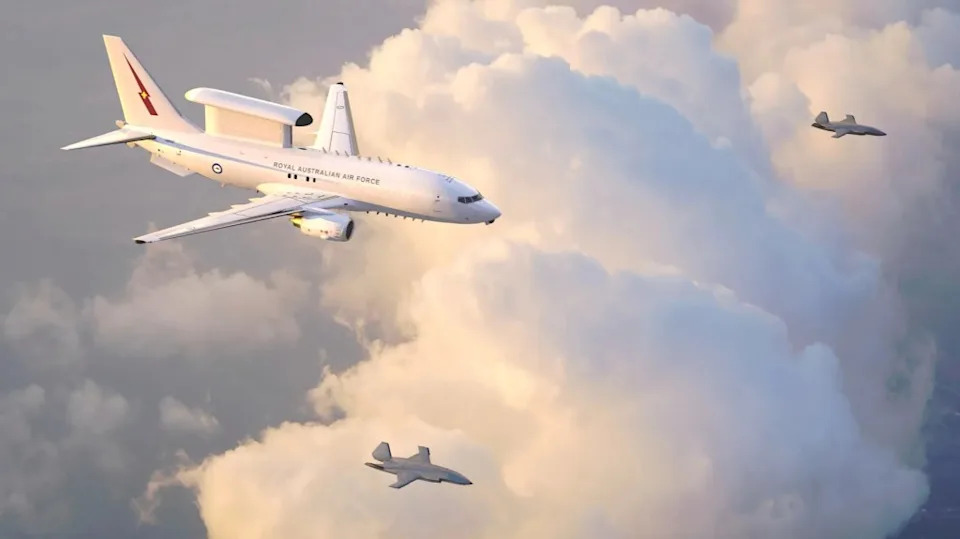
A rendering of a RAAF E-7A Wedgetail flying together with a pair of MQ-28s.Boeing
Valiant Shield and Test Collaboration
Schneider highlighted the MQ-28's participation in Exercise Valiant Shield 2026 as a key example of growing cooperation. He said much of the interaction during the exercise occurred inside the U.S. test community and that the Experimental Operations Unit (EOU) at Nellis Air Force Base — established in 2023 and expanded to squadron size in 2024 — worked closely with Australian developers to share test data and lessons learned.
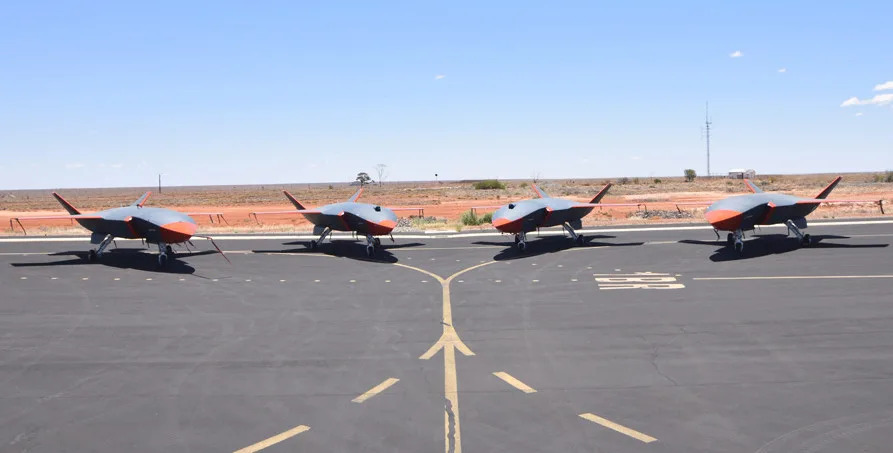
A quartet of RAAF MQ-28s.Boeing
The Experimental Operations Unit And CCA Development
The EOU is charged with developing concepts of operations, tactics, techniques and procedures for Collaborative Combat Aircraft (CCA). The Air Force's initial CCA Increment 1 includes designs such as General Atomics' FQ-42 Dark Merlin and Anduril's FQ-44 Fury. Although the MQ-28 is not formally part of the U.S. CCA program, the service has used a Ghost Bat to support autonomy and related work.
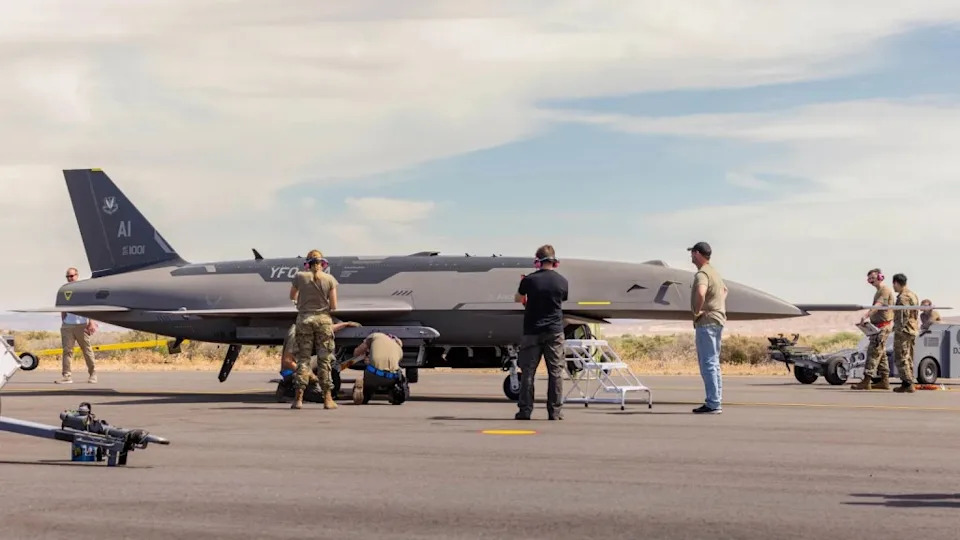
A pre-production YFQ-44A Fury drone seen during a test to demonstrate how CCAs can be deployed and sustained in a contested environment earlier this year.USAF
MQ-28 Status And Interoperability
To date the RAAF has received eight Ghost Bats in a pre-production Block 1 configuration. Boeing is now producing the first Block 2 aircraft — a refinement viewed as a stepping stone toward a substantially redesigned Block 3 that will include a longer main wing, internal weapons bays and other changes. At Valiant Shield the MQ-28 flew alongside an F-15EX Eagle II and other allied aircraft; previous demonstrations have shown airborne control of the MQ-28 from an E-7A Wedgetail airborne early warning and control platform.
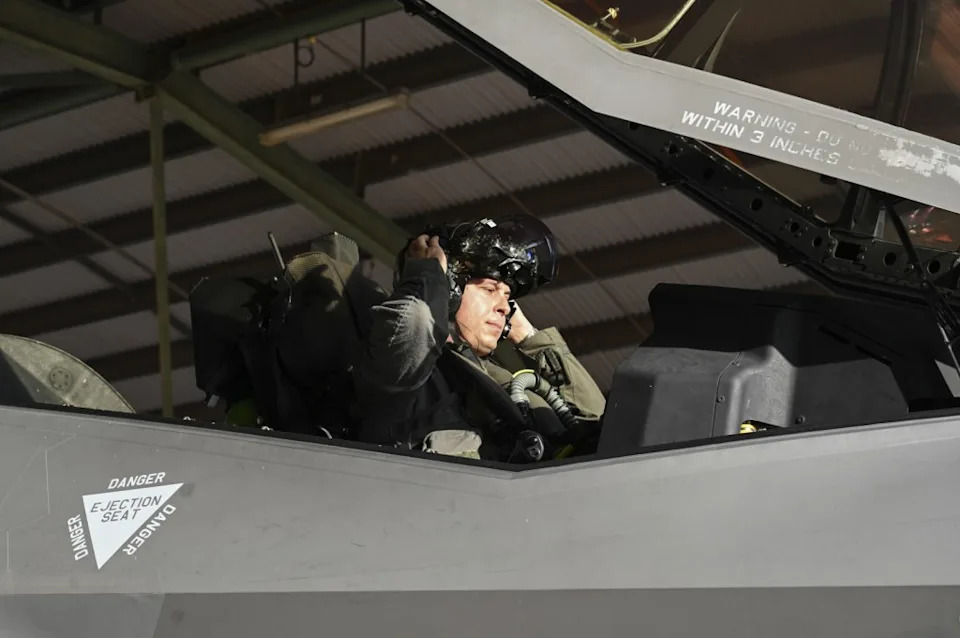
A US Air Force pilot sits in the cockpit of an Australian F-35A Joint Strike Fighter during Exercise Talisman Sabre 25 under the interfly agreement.USAF
"As that continues to play out and evolve, then we can start looking at operator-to-operator arrangements between the RAAF, PACAF and the USAF to define command-and-control architectures, authorities and exactly how we would use this," Schneider said.
Pooling Capacity And Allied Integration
Schneider noted the operational advantages of pooling CCA-like capacity across allies by adopting common command-and-control architectures rather than identical platforms. That approach could deliver tactical flexibility and logistics efficiencies in contested operations. The U.S. already has agreements with the Navy and Marine Corps to enable transfer of CCA control between services, and the Air Force has formalized foreign participation in the CCA program with partners including the Netherlands.
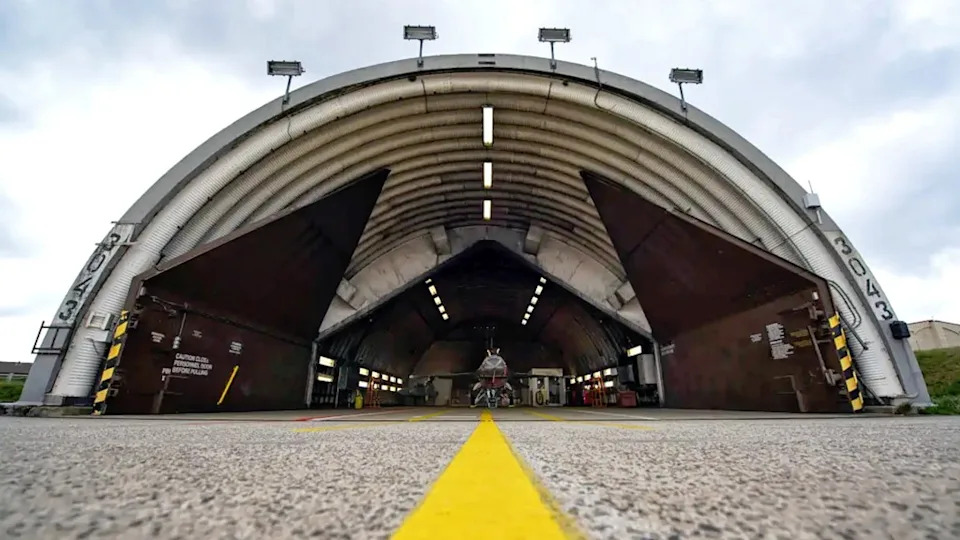
A US Air Force F-16 fighter sits inside a hardened aircraft shelter.USAF
Broader Context: ACE, Lessons From Combat, And Force Mix
Agile Combat Employment (ACE) — rapid, dispersed operations from austere locations — has been built into CCA concepts from the start. Schneider said recent EOU exercises at Creech AFB involving Increment 1 designs tested sustainment and deployment concepts in contested environments. He also pointed to lessons from recent conflicts, including how Ukraine and Israel have generated air power under sustained attack, as informing thinking about dispersal, deception, indications-and-warning, and base hardening.
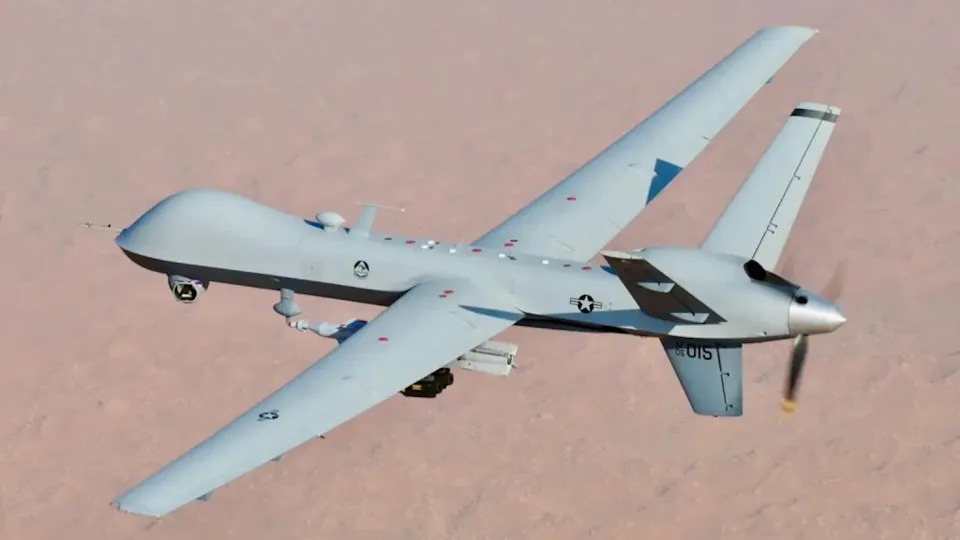
A stock picture of a US Air Force MQ-9 Reaper.USAF
Schneider emphasized the need for a mixed force: high-end, "exquisite" platforms alongside lower-cost, massed options and munitions to give commanders multiple courses of action. He also reiterated that air superiority remains a central and enduring mission for the Air Force, and that organic sensing and decision-making capabilities are critical if long-range data links are degraded.
Related Programs
Separately, the Air Force is pursuing a replacement for the MQ-9 Reaper with an emphasis on lower cost and modularity; that effort is distinct from the CCA program.
Interoperability Examples
Schneider also described deep integration with Australia in other areas. He recalled an "interfly" agreement that allowed U.S. operational F-35 pilots to fly Australian F-35s during Exercise Southern Cross — a step toward greater interchangeability among allies.
Overall, Schneider argued that a mix of capabilities, flexible concepts of operations and close allied cooperation — including interoperability with partner-operated drones like the MQ-28 — will be vital for future operations across the Indo-Pacific.
Contact: [email protected]
Help us improve.