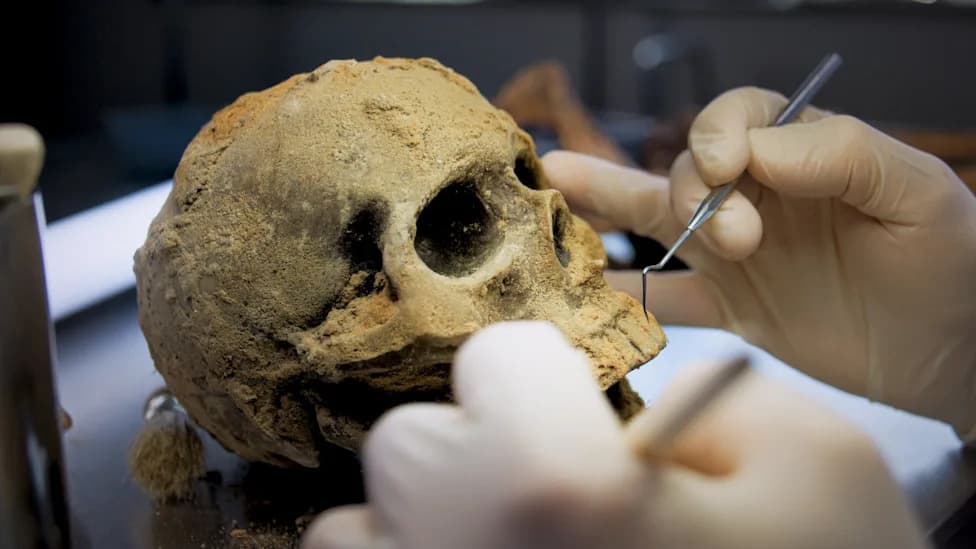
Forensic reanalysis of three Inca mummies reveals diverse ritual deaths and extensive pilgrimages. CT scans detected a 30 mm skull fracture in an eight-year-old boy (Niño de El Plomo) consistent with impact from a star-shaped stone mace. Hair isotope chemistry shows the victims made prolonged, structured journeys—NEP likely travelled ~2,600–2,800 km from Cuzco over ~9 months. The two female mummies show no throat fractures, and carbon isotopes suggest ritual feasting on maize before sacrifice.
Forensic Study Reveals Inca Child Marched Thousands of Kilometres and Killed with Stone Mace in Capacocha Ritual
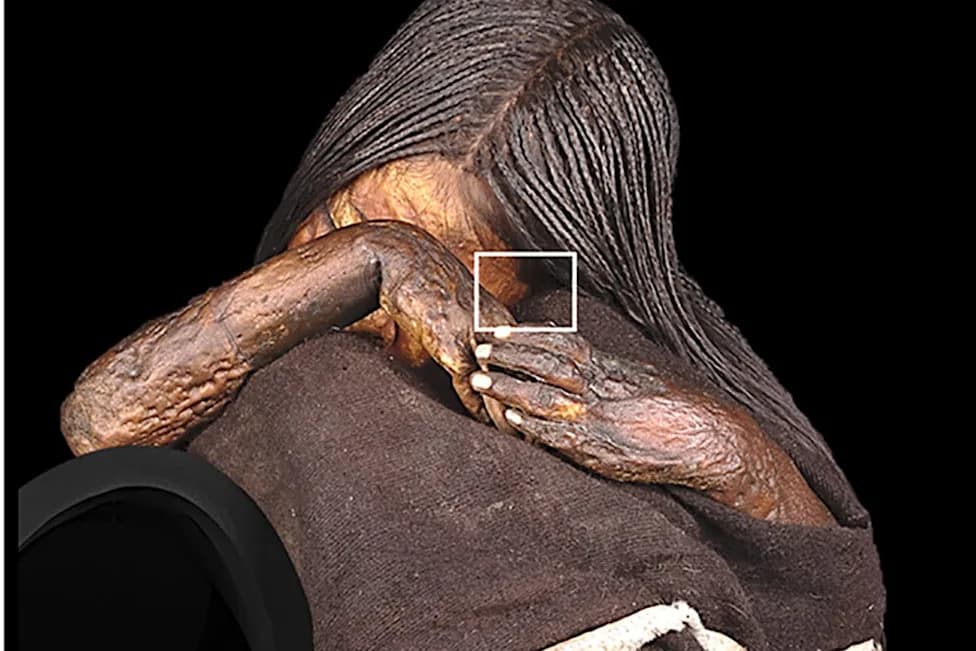
Inca sacrifice victim was marched thousands of miles to his death in gruesome ritual
New forensic evidence overturns earlier accounts of a famous Inca sacrifice, showing prolonged pilgrimages and a violent ritual killing.
Modern forensic methods have shed fresh light on how three naturally preserved Inca mummies — recovered from sites in Chile and now studied with collections from the Museo Nacional de Historia Natural — met their deaths as part of the Capacocha ritual. The research, published in Science Advances (2026), combines high-resolution CT imaging, hair isotope chemistry and computer modelling to reconstruct travel histories and causes of death.
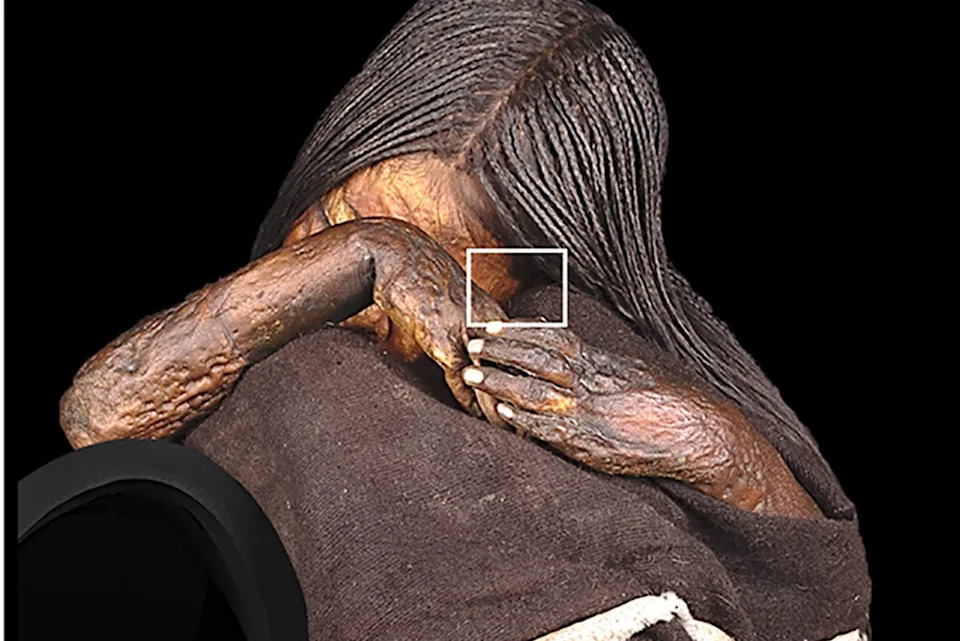
Inca boy Niño de El Plomo marched for thousands of kilometres before he was sacrificed (Science Advances (2026)/Colección Museo Nacional de Historia Natural, Chile)
Skull Trauma Points to Blunt-Force Killing
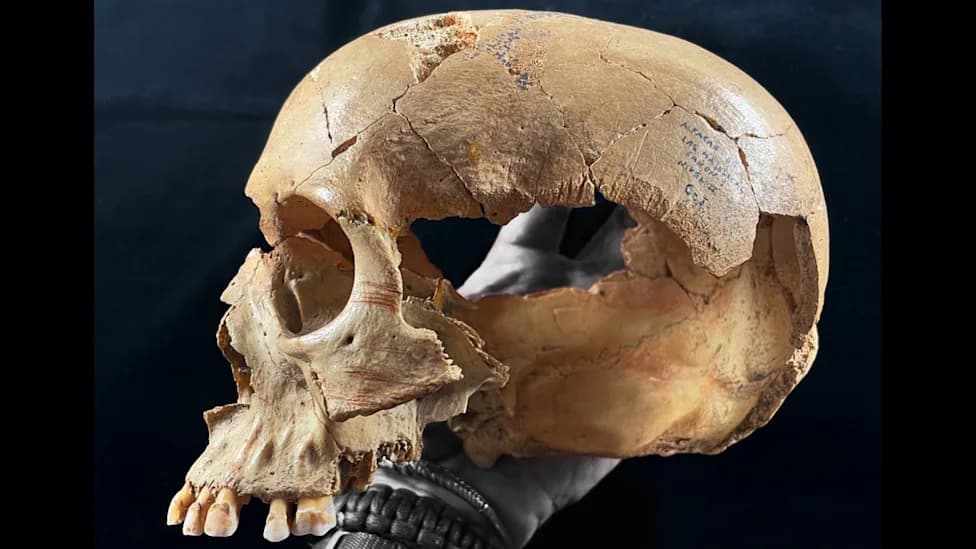
High-resolution CT scans of an eight-year-old boy known as Niño de El Plomo (NEP) revealed a 30 mm fracture to the left frontal bone. Researchers used a computer simulation technique adapted from automobile crash testing to model force and impact patterns. The pattern of skull damage is consistent with a blow from a star-shaped Inca stone mace, supporting a blunt-force traumatic death rather than death from exposure.
Isotopes Trace Long Pilgrimages
Chemical analysis of hair from the boy and the two female mummies shows large shifts in oxygen and hydrogen isotopes, indicating movement through diverse environments. The study estimates that NEP travelled an estimated 2,600–2,800 km from Cuzco to the Maipo–Mapocho valley over roughly nine months. The two females — CES-A (about 9 years old) and CES-B (about 18) — appear to have undertaken comparable long-distance journeys: CES-A an estimated 900–1,200 km over ~5 months and CES-B a similar distance over ~3 months.
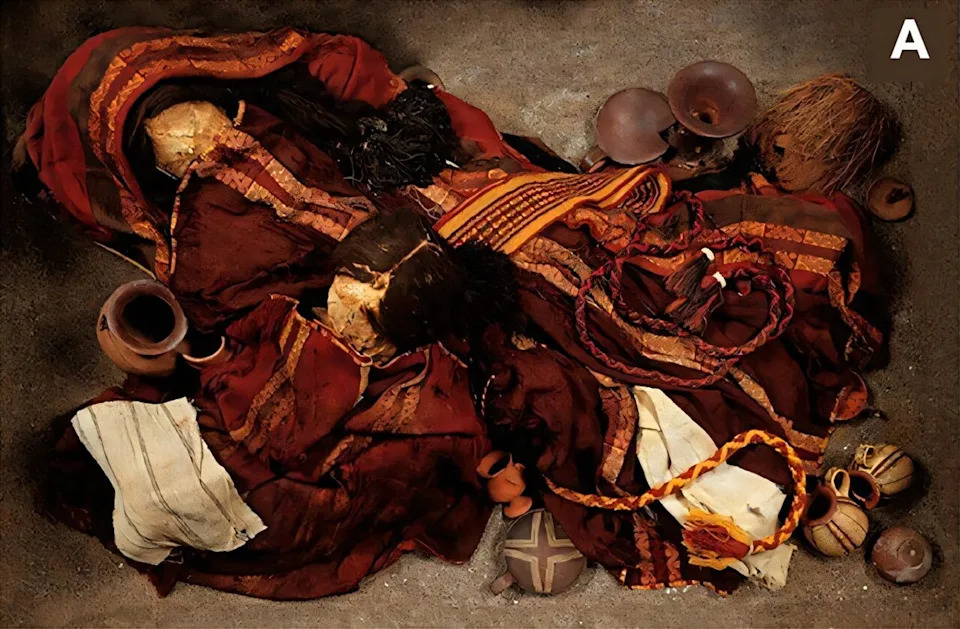
Museum display of CES-A and CES-B at the Museo Regional de Iquique before 2011 (Science Advances (2026))
Female Remains Show Different Endings
Earlier interpretations had suggested the two female mummies were strangled. The new forensic review, however, found no fractures or bony trauma to the hyoid or throat bones. Marks around their necks are better explained by prolonged pressure from clothing or textiles, making deliberate strangulation unlikely. Hair carbon isotopes show late-life spikes consistent with increased maize consumption, likely reflecting ritual feasting before sacrifice.
"Together, these results indicate that multiple mechanisms of ritual death were used across Inca Capacocha sites," the authors write, noting the combination of organized pilgrimage, local provisioning and varied sacrificial practices.
This multidisciplinary study demonstrates how combining imaging, biomechanical modelling and biochemical mobility markers can reveal nuanced, human-scale stories about past ritual practices and the lived journeys of sacrificial pilgrims across the Andes.
Help us improve.