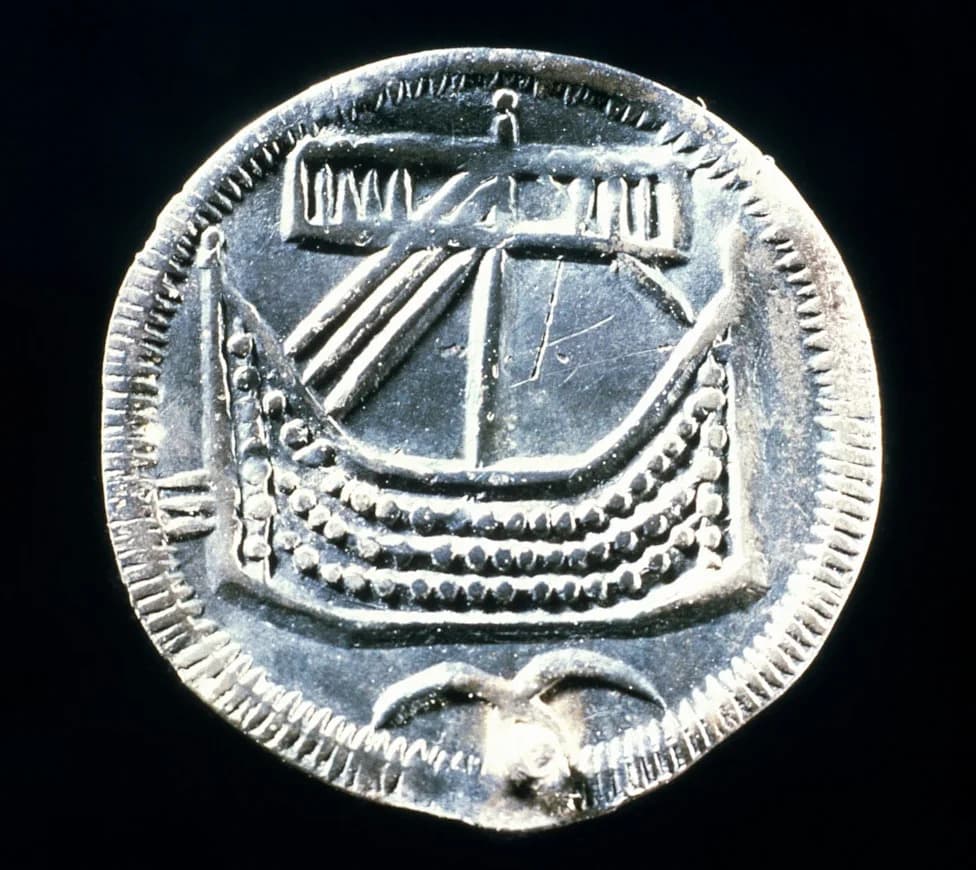
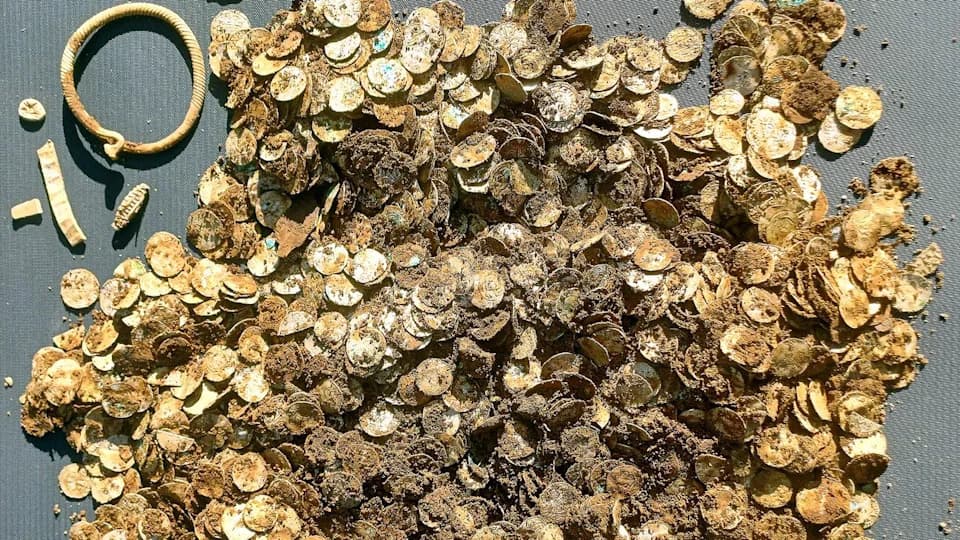
The Goddard coin, discovered in 1957 at Naskeag Point and kept privately until 1974, was later identified as a Norse silver penny dating to King Olaf III (c. 1067–1093 C.E.). Scientific analyses support its Viking‑age origin, but the find lacks documented excavation context because the discoverer did not record his dig, opening the door to suspicion that the coin might have been planted. Some scholars argue the coin could have reached Maine via indigenous trade networks after originating near Norse settlements in Newfoundland; others treat the circumstances as evidence of a possible hoax. The debate remains unresolved, leaving the penny both unique and controversial.
The Maine Penny: Genuine Viking Treasure or a Carefully Crafted Hoax?
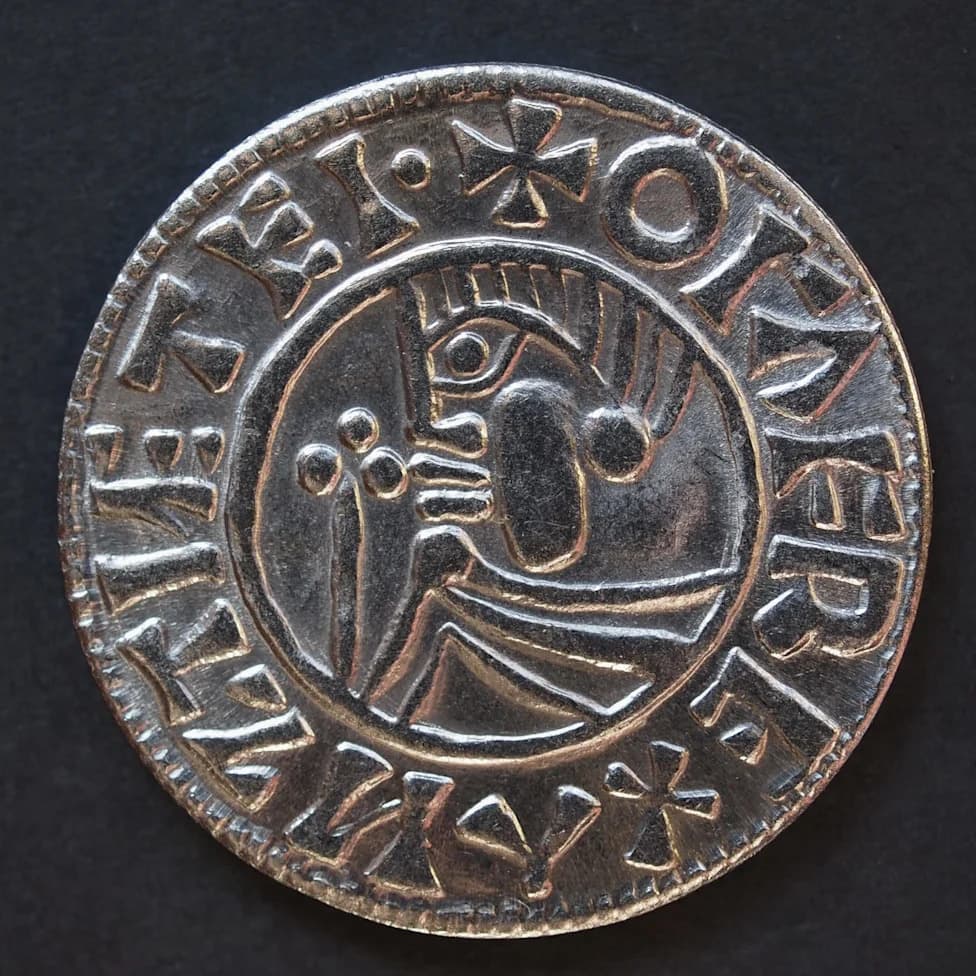
A Norse Coin in Maine Has Experts Divideda1977 - Getty Images
In 1957, amateur archaeologist and coin collector Guy Mellgren dug up a small silver penny five inches beneath the surface at Naskeag Point in Brooklin, Maine. He kept the piece private for 17 years, believing it was an old English coin. After Mellgren's death the coin passed to the Maine State Museum, where scientific testing and numismatic study transformed it into one of North America's most debated artifacts.
Background of the Find
The object—known as the Goddard coin or the Maine Penny—was reclassified in 1978 as a Norse silver penny dating to the reign of King Olaf III (c. 1067–1093 C.E.). Neutron activation analysis in the 1970s linked the metal composition to Norse issues, and later chemical testing suggested the coin had been buried horizontally in a wet deposit for centuries. Typology and perforation indicate the coin had been worn as a pendant rather than circulated as currency.
Why the Coin Matters
If accepted at face value, the coin would represent authenticated Norse material culture on present‑day United States soil roughly 400 years before Columbus—unique among pre‑Columbian finds in the U.S. It therefore touches on broader questions about contact, trade networks, and the movement of objects across North America during the medieval period.
The Case For And Against Authenticity
Proponents cite the coin's metallurgy, typology, burial chemistry, and the 2017 analysis by Norwegian numismatist Svein Gullbekk, who concluded that both the coin and its modern context offer plausible evidence of authenticity. The Maine State Museum and the Smithsonian regard the piece as legitimate.
By contrast, skeptics point to the lack of excavation documentation: Mellgren did not record the find in situ, note associated artifacts, or supply excavation notes that would allow archaeologists to verify context. The American Numismatic Society has expressed concern that "much circumstantial evidence suggests that someone was deliberately trying to manipulate or obfuscate the situation" and has recommended treating the coin with caution.
Alternative Explanations
Archaeologists have found no Norse settlement at the Goddard site; instead they uncovered a large Native American village dated roughly between 1180 and 1235 C.E. That community traded widely—from Pennsylvania to Labrador—so it is plausible the coin arrived via indigenous trade routes after being obtained in Newfoundland or elsewhere. The coin's perforation supports the possibility it was used as an ornament rather than as money, a form of transfer compatible with known practices among Wabanaki peoples.
Conclusion
The Goddard coin remains a singular, provocative object: its Norse origin and medieval date are well supported by scientific and numismatic analysis, but the missing excavation record leaves legitimate doubts about provenance and context. Until new evidence emerges, the coin will continue to divide experts—and to illuminate how a single small object can reshape questions about pre‑Columbian contact in northeastern North America.
Help us improve.