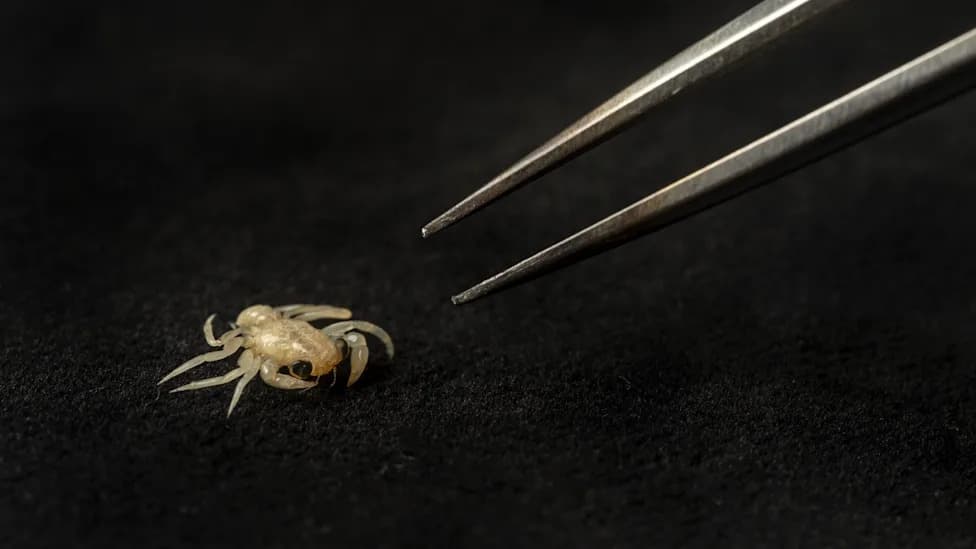
Eucrate liui is a newly described tiny crab discovered under coral rubble in shallow waters off Beihai (Guangxi) and Hainan, China. Measuring about 0.63–0.75 inches (16–19 mm), it differs from the similar Eucrate tripunctata in carapace shape, sharp triangular front teeth, a distinctive frontal notch and raised ridges, and shorter male reproductive organs. DNA barcoding (COI) shows ~8.7% divergence from E. tripunctata, supporting its status as a new species and bringing the genus to nine recognized species.
Hidden Under Rocks: Tiny South China Sea Crab Revealed as New Species, Eucrate liui
© Zhang Xu
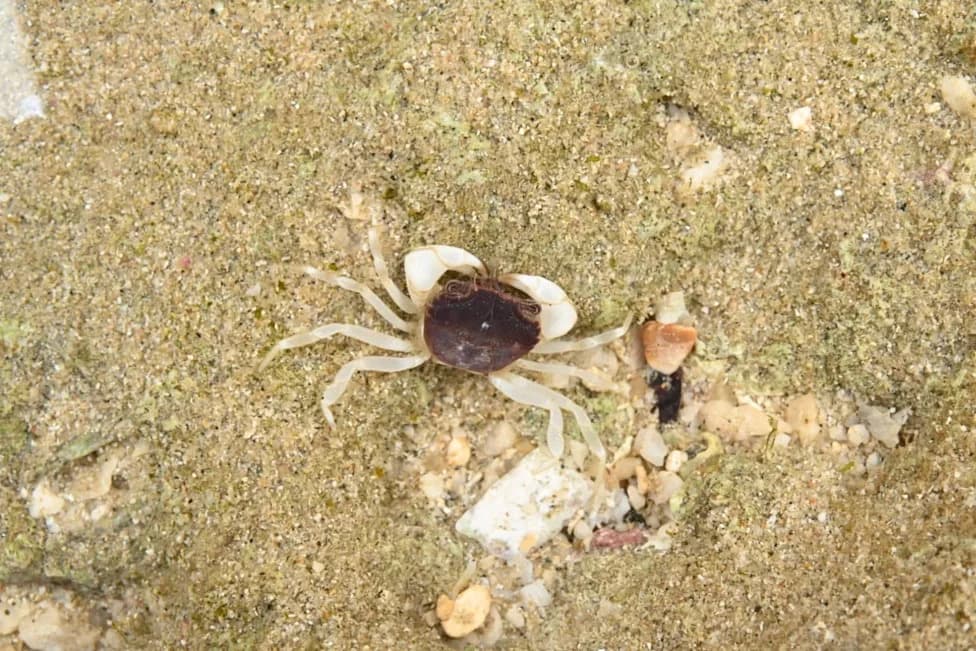
Scientists working in the South China Sea have identified a previously unrecognized tiny crab that long hid in plain sight beneath coastal rubble. Frequently observed in shallow waters, these crabs were repeatedly mistaken for a similar species until careful laboratory study and DNA analysis confirmed they represent a new species: Eucrate liui.
Discovery and Where It Was Found
Research published in the journal ZooKeys describes specimens collected from coral rubble in shallow coastal waters off Beihai (Guangxi) and Hainan, China. Field collections were fixed in 70% ethanol and deposited at the Marine Biological Museum of the Chinese Academy of Sciences (Qingdao), where the detailed examinations took place.
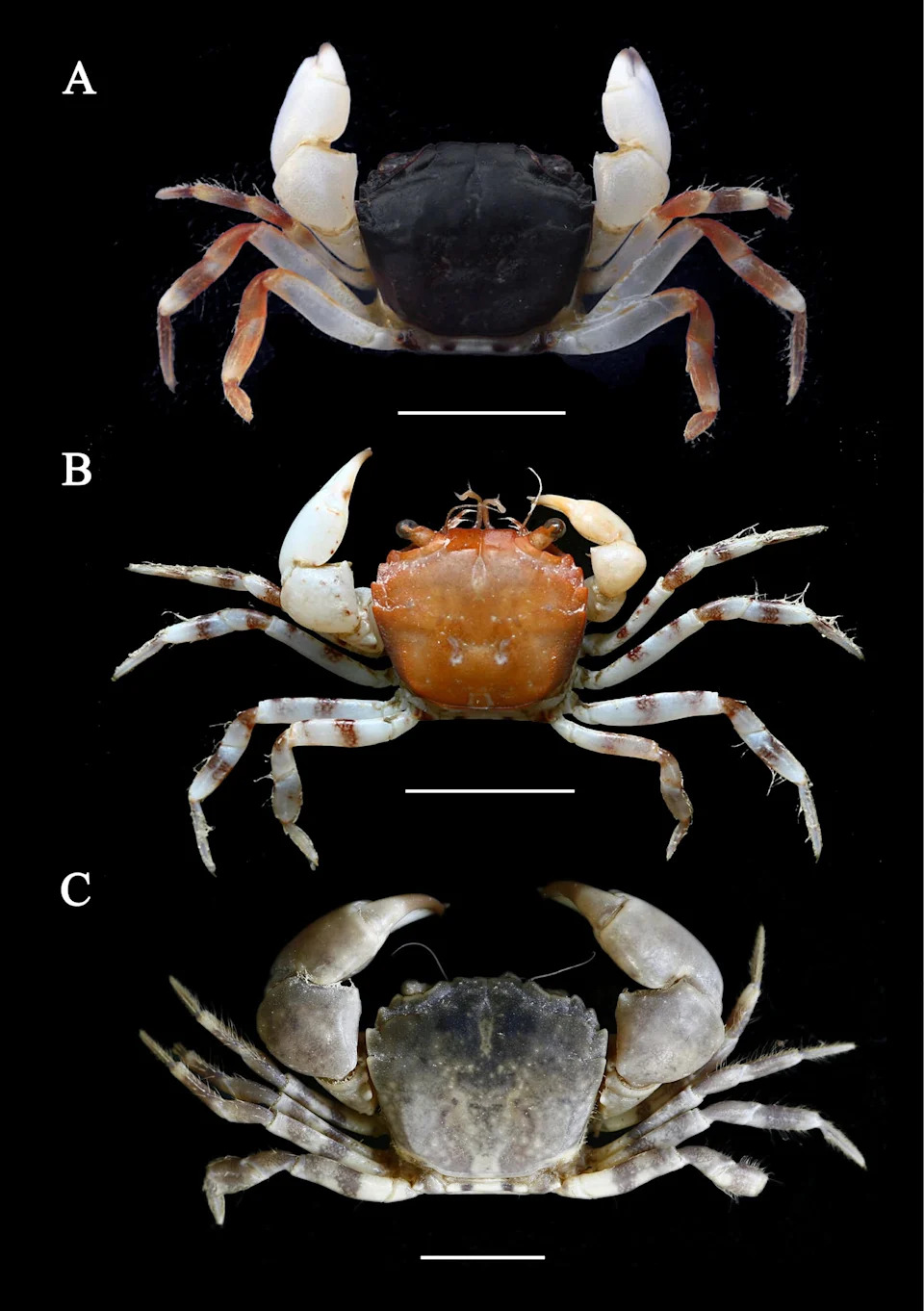
©Ziming Y, Zhongli S, Jiao C, Wei J –Original/License
What the Crabs Look Like
The largest specimen measured between 0.63 and 0.75 inches long (about 16–19 mm). Individuals occur in several color variants, from orange-red to nearly black, and some show a grey-brown marbled pattern. Though tiny, they display distinct morphological features that separate them from their close relatives.
How Scientists Distinguished It
At first the crabs were assumed to be Eucrate tripunctata, a lookalike known from Australia and parts of Southeast Asia. However, careful morphological comparison revealed consistent differences:
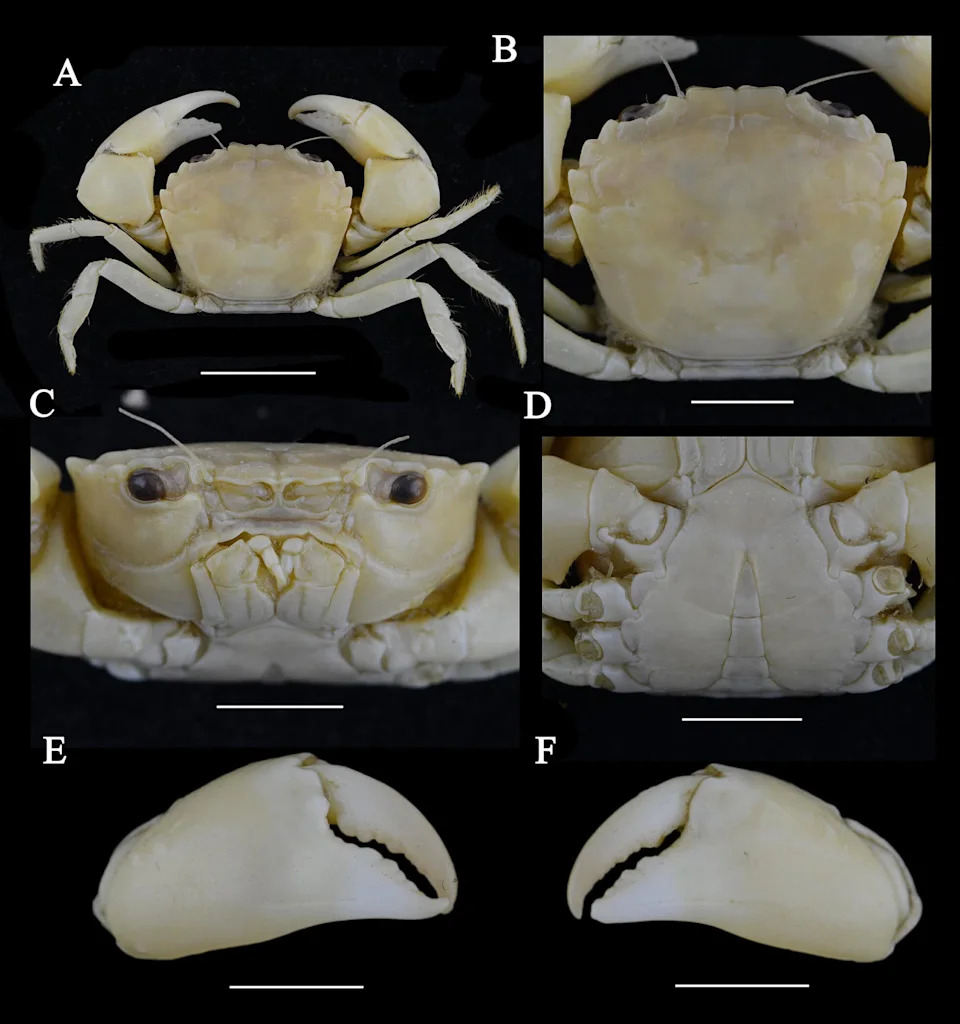
The newly discovered species, as seen under a microscope.A. Overall body;B. Carapace;C. Frontal view;D. Thoracic sternites and abdomen;E. Right cheliped;F. Left cheliped. Scale bars: 10 mm (A); 5 mm (B–F).©Ziming Y, Zhongli S, Jiao C, Wei J –Original/License
- Carapace Shape: E. liui has a relatively flat carapace, while E. tripunctata is more arched.
- Front Teeth: The small teeth along the front edge of the carapace are sharply triangular in E. liui, versus more rounded in E. tripunctata.
- Frontal Notch and Grooves: E. liui shows a distinctive frontal notch and groove plus raised longitudinal ridges on the carapace not seen in the other species.
- Male Reproductive Anatomy: Under the microscope the male gonopods of E. liui are shorter and end in a larger terminal opening—one of the most diagnostic differences.
Genetic Confirmation
To confirm the morphological findings, researchers used DNA barcoding based on the mitochondrial COI marker. Genetic divergence between E. liui and E. tripunctata was about 8.7%, a level of difference that exceeds that separating some well-studied marine species such as certain snapping and mantis shrimps. Combining morphology and genetics gave the team confidence to describe the crab as a new species.
Taxonomic and Ecological Notes
With the addition of Eucrate liui, the genus Eucrate now comprises nine recognized species. The survey that produced these specimens also recovered true E. tripunctata, confirming that species occurs in the South China Sea as well and extending its known range.
Why This Matters
Although minute and easily overlooked, Eucrate liui illustrates how much biodiversity can remain undocumented even in shallow, nearshore environments. The discovery underscores the value of detailed morphological work combined with genetic tools in uncovering hidden species diversity.
Image credits: Ziming Y, Zhongli S, Jiao C, Wei J.
Help us improve.