Archaeologists led by Yale doctoral student Carlos Flores Manzano excavated a face-down burial in Antiguo Cuscatlán, El Salvador, accompanied by a ceramic sea-turtle vessel. The grave lies beneath ash from the Plan de la Laguna eruption, dated to about 850–830 B.C., placing it in the Middle Preclassic period. Researchers caution that the burial’s meaning is uncertain—previous regional finds have been read as sacrificial, but newer studies suggest cosmological or ritual explanations are also possible. The remains were protected with plaster and will undergo chemical and bioarchaeological analyses over the next year.
Nearly 3,000-Year-Old Face-Down Burial With Sea-Turtle Vessel Unearthed in El Salvador
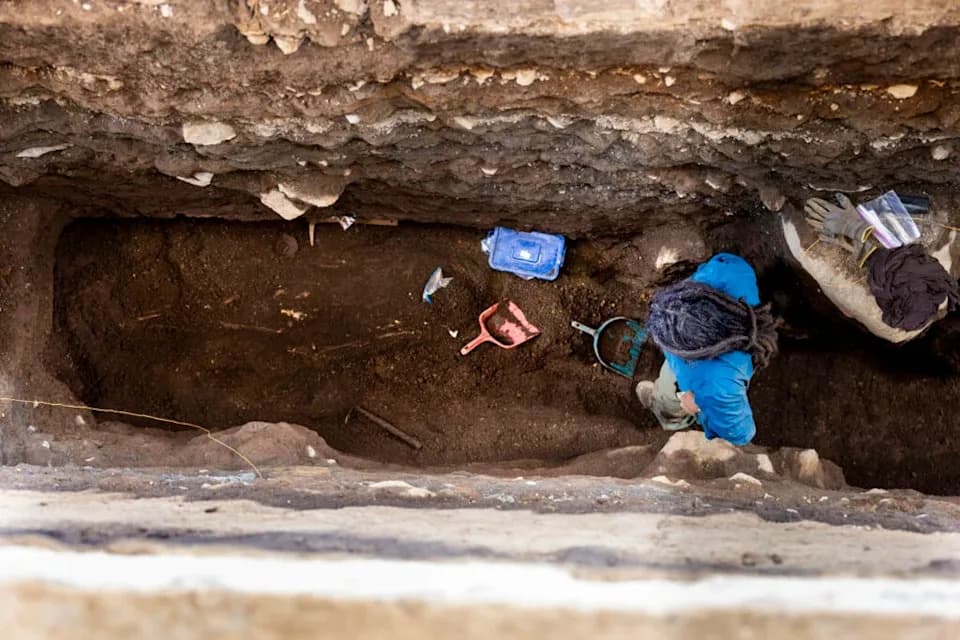
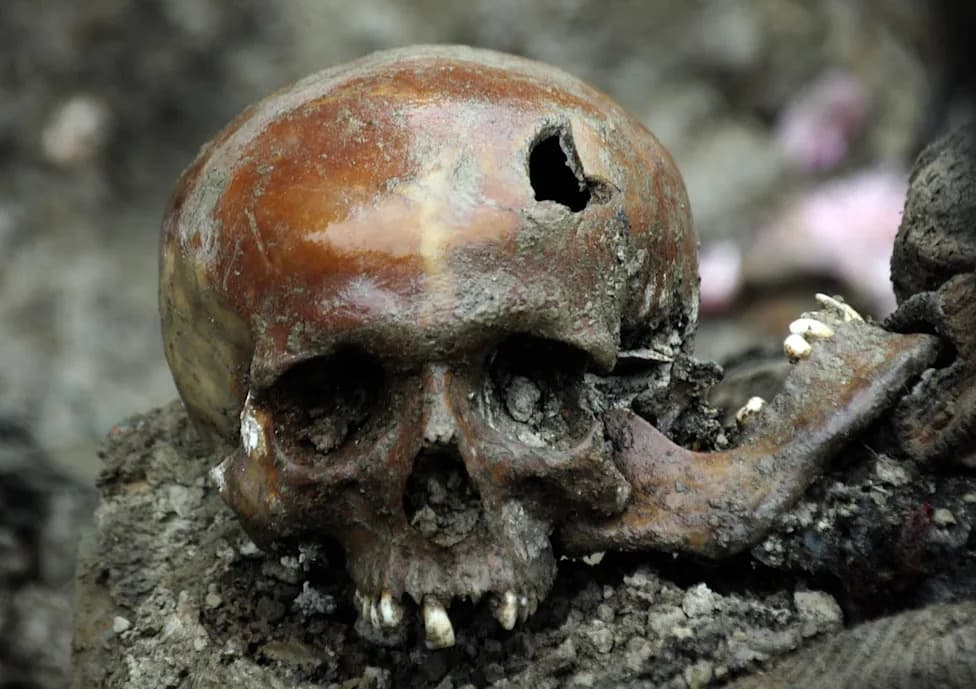
Archaeologist Carlos Flores Manzano excavates the remains of a skeleton buried face down nearly three millennia ago in El Salvador. | Credit: El Salvador Ministry of Culture
Archaeologists in El Salvador have uncovered a rare and remarkably preserved burial: a human skeleton laid face down and accompanied by a ceramic vessel shaped like a sea turtle. The grave was discovered on July 2 in Antiguo Cuscatlán, a suburb of San Salvador, during excavations led by archaeologist and Yale University doctoral student Carlos Flores Manzano, and was announced by the El Salvador Ministry of Culture.
Discovery and Dating
The remains have not yet been directly radiocarbon-dated. However, the skeleton was found beneath a layer of volcanic ash (tephra) attributed to an eruption of the Plan de la Laguna crater. That ash is thought to date to about 850–830 B.C., which places the burial in the Middle Preclassic period of Mesoamerica (roughly 1000–400 B.C.).
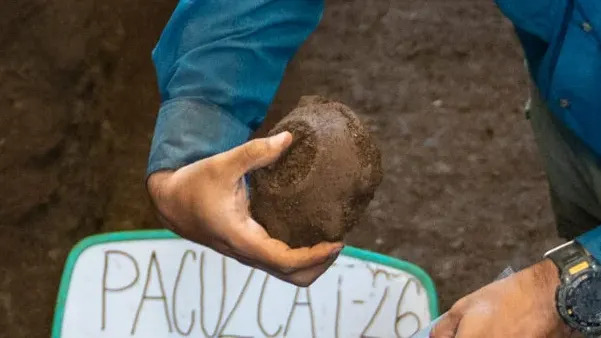
A ceramic vessel shaped like a sea turtle was discovered in the grave. | Credit: El Salvador Ministry of Culture
What Was Found
Excavators recorded a prone (face-down) burial with a small ceramic vessel fashioned to resemble a sea turtle positioned near the individual’s hand. The fragile context was carefully encased in plaster in the field to protect bones and associated artifacts before transport to conservation facilities.
Possible Interpretations
Researchers emphasize that the burial’s meaning remains uncertain. Some past finds in the region have been interpreted as evidence of human sacrifice; for example, in the late 1970s archaeologist William R. Fowler excavated a site at Chalchuapa and reported 33 mostly male skeletons he interpreted as sacrificed war captives because several showed signs consistent with binding.
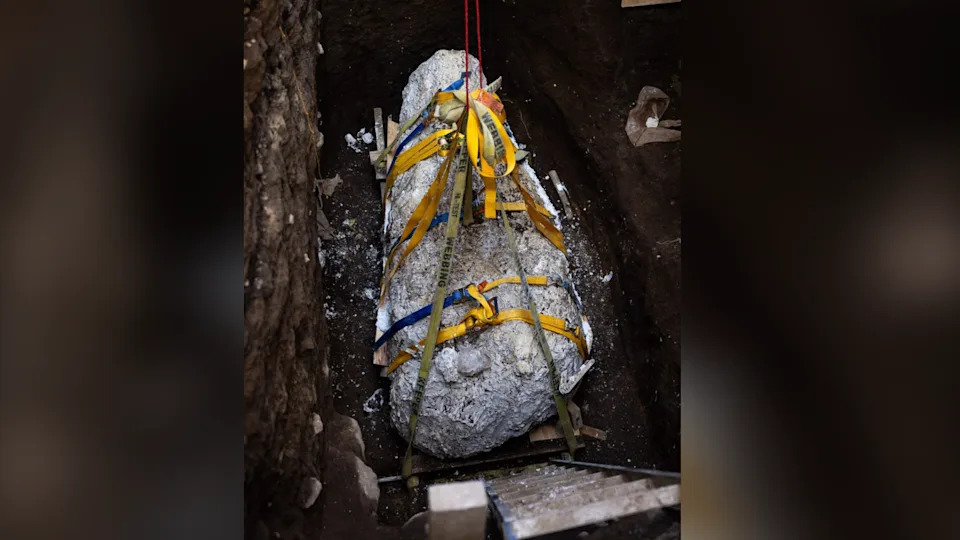
The burial was encased in plaster to prevent damage during recovery. | Credit: El Salvador Ministry of Culture
However, more recent scholarship — including work by Flores Manzano — has questioned a straightforward sacrificial reading. Unusual burial positions can reflect ritual or cosmological beliefs about the underworld rather than proof of violence. The sea-turtle vessel may carry symbolic meaning: scholars have suggested turtles and other motifs could be linked to celestial imagery in later Mesoamerican astronomy (for instance, Orion’s Belt figures in Maya cosmology), but any direct connection for this burial remains speculative.
Conservation and Research Plans
After careful removal, the skeleton will undergo chemical and bioarchaeological analyses to reveal information about the individual’s age, sex, diet, mobility, and possible cause of death. Flores Manzano estimates laboratory and specialist work could take about a year, after which the team will release detailed results and context for the find.
Note: Interpretations are preliminary. Dating, laboratory analyses and broader excavation around the find are needed to build a fuller picture of this burial and its social and ritual significance.
Help us improve.