Researchers at the University of Portsmouth, supported by the UK Intellectual Property Office, are testing whether counterfeit football shirts shed more microplastic fibers and have larger life-cycle environmental impacts than official kits. The study will compare energy use, carbon emissions, fiber release during wear and washing, and disposal outcomes for genuine versus fake shirts. Findings will be published as a government-facing report and academic paper, and shared at a stakeholder workshop; the team will also test which consumer messages best discourage counterfeit purchases.
Do Fake Football Shirts Pollute More Than the Real Thing? UK Study to Find Out
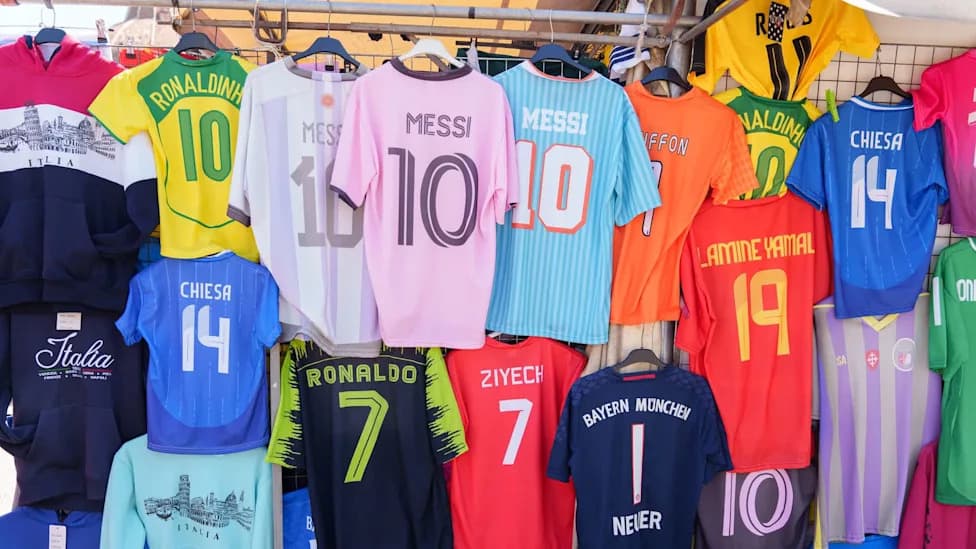
Photo Credit: iStock
Researchers at the University of Portsmouth have launched a study to determine whether counterfeit football shirts cause greater environmental harm than authentic kits—focusing on microplastic shedding, life-cycle carbon footprints, and contributions to textile waste.
What the Study Will Test
The project, funded by the UK Intellectual Property Office, brings together teams from the Revolution Plastics Institute and the School of Criminology and Criminal Justice. Researchers will compare genuine and counterfeit shirts across their full life cycles, measuring energy use and carbon emissions during production, distribution and disposal.
Laboratory tests will quantify the release of microplastic fibers during everyday wear and laundering, and the team will investigate how counterfeit garments fare at end of life—how often they are discarded, whether they enter textile waste streams, and how they contribute to environmental pollution.
Methods and Outputs
The study combines experimental lab work, life-cycle assessment and social-science methods. Results will inform a report for the UK Intellectual Property Office, an academic paper and a stakeholder workshop. The team will also test which consumer messages most effectively discourage purchases of counterfeit goods.
"The trade in counterfeit products is a massive criminal industry, annually worth well over $500 billion," said Dr. David Shepherd of the School of Criminology and Criminal Justice. "This calls for strategies based on robust scientific evidence rather than speculation."
Felicity Webster, a research associate at the Revolution Plastics Institute, adds that synthetic textiles are a major source of microplastic pollution: "Synthetic garments shed tiny plastic fibers during manufacturing, everyday wear and most notably laundering. Many of these fibers can bypass wastewater treatment and accumulate in rivers, soils and coastal environments, where they pose risks to wildlife and potentially to human health."
Why It Matters
The study arrives at a time of heightened demand for fan merchandise, such as around major tournaments like the FIFA World Cup, when both licensed and counterfeit products often flood the market. Cheap, poorly made clothing tends to wear out faster and be discarded sooner, amplifying water contamination, air pollution and waste-management challenges.
By producing independent, evidence-based findings, the researchers hope to give brands, policymakers and environmental groups more credible tools to address counterfeit sales and to shape public messaging grounded in science.
Help us improve.