Cameroon’s President Paul Biya, 93, has been in Switzerland since June 7, and his 48-day absence has revived concerns about a leadership vacuum. Opposition figures and analysts warn that repeated long absences, a delayed cabinet reshuffle and postponed elections have deepened frustration after a contested re-election and violent post-election unrest. Authorities deny any paralysis, while institutional reforms — including a new vice-presidential post — have so far not resolved succession uncertainties.
Power in Limbo: Paul Biya’s Prolonged Absence Sparks Debate Over Cameroon’s Leadership
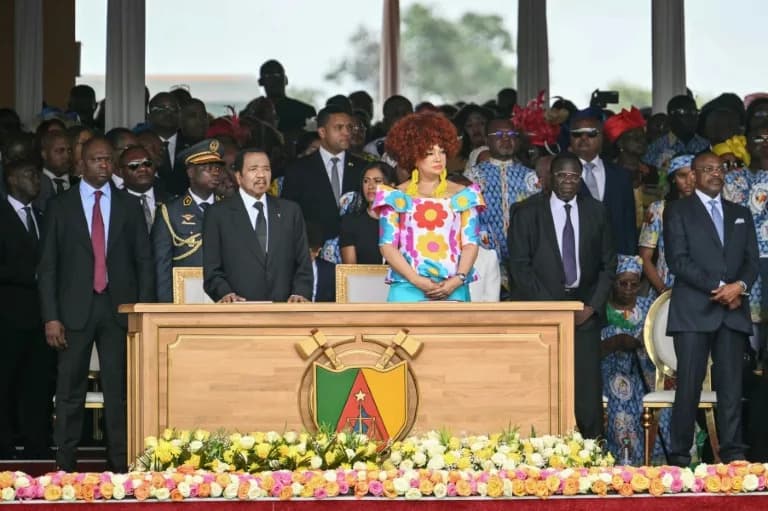
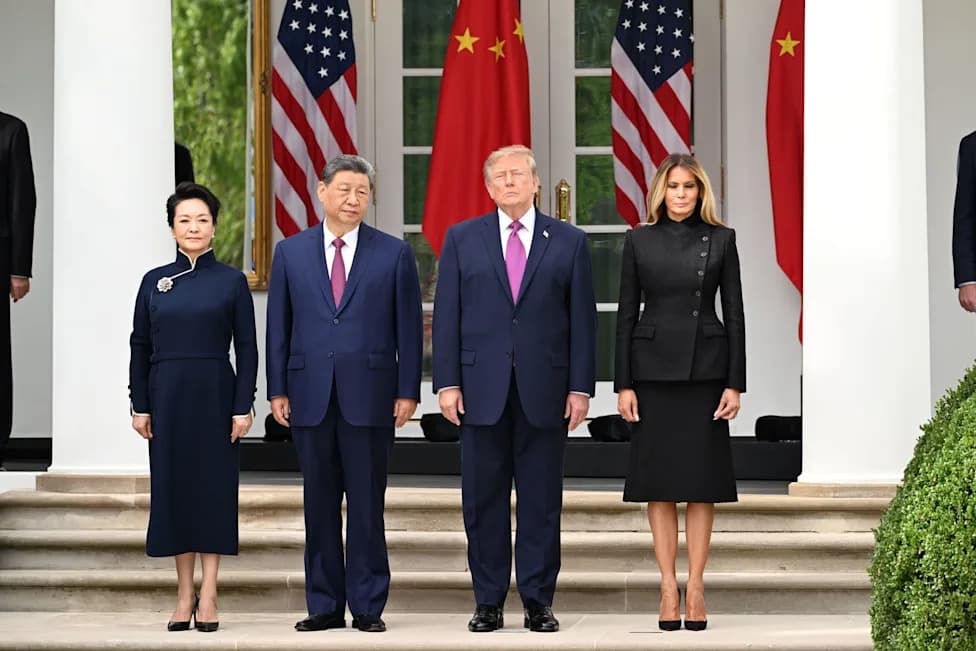
Cameroon's President Paul Biya (CL) and First Lady Chantal Biya (CR) left June 7 for a 'short, private stay in Europe' (Alberto PIZZOLI)
Cameroon’s long-serving president, Paul Biya, has been in Switzerland since departing on June 7 for what an official communiqué described as a “short, private stay in Europe.” At 93, and after more than four decades in power, his extended absence has reignited concerns about government paralysis, succession and infighting at the highest levels of state.
Questions Over Governance
By the time of reporting, Biya had been abroad for 48 days, prompting opposition figures and analysts to warn of a growing institutional vacuum. The Communication Minister, Rene Emmanuel Sadi, denied media reports that the president had been hospitalised, and ruling-party figures insist Biya continues to follow state business through aides.
“Wherever he is, the head of state is meticulously following the files submitted to him by his aides,” said Minister of Higher Education Jacques Fame Ndongo.
Opposition Alarm And Public Frustration
Opposition leaders and some commentators say the repeated long absences — Biya has spent lengthy periods abroad before — have compounded public frustration with a government perceived as slow to reform. The Social Democratic Front (SDF) said the country was running “on autopilot,” while Mamadou Mota of the Cameroon Renaissance Movement (MRC) described the situation as a “glaring institutional vacuum.”
Critics point to several factors feeding discontent: Biya’s contested re-election to an eighth term last October, subsequent demonstrations that were violently repressed, a government acknowledgement of “several dozen” deaths linked to unrest, and repeated postponements of municipal and legislative elections that have effectively extended the terms of sitting officials.
Reforms, Rumours And The Succession Question
Authorities have enacted some institutional changes, replacing the presidents of both parliamentary chambers in March and creating a vice-presidential post in a May constitutional reform. However, no vice-president has yet been named, leaving the president of the senate, Aboubakary Abdoulaye, next in line to lead temporarily if a vacancy arises.
The governance standstill has also fuelled rumours and misinformation. In June, forged documents purporting to be a presidential decree announcing a vice-president were delivered to a public radio station; journalists identified the papers as counterfeit and did not broadcast them.
Political scientists and commentators report increasing signs of factional infighting within Biya’s inner circle, and some analysts point to the growing prominence of First Lady Chantal Biya in state affairs and appointments as part of competing influence networks.
What Comes Next?
Calls have been made for clearer, impartial procedures to determine temporary or permanent incapacity of the head of state, a step urged by opposition and civil-society figures. Until a vice-president is appointed or a definitive institutional response is agreed, uncertainty over leadership and succession is likely to persist in Yaoundé.
Help us improve.