Young Liberians are using TikTok, Facebook, podcasts and digital archives to preserve family histories and cultural traditions disrupted by civil war and migration. Initiatives like Archive Liberia combine research and oral storytelling to reclaim the national narrative while institutions work to improve access to archives. Major challenges include limited internet access, low adult literacy and the spread of misinformation — but many see online platforms as an evolution, not a loss, of Liberia's oral traditions.
From Palava Huts to TikTok: How Young Liberians Are Reclaiming and Preserving Their History
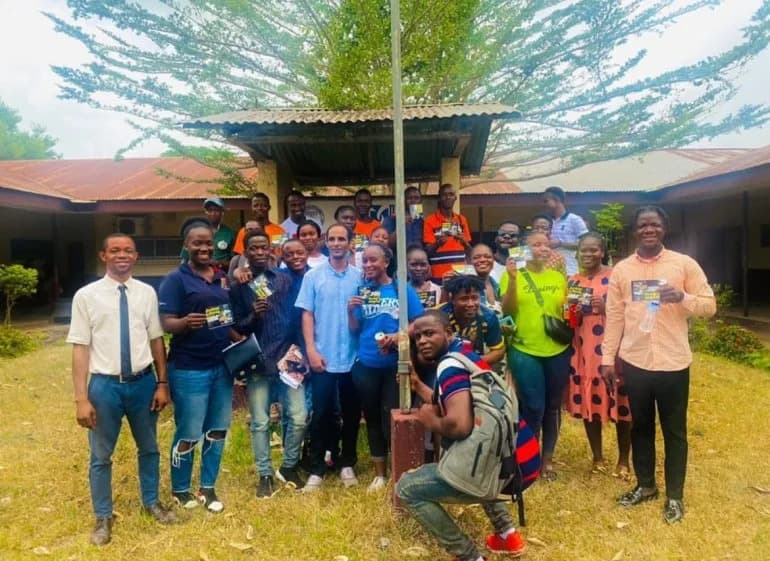
Participants in an Archive Liberia oral history project pose for a group photograph [Bilphena Decontee Yahwon/Al Jazeera]
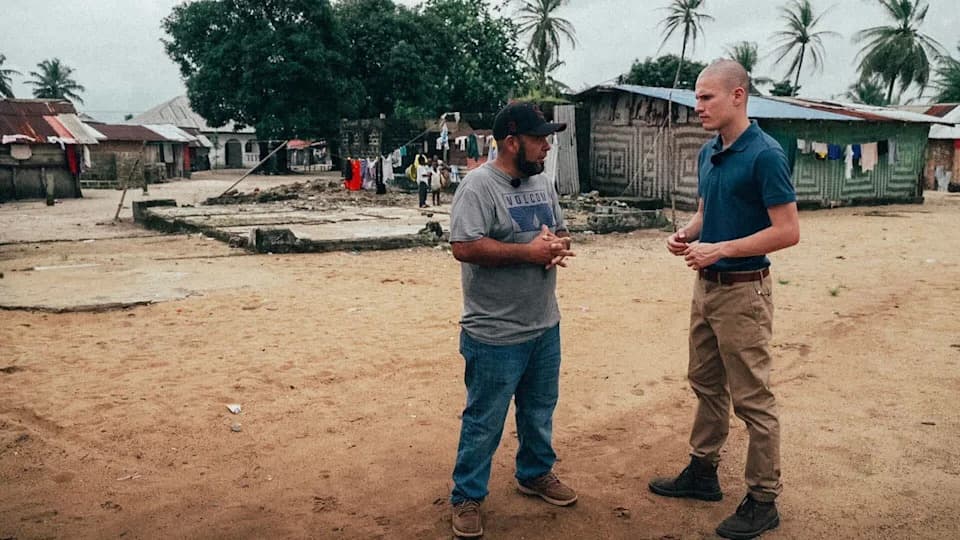
Monrovia, Liberia — For generations, Liberian memory lived in the voices of elders: stories passed during conversations, ceremonies and community gatherings. Today, those same stories are finding new life on digital platforms — TikTok, Facebook, YouTube, podcasts and online archives — as a new generation documents family history, cultural practices and collective memory.
Digital Storytelling Meets Oral Tradition
Young Liberians are not replacing traditional storytellers; they are extending an age-old practice into the digital era. A single photograph, a short video explaining a ritual, or a podcast episode exploring a local event can now reach audiences across cities, countries and the Liberian diaspora in seconds.
Leaders of the Movement
Bilphena Decontee Yahwon, founder of Archive Liberia, is one of the prominent voices in this movement. Archive Liberia combines archival research, oral history and public storytelling to deepen understanding of Liberia's past.
"I didn't originally set out to tell Liberian stories. I wanted to tell my own story. Within my story was also a story of war and migration... I realised I was inside a web of stories, and that is ultimately what brought me to the work I do now," Yahwon told Al Jazeera.
What Was Disrupted
Historically in West Africa, griots preserved collective memory through storytelling and music. Liberia did not develop the formal griot institutions of the Sahel, but elders fulfilled a comparable role. That unbroken chain of transmission was severely disrupted by Liberia's two civil wars (1989–2003), which are estimated to have killed around 250,000 people, displaced hundreds of thousands and weakened intergenerational cultural transmission.
Changing Contexts: Urbanisation and Migration
Urbanisation and internal migration have changed where and how stories are shared. A 2022 report from the Liberia Institute for Statistics and Geo-Information Services found that internal migrants make up 46.7% of the urban population versus 13.6% in rural areas. As young people move away from their communities, the palava hut and village gatherings are less central to daily life.
Opportunities and Challenges Online
Digital platforms offer powerful tools to record traditions, recover forgotten photographs and share private recollections with large audiences. But there are real obstacles: limited internet access (just over one in three Liberians use the internet, according to World Bank data), adult literacy estimated at about 58.6%, and the risk of misinformation.
"Historically, African griots underwent rigorous training, and the recitation of knowledge by young acolytes was fact-checked by their elders," says historian Patrick Burrowes. "Social media is a brave new world... Many users post information without vetting, often to gain followers rather than to safeguard communal knowledge."
Limited literacy and restricted access to archives make verifying historical claims harder for many people. At the same time, creators are challenging long-standing, ahistorical narratives shaped by colonial and external perspectives. Yahwon highlights the need to reframe Liberia's past from an anti-colonial and locally grounded viewpoint.
Institutional Support and the Way Forward
The Liberia Tourism Authority and other institutions are working with historians, cultural groups and content creators to broaden access to archives and support accurate, engaging storytelling. Zuleka Dauda of the Center for Integrated Solutions emphasizes that the solution is not to halt online storytelling but to help creators tell better, evidence-based stories.
"Silence is a far greater threat than conversation. We need to find ways to encourage young Liberians to tell better stories," Dauda told Al Jazeera.
Whether shared beneath a palava hut or uploaded to TikTok, the responsibility remains the same: to preserve Liberia's past for future generations. As Dauda notes, "Our generation doesn't just inherit history. We are creating it and sharing it. The future of Liberian history may not be written first in textbooks. It may be uploaded."
Help us improve.