BAE Systems has released the clearest production photo and a new scale model of the Combat Air Flying Demonstrator. The twin‑engine demonstrator features outward‑canted twin fins, no horizontal tails, DSI intakes and a notably broad, deep centre fuselage. It will use EJ200 turbofans for flight testing and is intended to validate technologies for the sixth‑generation Tempest being developed under GCAP. Officials stress it is a technology demonstrator, not a final Tempest prototype.
Clear Photos and Scale Model Reveal the UK’s Combat Air Flying Demonstrator
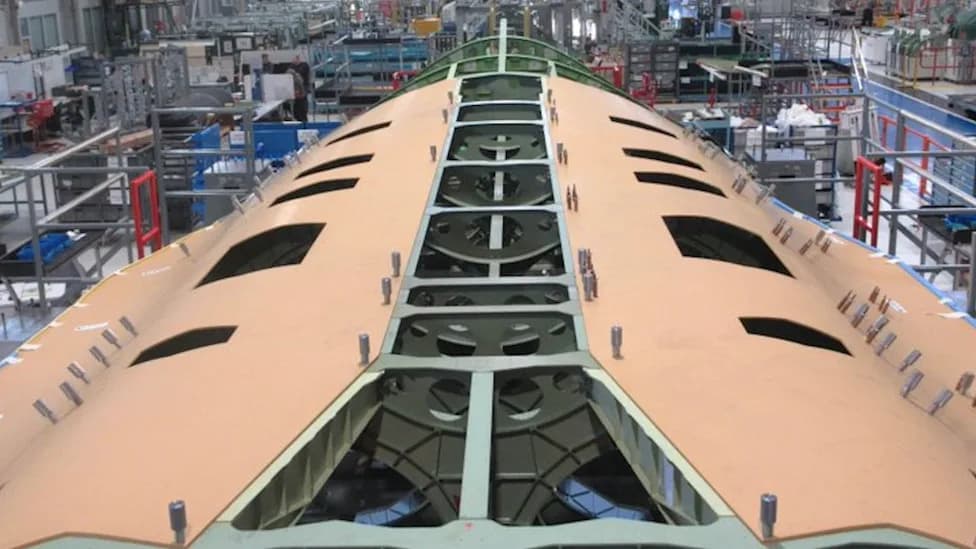
Unlike artist’s renderings, which offer few clues about scale, the factory-floor photograph includes technicians, assembly tooling, work platforms, and production fixtures that immediately provide useful reference points. Even allowing for perspective effects, the demonstrator’s center fuselage appears exceptionally broad and deep, giving the aircraft a physical presence that is difficult to appreciate in computer-generated imagery.
BAE Systems has released the clearest production-line photograph yet of the United Kingdom's Combat Air Flying Demonstrator, accompanied by a new scale model that clarifies key design features and the aircraft's scale.
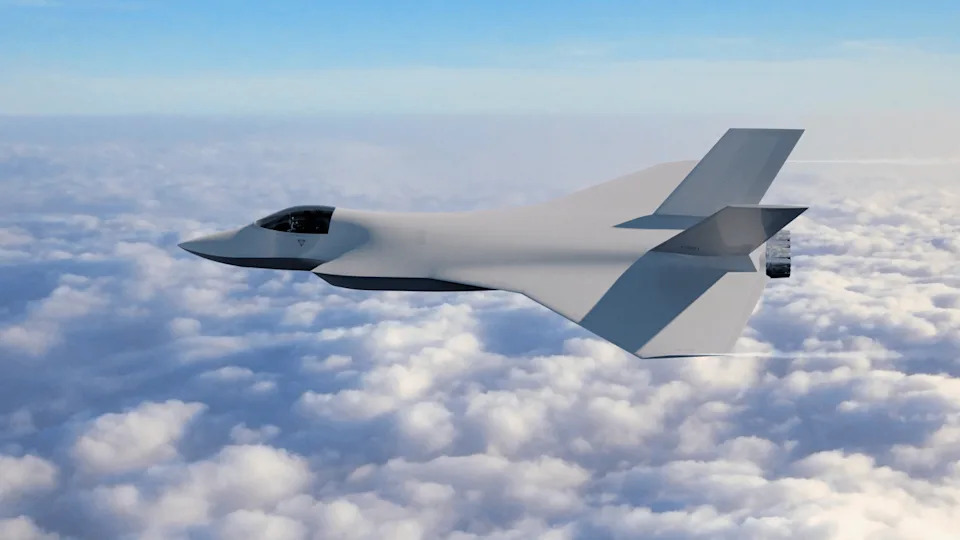
A company rendering of the Combat Air Flying Demonstrator.BAE Systems
The factory image shows the demonstrator's fuselage under assembly at BAE's Samlesbury facility, while wings and fins are being built at Warton. The company expects the demonstrator to fly from Warton before the end of 2027.
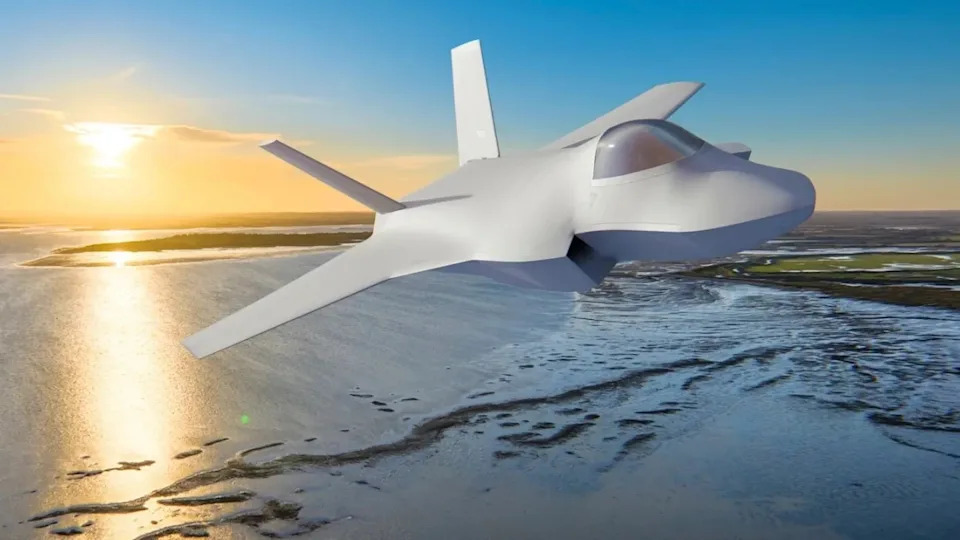
The very first official rendering of the Combat Air Flying Demonstrator.BAE Systems
What the Photos and Model Reveal
Configuration and Airframe: The demonstrator is a twin-engine, supersonic experimental jet with outward-canted twin fins and no horizontal tailplanes. Its planform shows a slightly cranked inboard leading edge, some forward sweep on the trailing edge, and severely cropped wingtips — producing a modified, cropped-delta wing rather than the lambda planform shown in the earliest Tempest concepts. A pronounced forward chine and forward-swept, diverterless supersonic inlets (DSI) are visible.
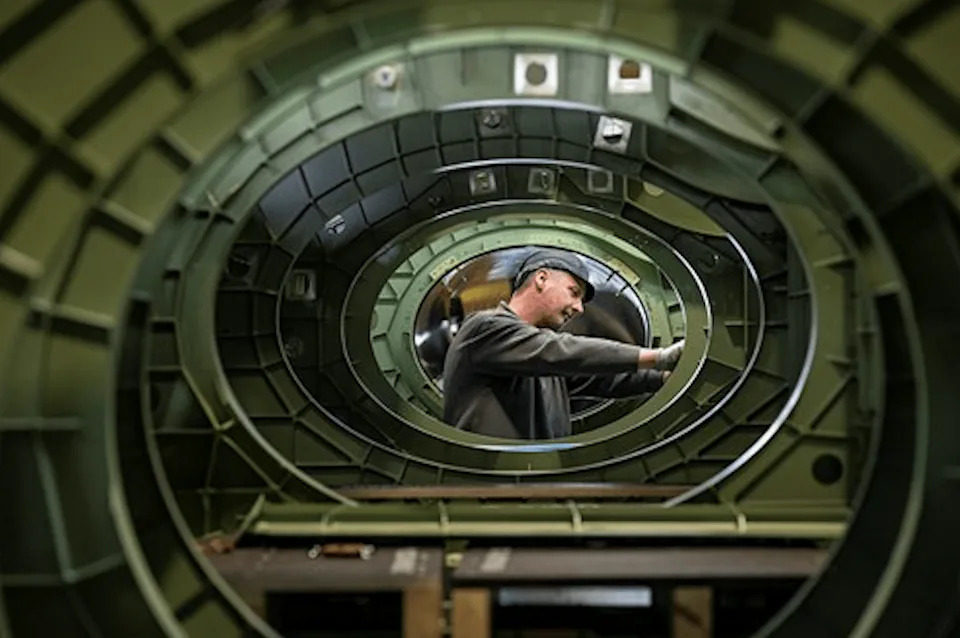
A view of the ducting inside the center fuselage section.BAE Systems
Powerplant: For testing purposes the demonstrator will use two EJ200 turbofan engines — the same engine type that powers the Eurofighter Typhoon. The production Tempest is expected to use a new, purpose-built powerplant that is still under development.
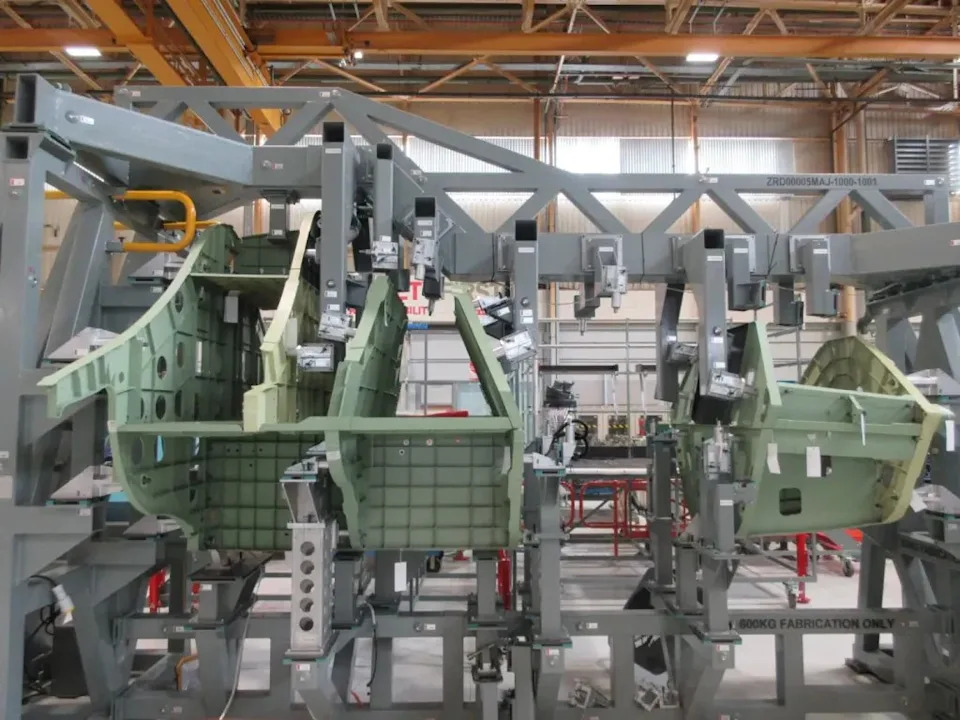
An earlier view of the Combat Air Flying Demonstrator taking shape on the production line.Team Tempest
Internal Volume: With skin panels removed the center fuselage exposes substantial internal space and serpentine ducting for low-observable intakes. The factory photograph includes technicians and tooling that provide clear scale references; even allowing for perspective, the demonstrator’s centrebody appears broad and deep, indicating generous internal volume for fuel, systems or weapons bays.
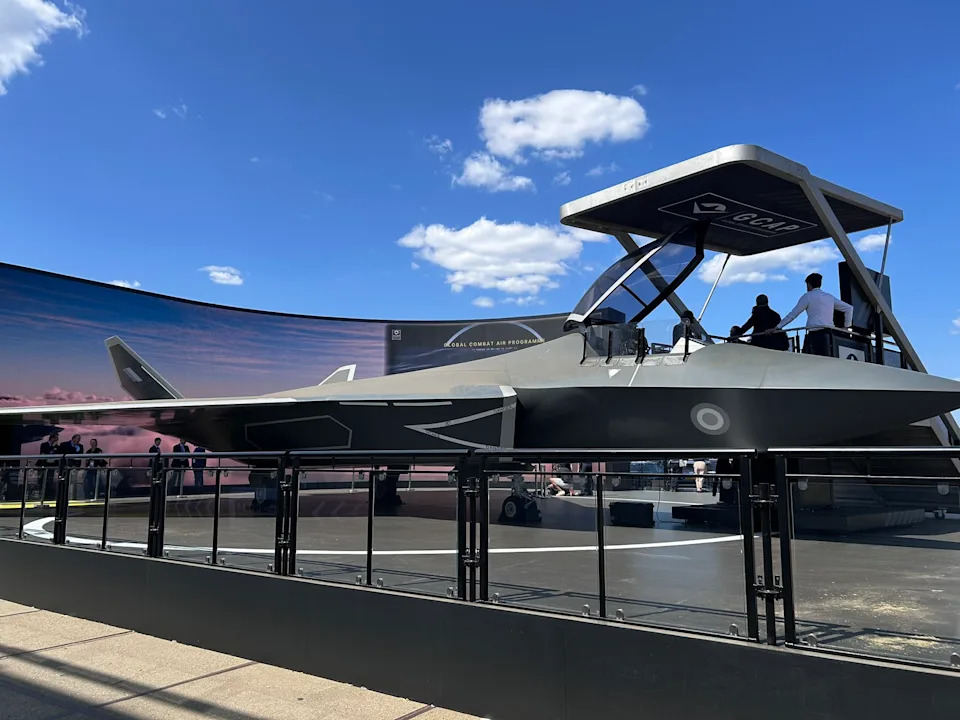
The latest full-size mockup of the Tempest.GCAP
How It Fits Into GCAP and Tempest Development
The Combat Air Flying Demonstrator is intended as a technology demonstrator to validate technologies, manufacturing methods, aerodynamics and systems integration ahead of the Global Combat Air Program (GCAP) operational aircraft. GCAP’s Tempest — being developed by the UK with Italy and Japan (Canada is an observer and Germany has been reported to be considering participation) — is aimed at service in the 2040s and will be larger and more complex than this demonstrator.

@shinjirokoiz/via X
Air Commodore Martin Lowe, FCAS programme director at the U.K. Ministry of Defence, has emphasised that the demonstrator is not a Tempest prototype “in terms of shape or size.”
Design Comparisons and Mission Drivers
Visually the demonstrator borrows elements seen on other stealth jets: some resemblance to the F-35 in forward chines and DSI inlets, while recent full-size Tempest mock-ups have leaned toward a wider, squatter silhouette similar to the F-22. Programme requirements for Tempest emphasize very long range and considerably greater internal payload — reportedly targeting roughly double the internal payload of an F-35A — which drives demands for larger internal fuel volume, bigger weapons bays, and substantially greater electrical power and cooling capacity for advanced sensors, EW systems, onboard computing and potential future directed-energy weapons.
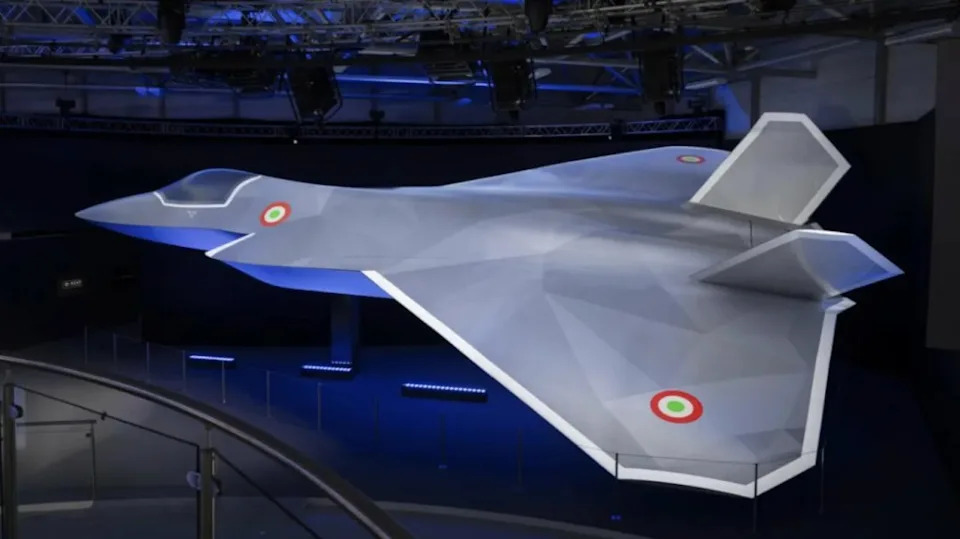
A 2024 mockup of the Tempest combat jet.Leonardo
Limitations and Purpose
As a technology demonstrator, this aircraft prioritises rapid, low-risk testing of core technologies over representing the final operational configuration. It is likely smaller and less powerful than the eventual Tempest production fighter; configurations that enter service in the 2030s–2040s will evolve from findings provided by this demonstrator.
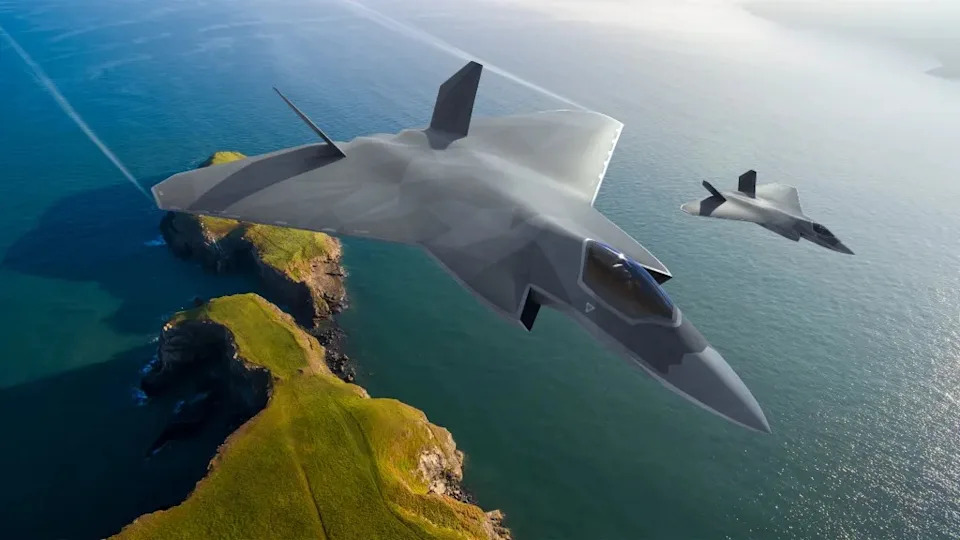
A rendering of a pair of Tempests overflying the U.K. coastline.BAE Systems
In short, the new production photographs and the Farnborough scale model offer the most detailed look yet at Britain’s stealth demonstrator, confirming layout choices and underlining the internal-volume priorities that will shape sixth-generation combat aircraft.
Contact the author: [email protected]
Help us improve.