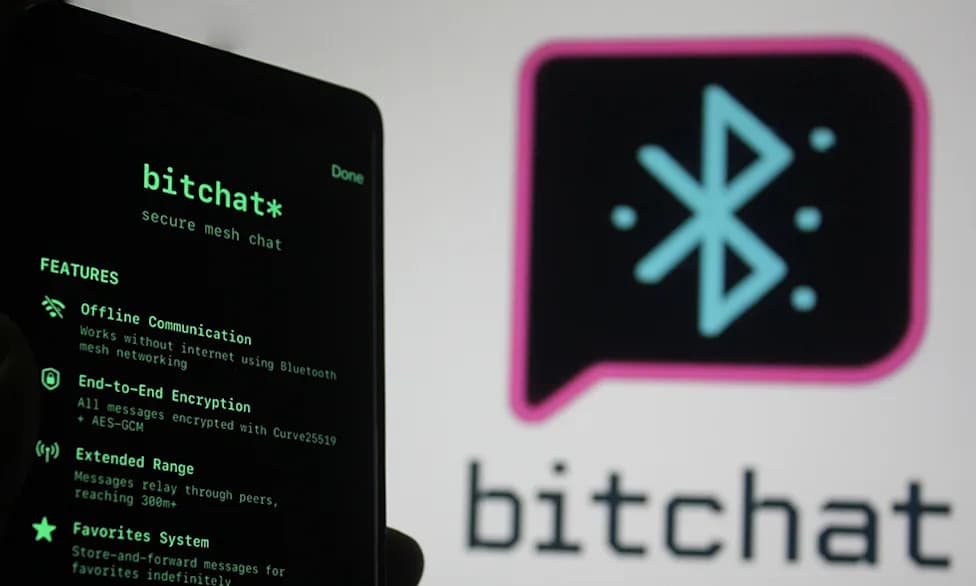
India's government has ordered a nationwide takedown of Bitchat, a decentralized Bluetooth‑mesh messaging app released as open‑source by Jack Dorsey in July 2025. Authorities say the app is being used by demonstrators to communicate during repeated internet outages and argue it "impedes law enforcement agencies."
Takedown Order Directed At GitHub
The Indian Cyber Crime Coordination Centre reportedly instructed Microsoft‑owned GitHub to disable access to Bitchat within India, giving the platform just three hours to act. Officials say the move targets the distribution of the app amid large demonstrations in the capital and other cities.
How Bitchat Works
Bitchat is designed to operate without internet, servers, phone numbers or centralized logs. It uses encrypted messages relayed across Bluetooth mesh networks so phones can pass messages to one another peer‑to‑peer. The app also includes a mechanism to relay Bitcoin transactions offline, forwarding them device‑to‑device until a node with connectivity broadcasts them to the broader network.
Why Authorities Are Concerned
New Delhi has said Bitchat enables anonymous communication without registration and centralized records, which it views as obstructing law enforcement.
Officials argue that the anonymity and decentralized routing make it difficult to trace or moderate communications related to public‑order incidents. Researchers and rights groups warn that blocking such tools can further limit protesters' ability to coordinate during internet shutdowns.
Context: Protests And Connectivity Blackouts
Since July 20, cities across India have seen major demonstrations as students protest an examination scandal and allege broader government corruption. Authorities have imposed repeated internet suspensions around protest sites, and researchers report protesters turning to Bluetooth mesh apps like Bitchat to sustain coordination when networks are cut.
Compliance And Wider Implications
It was not immediately clear whether GitHub complied with the takedown order. The incident raises broader questions about the limits of platform responsibilities, the enforceability of national orders on globally distributed open‑source projects, and the role of offline communication tools in civic protest and disaster resilience.
Market Note
The article cites that Block's stock (referred to in some reports as $XYZ) has declined roughly 71% over the past five years and was trading at $76.49 per share in U.S. markets at the time of reporting.