The study found basking shark skin so abrasive it shredded researchers' gloves, revealing oversized dermal denticles clustered into dense patches with bare skin folds between them. This arrangement may let the shark repeatedly expand its mouth and throat while filter feeding — a process that can move roughly 100,000 gallons (≈378,000 liters) of water per hour and involves a mouth opening near 3 feet (≈0.9 m) across. Researchers combined beached specimens, high-resolution scans, and museum samples and compared modern denticles with fossils, finding the pattern likely evolved with filter feeding. The findings point to biomimicry opportunities for materials that must resist wear while remaining flexible.
Basking Shark's Razor-Like Skin Shreds Gloves — May Explain How Its Giant Mouth Flares Open
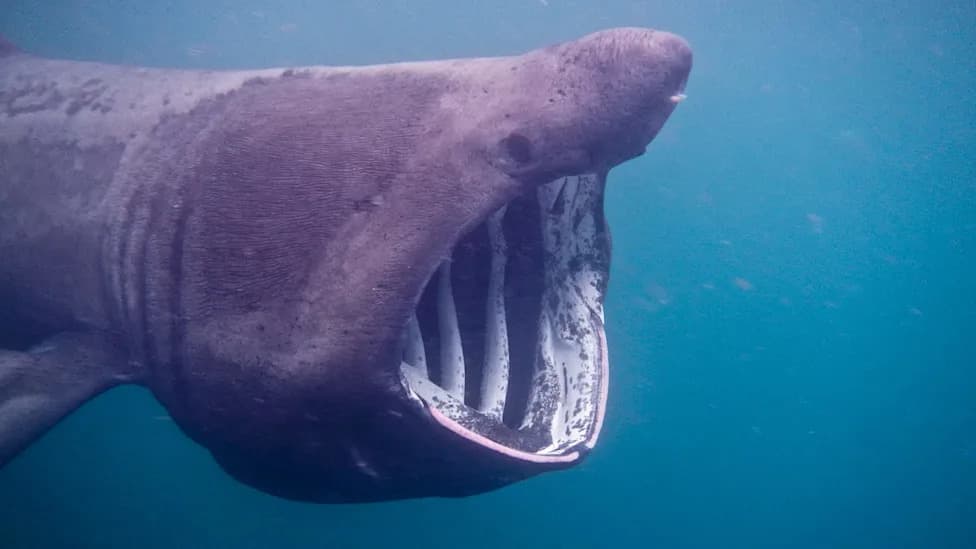
Photo Credit: iStock
A new study reveals that basking shark skin is so abrasive it tore researchers' gloves, and that unusual surface structure may help the giant filter-feeder open and expand its mouth and throat while feeding.
Unusual Scales and Surprising Texture
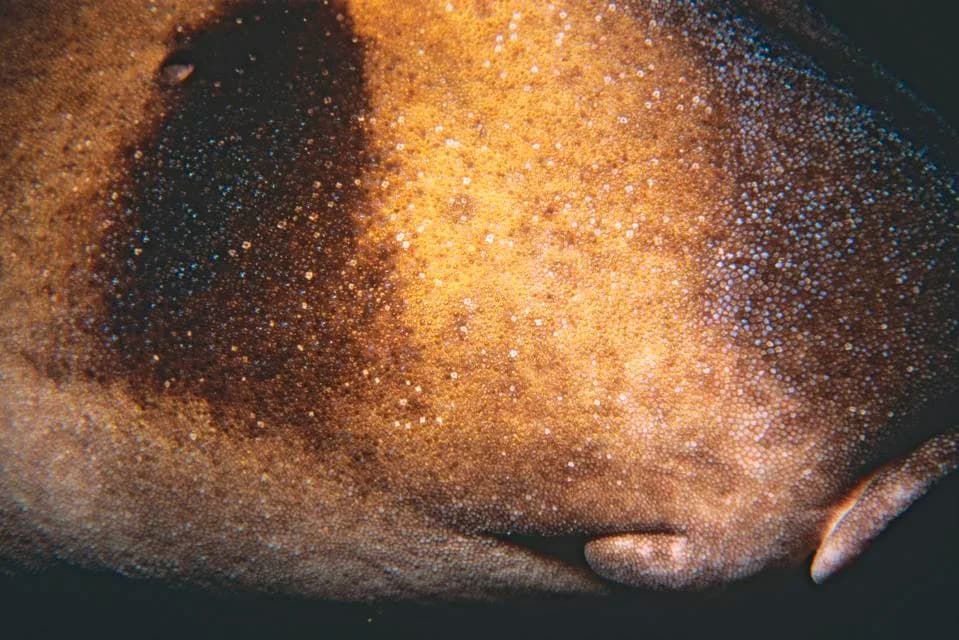
Researchers found the sharks' bodies are covered with oversized, fang-like scales called dermal denticles that reach roughly 0.02 inches (about 0.5 mm) across — exceptionally large for shark skin. Rather than forming a smooth, tail-directed covering, these denticles are clustered into dense, paver-block-like patches oriented in multiple directions, with bare skin folds between the clusters. Team members first noticed the difference by touch: "When we touched the basking shark's skin with gloves, they quickly ripped apart," said Mike Schindler, a Ph.D. student in Mason Dean's lab at the City University of Hong Kong (reported by Earth.com).
How The Skin Helps Feeding
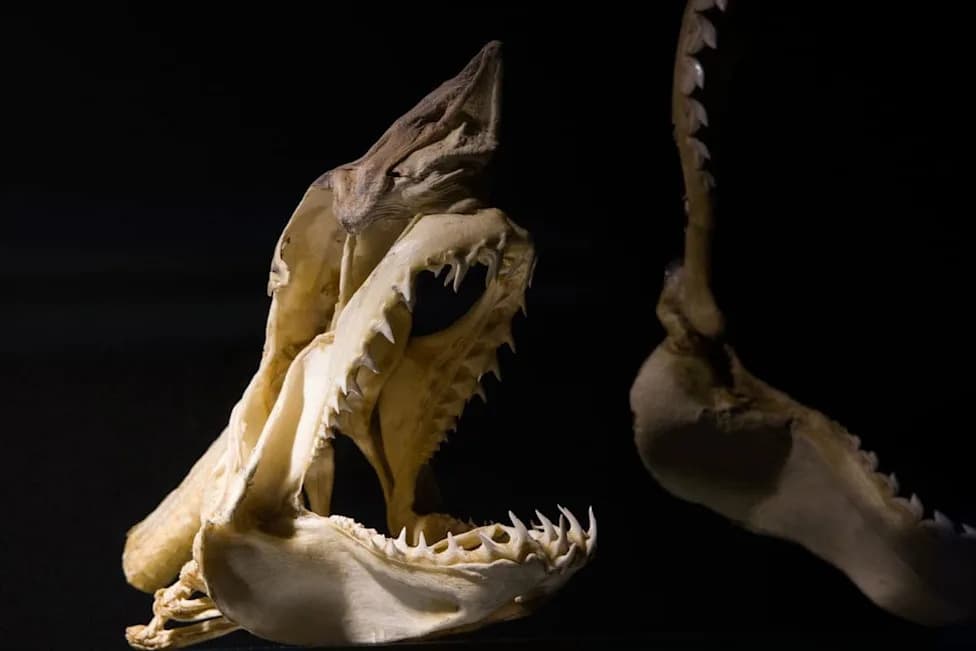
Basking sharks are slow-swimming, enormous filter feeders that can exceed 30 feet (about 9 m) in length and open their mouths to roughly 3 feet (≈0.9 m) across. During feeding a single shark can draw on the order of 100,000 gallons (≈378,000 liters) of water per hour while sieving microscopic prey. The researchers suggest that by concentrating denticles into rigid patches and leaving intervening bare folds, the skin protects vulnerable areas without preventing the repeated stretching and contraction required around the mouth and throat.
Rethinking Shark Skin Function
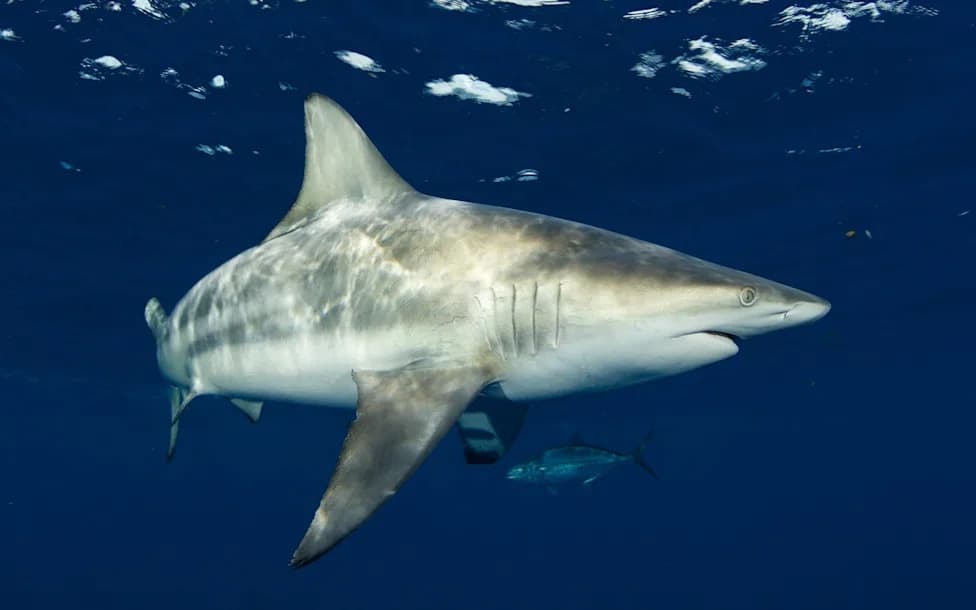
These findings challenge the assumption that shark skin is primarily shaped to reduce hydrodynamic drag. For fast-swimming species, denticles are often seen as streamlining features, but basking sharks' slow speed and extreme mouth expansion indicate a different evolutionary pressure: directional protection combined with flexibility.
Methods and Evolutionary Context
To study this rare species, the team combined samples from stranded (beached) animals with high-resolution digital scans and museum specimens. They also compared modern denticles with those of fossil relatives and found evidence that the clustered skin pattern may have evolved alongside filter-feeding habits.
Biomimicry and Practical Applications
Beyond marine biology, the study highlights potential biomimicry opportunities. Engineers often seek surfaces that are protective in one direction yet flexible in another for applications such as medical bandages, performance clothing, and athletic equipment. The basking shark's patch-and-fold skin design could provide a natural blueprint for materials that resist abrasion while allowing repeated expansion.
Conservation Note: Basking sharks are an endangered species. Studying them is challenging but important — not only for understanding ocean ecosystems, but also because rare species can reveal novel biological designs with practical uses.
Help us improve.