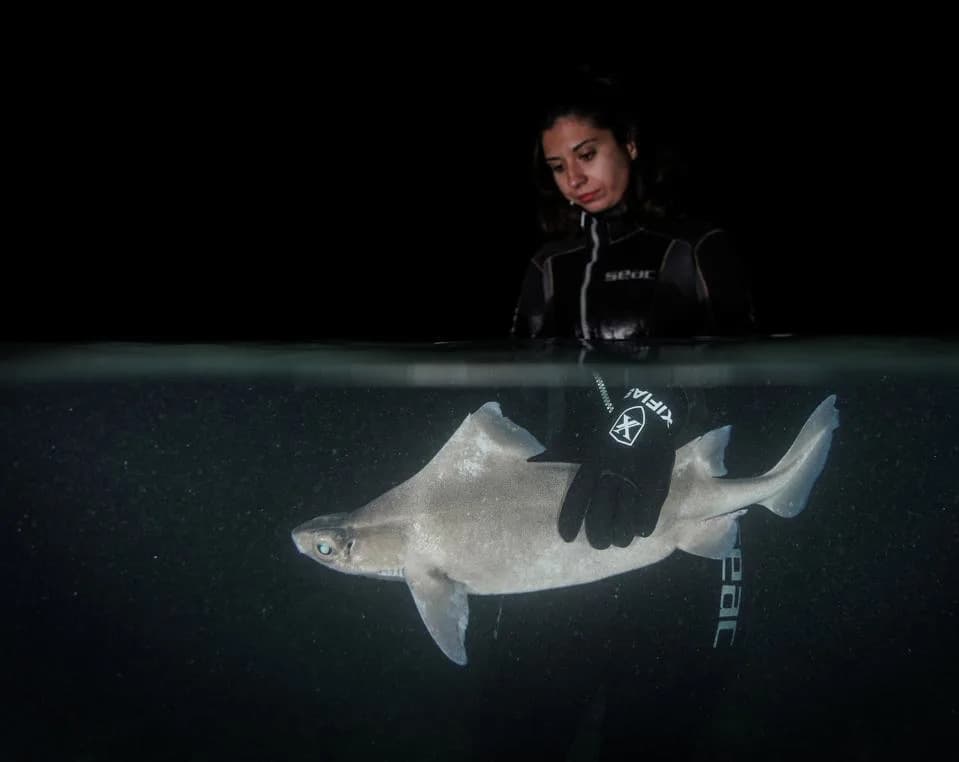
The microscopic dermal denticles sharks shed and that accumulate in reef sediments form a biological archive. By analyzing 3,497 denticles from 157 samples around the Isthmus of Panama, researchers compared mid-Holocene baselines (≈7,000–3,000 years ago) with sediments from the past century. The Caribbean showed a ~75% decline in denticle accumulation, while Pacific Panama remained near Holocene levels—likely due to nutrient-rich upwelling. The authors say conservation targets should account for regional productivity, and warn climate-driven declines in ocean productivity could threaten once-resilient populations.
Tiny Fossil Shark Scales Reveal 7,000 Years Of Shark Population Change In Panama
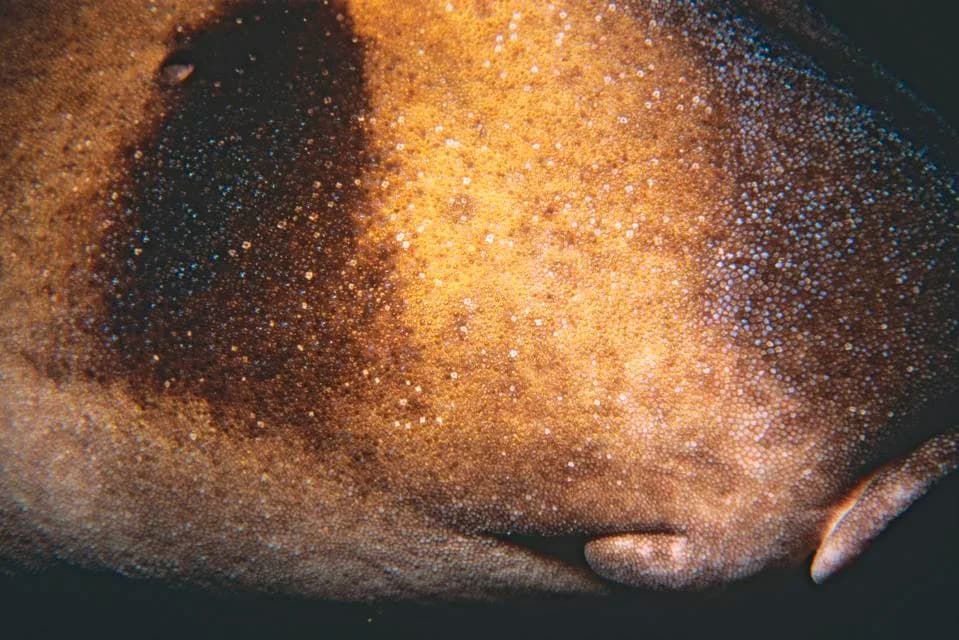
Port Jackson shark (Heterodontus portusjacksoni), dermal denticles. New South Wales, Australia. (Photo by Auscape/Universal Images Group via Getty Images)Universal Images Group via Getty Images
Researchers have used microscopic fossil shark scales to reconstruct nearly 7,000 years of shark population change across the Isthmus of Panama. The study analyzed 3,497 dermal denticles recovered from 157 reef-sediment samples on both the Caribbean (Bocas del Toro) and Pacific (Gulf of Panama) sides, comparing mid-Holocene deposits (≈7,000–3,000 years ago) with sediments representing roughly the past century.
Key Findings
Large Caribbean Decline. Denticle accumulation on the Caribbean side fell by about 75% relative to the mid-Holocene baseline, implying sharks were roughly four times more abundant before intensive fishing and modern human impacts. The decline was strongest among pelagic groups, such as requiem sharks and hammerheads.
Pacific Stability Despite Heavy Fishing. By contrast, Pacific Panama showed denticle accumulation similar to Holocene levels. Pacific reefs historically supported an estimated ~20× more sharks than Caribbean reefs, with pelagic sharks still making up more than two-thirds of the denticle assemblage and little long-term change in community structure in the sediment record.
Why The Difference?
Oceanography appears to be a major factor. The Pacific coast benefits from seasonal upwelling that brings cold, nutrient-rich water to the surface, fueling phytoplankton, greater fish biomass and ultimately a larger ecological "budget" for top predators. The Caribbean is more oligotrophic, with lower baseline productivity that amplifies the effects of fishing and other stressors.
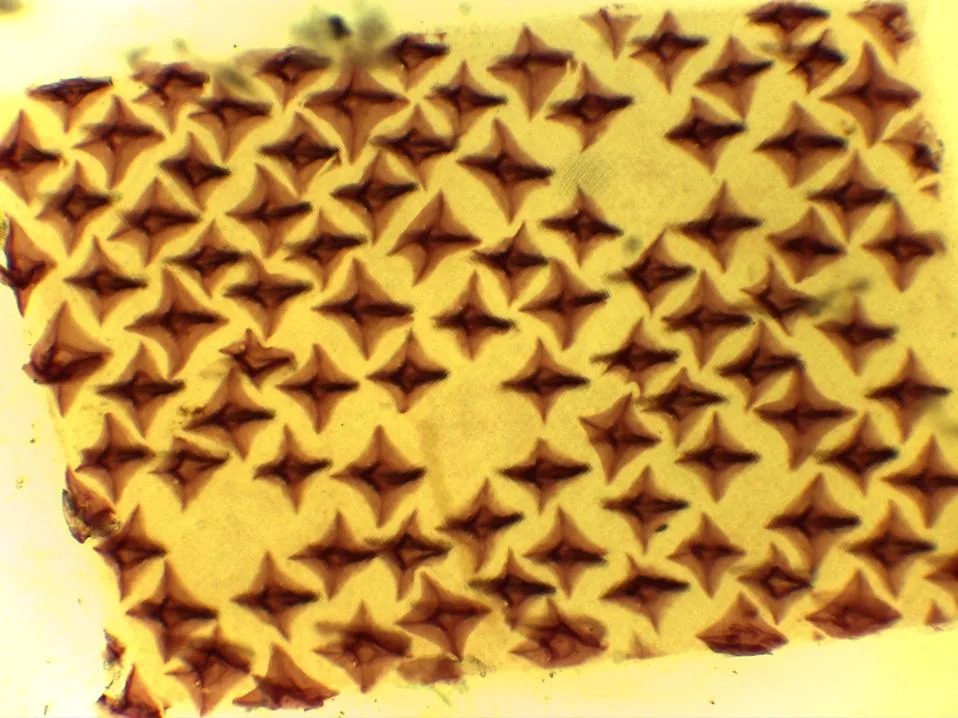
Microscopic Detailed View of Dogfish Placoid Scales and Shark Skin Anatomy. What if the sharks we see on a reef today are only a fraction of what that ecosystem once supported? By examining fossil shark scales preserved in reef sediments, scientists reconstructed shark communities in Panama across roughly 7,000 years. Their results reveal a striking contrast: Caribbean reef sharks declined by about 75%, while shark abundance in Pacific Panama remained remarkably stable. The difference appears to be tied not simply to fishing, but to the productivity of the ocean itself.
Conservation Implications
The authors argue that long-term baselines from fossil denticles should inform conservation targets. Assuming identical carrying capacity across regions with similar species can produce unrealistic recovery goals. Environmental context—ocean productivity, habitat energy budgets, connectivity and life history—should be considered alongside fishing pressure.
Important Caveats: The recent sediment samples span roughly the 20th century to today, so very recent, rapid declines may be hard to detect. Broad denticle categories can mask species-level changes, and fisheries records indicate some Pacific shark populations have become unstable since the early 2000s. "Resilient" does not mean invulnerable.
Risks Ahead
Climate models predict reduced ocean productivity in parts of the Tropical Eastern Pacific, which could weaken upwelling and the ecological capacity that has sustained Pacific shark populations for millennia. If productivity declines while fishing pressure remains high, once-resilient populations could cross ecological thresholds and collapse rapidly.
Conclusion: Thousands of tiny fossilized scales create a layered biological archive that extends our baseline for shark abundance far beyond modern surveys. These long-term records can better define realistic recovery targets and reveal how environmental context determines both historical abundance and future vulnerability.
Photo note: The Port Jackson shark (Heterodontus portusjacksoni) is an example of a species with dermal denticles; such scales were central to the study's reconstructions.
Help us improve.