The FAU study found that blacktip sharks can detect low-frequency sounds up to 74 meters (243 feet) away and respond by turning away from the source. Researchers used a drifting underwater speaker, calibrated hydrophones and a drone (40–50 m altitude) for frame-by-frame analysis. Sharks reacted to 100–800 Hz bands but not to a 10 kHz control, and more than 70% of responses occurred in the acoustic far field. The results suggest sharks detect particle motion through their inner ears and the macula neglecta rather than via a swim bladder.
Sharks' Super Hearing: Blacktips Detect Low-Frequency Sounds Nearly 250 Feet Away
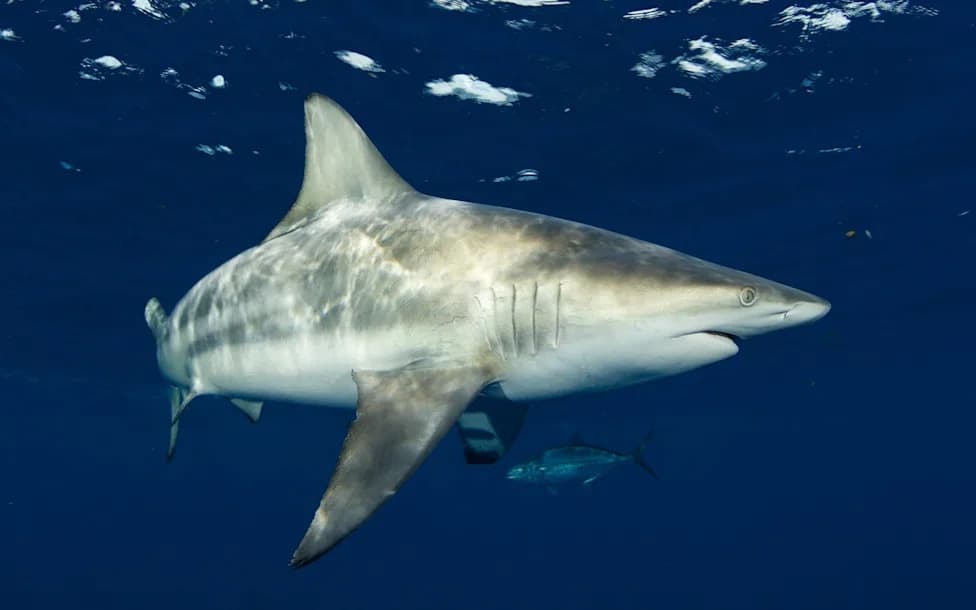
Blacktip sharks provided researchers with a rare opportunity to observe free-swimming sharks in clear, shallow water off Southeast Florida. (Stephen Kajiura / Florida Atlantic University via SWNS)
New field research from Florida Atlantic University reveals that blacktip sharks can detect faint, low-frequency sounds from hundreds of feet away and respond by sharply turning away from the source. The study provides the first quantified evidence that free-swimming sharks can detect and orient away from sounds in the acoustic far field.

(Photo by Karam Alani via Pexels)
How the Study Was Done
Researchers studied naturally occurring aggregations of blacktip sharks along the Palm Beach County coast, where large groups gather seasonally in clear, shallow water. To minimize disturbance, the team anchored a boat while an underwater speaker drifted with the current up to 19 meters (62 feet) from the vessel. An aerial drone recorded the sharks from 40–50 meters above the water and frame-by-frame video analysis was used to measure response distance and changes in swimming direction.

(Photo by Airam Dato-on via Pexels)
Sounds, Controls and Measurements
The team played three low-frequency bands — 100–200 Hz, 200–400 Hz and 400–800 Hz — and a 10 kHz control tone that lies outside the sharks' known hearing range. Sounds were presented at relatively high intensity to elicit startle responses rather than to attract animals. Calibrated hydrophones mapped sound levels at different distances so researchers could calculate the exact acoustic exposure when sharks reacted.

(Photo by Public Domain Pictures via Pexels)
Key Findings
Sharks responded to all three low-frequency bands but not to the 10 kHz control. The species detected low-frequency sounds from up to 74 meters (243 feet) away — substantially farther than previous free-swimming estimates — and most responses occurred in the acoustic far field (>70%). When exposed, sharks rapidly turned away from the sound source, indicating they could determine its direction.
"What makes this finding particularly interesting is that the sharks were responding to sounds beyond the acoustic near field... This suggests that they are detecting the particle motion associated with sound even at considerable distances from the source," said study senior author Professor Stephen Kajiura.
Why This Matters
Unlike many bony fish, sharks lack a gas-filled swim bladder that amplifies sound pressure. Instead, they are believed to rely on their inner ears — including a specialized structure called the macula neglecta — to sense particle motion and vibrations. Demonstrating sensitivity to distant particle motion in free-swimming sharks helps explain how these predators use sound as an environmental cue, and it emphasizes the value of conducting sensory research in the ocean rather than in tanks, where reflections can confound results.
Publication: Integrative Organismal Biology. Lead author: Caroline Sullivan (master's research). Institution: Florida Atlantic University.
Help us improve.