Researchers from the University of the Sunshine Coast have described Hemiscyllium dudgeonae, a new fin‑walking epaulette shark discovered during night dives in Milne Bay, Papua New Guinea. The roughly one‑metre shark uses its pectoral and pelvic fins to move across reef flats and bears distinctive white‑dash markings. Locals already knew the animal as kadedekedewa. Because its range is small, researchers warn the species is vulnerable and will return in October 2026 to gather more data for a conservation assessment.
Meet Dudgeon's Walking Shark: New Fin‑Walking Species Discovered in Papua New Guinea
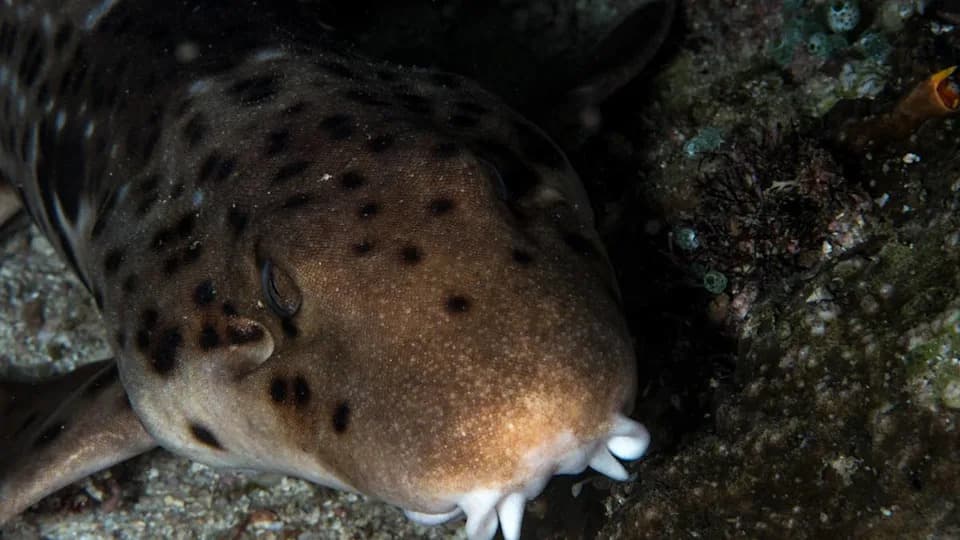
A new species of walking shark called Dudgeon's walking shark was discovered in the shallow coastal waters of Milne Bay, Papua New Guinea.Akkarachai Ditjanapongpon / Getty Images
Scientists have formally described a striking new species of fin‑walking shark found in the shallow reefs of Milne Bay, Papua New Guinea. The shark, Hemiscyllium dudgeonae (commonly called Dudgeon's walking shark), uses broadened pectoral and pelvic fins to haul itself across reef flats and between tide pools — an adaptation that looks more like walking than swimming.
Discovery and Identification
The species was documented during night dives in 2025 by a team led by Jess Blakeway and Christine Dudgeon from the University of the Sunshine Coast. The team published the formal description in the peer‑reviewed Journal of the Ocean Science Foundation in mid‑2026 after recording a distinctive pattern of scattered white dash markings on multiple individuals.
Blakeway described the markings as reminding her of "braille" or Morse code when she first handled a specimen.
Behavior, Appearance and Habitat
Dudgeon's walking shark belongs to the epaulette shark family — small, harmless reef sharks nicknamed for the dark shoulder spots that resemble epaulettes. It reaches roughly one metre in length (about 3.3 ft) and forages across exposed coral flats and tide pools, using its paddle‑shaped fins to move across the substrate rather than rely on open‑water swimming.
Local Knowledge
Local communities were already familiar with the animal, calling it kadedekedewa, roughly translated as "dog shark" or "lazy shark," a nod to its slow, deliberate crawl. The scientific description simply formalizes a species long known to people who live alongside these reefs.
Conservation Concerns
Although remarkable, the species appears to have a very restricted range. That limited distribution makes it especially vulnerable to coastal development, local fishing pressure and warming seas. Conservationists note that five of the ten known fin‑walking shark species are already considered threatened. The research team plans to return in October 2026 to collect additional data before recommending a high‑risk conservation listing.
What Surfers and Divers Should Know
This discovery is not cause for alarm: a one‑metre epaulette shark is not a Hollywood predator. Instead, the find is a reminder that the shallow reef corridors surfers and snorkelers cross are living ecosystems that continue to yield new species discoveries. If you spot an unusual shark moving across a reef, consider reporting the sighting to local conservation groups or researchers rather than assuming danger.
Key facts: Hemiscyllium dudgeonae was found in Milne Bay, described in 2026, reaches ~1 m, displays unique white‑dash patterning, is part of the epaulette shark family, and faces conservation risks due to its small range.
Help us improve.