The tapeworm Anomotaenia brevis infects Temnothorax nylanderi larvae via woodpecker droppings and produces workers that live up to ten times longer. Infected ants become pale, smaller, and emit queenlike cues, prompting nestmates to feed and groom them while they abandon tasks. Gene-expression analysis shows infected ants’ fat bodies adopt queen-like signatures linked to metabolism, immunity, stress and aging, while brain signaling related to worker behavior is broadly suppressed.
Tapeworm Turns Ants Into ‘Royal’ Hosts — Lifespans Increase Up To Tenfold to Complete Parasite’s Life Cycle
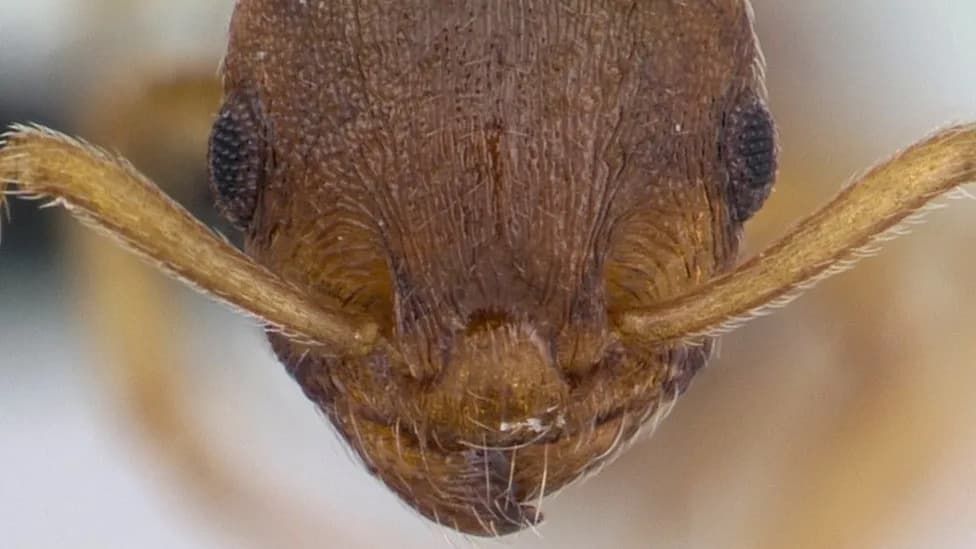
Temnothorax nylanderi. (April Nobile/AntWeb/CC BY 4.0)
Imagine a parasite that extends its host’s life by up to ten times while tricking the colony into treating the host like royalty. This is not fiction but the reality for the ant Temnothorax nylanderi and its tapeworm parasite Anomotaenia brevis, according to a new study in BMC Genomics.
The lifecycle begins when ant larvae eat woodpecker droppings containing tapeworm eggs. Infected larvae develop into workers that differ strikingly from healthy nestmates: they become pale yellow instead of dark brown, remain smaller, and emit chemical cues that other ants interpret as queenlike. Nestmates then feed, carry, and groom these infected workers while the latter abandon normal colony duties and rarely leave the nest.
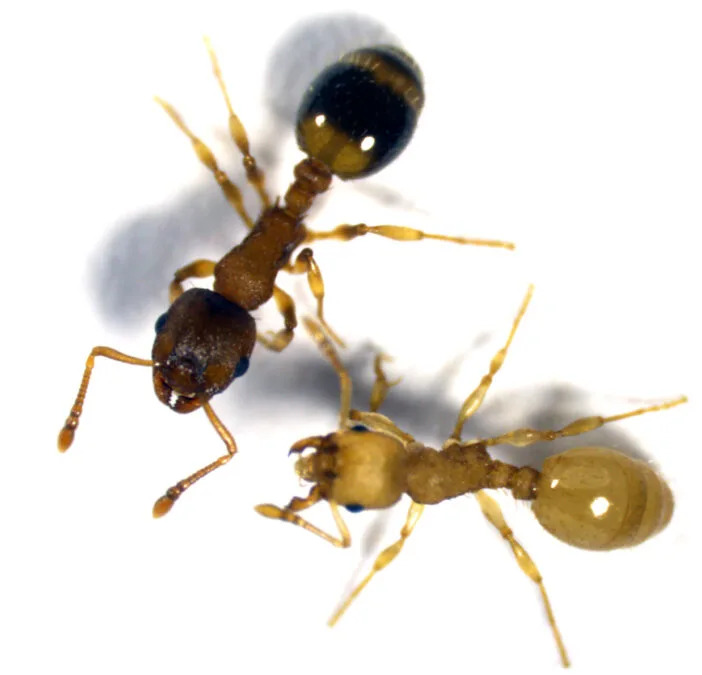
Infected workers (right) become much lighter in color than uninfected ants (left). (©: Susanne Foitzik)
These behavioral changes benefit the parasite. When a woodpecker visits and disturbs the nest, healthy ants flee while infected ants remain sluggish and are more likely to be eaten. Once inside the bird’s gut, the tapeworm matures, reproduces, and its eggs are shed in droppings, closing the transmission loop.
To understand how the tapeworm manipulates host physiology, researchers from Johannes Gutenberg University Mainz (JGU) and Zhejiang University compared gene expression in the brains and fat bodies of infected workers, uninfected workers, and queens. The insect fat body — a multifunctional tissue analogous to vertebrate liver and adipose tissue — plays a central role in metabolism, immunity, and lifespan regulation.
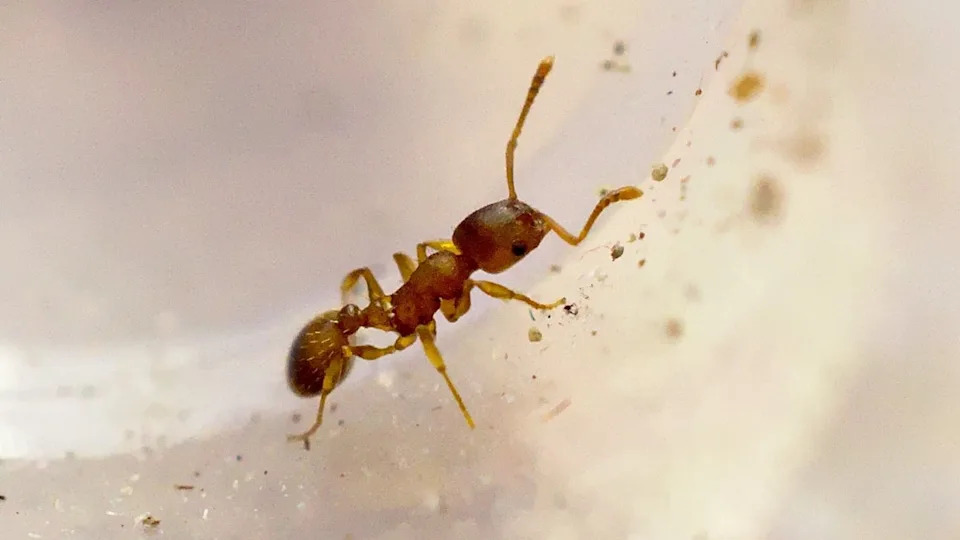
A worker ant of the speciesTemnothorax nylanderi. (Herman/Wikimedia Commons/CC BY SA 2.0)
The team found that infected workers’ fat-body gene-expression patterns resembled those of queens more than those of uninfected workers. These queen-like signatures involved pathways linked to metabolism, immune function, stress responses, and aging, which likely explain the infected ants’ extended lifespan and the social care they receive.
“Our genetic analyses show that the infection does not simply make the ants sick, but alters their physiology in a highly targeted way,”
— Susanne Foitzik, lead author and behavioral ecologist at JGU.

Subscribe to ScienceAlert's free fact-checked newsletter
By contrast, infected ants’ brains showed widespread suppression of signaling molecules and receptors that are normally associated with worker behavior and activity. Importantly, the depressed brain signals did not match parasite-derived peptides, arguing against a simple model where the tapeworm secretes its own neuroactive molecules to directly hijack the ant brain.
“The data rather suggest that the parasite influences the ant indirectly by intervening in the host’s own regulatory networks, which control metabolism, the immune system, aging, and behavior, among other processes,”
— Giulia Blasi, first author and biologist at JGU.
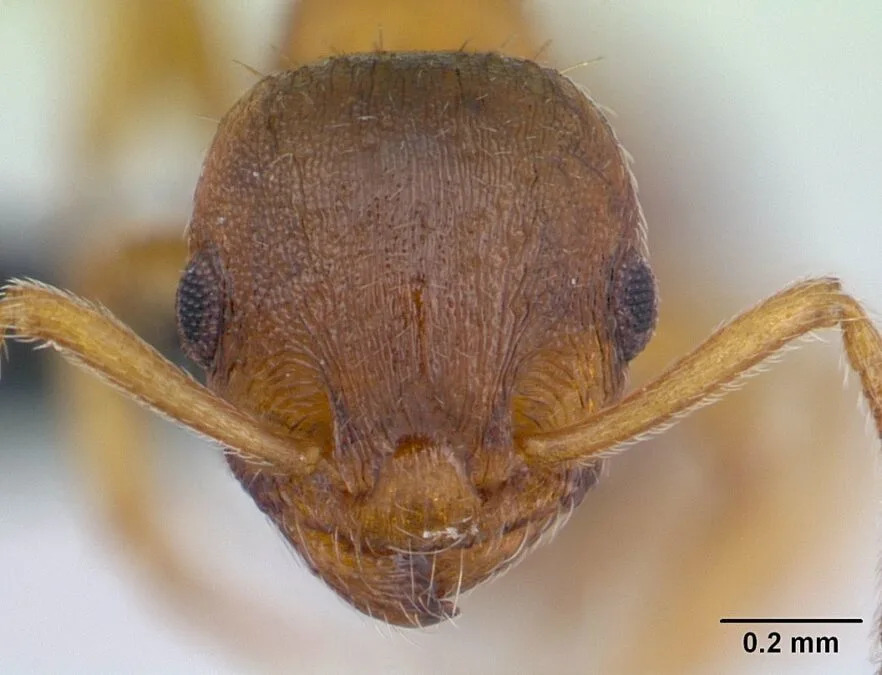
Close-up of the head of aTemnothorax nylanderi. (April Nobile/AntWeb/CC BY 4.0)
This tapeworm joins a suite of parasites known for dramatic host manipulation. For example, Cordyceps fungi take over ant nervous systems to force climbing and attachment behavior before releasing spores. In the case of Anomotaenia brevis, manipulation emphasizes longevity and social deception to increase the chance of transmission to an avian predator.
The study adds molecular detail to a striking ecological story: a parasite that extends host life, redirects peripheral physiology toward a queen-like state, suppresses brain signaling linked to work, and relies on woodpeckers to complete its lifecycle. The findings highlight how subtle rewiring of host regulatory networks can produce complex behavioral and social outcomes that benefit the parasite.
Reference: Blasi et al., BMC Genomics (study by Johannes Gutenberg University Mainz and Zhejiang University).
Help us improve.