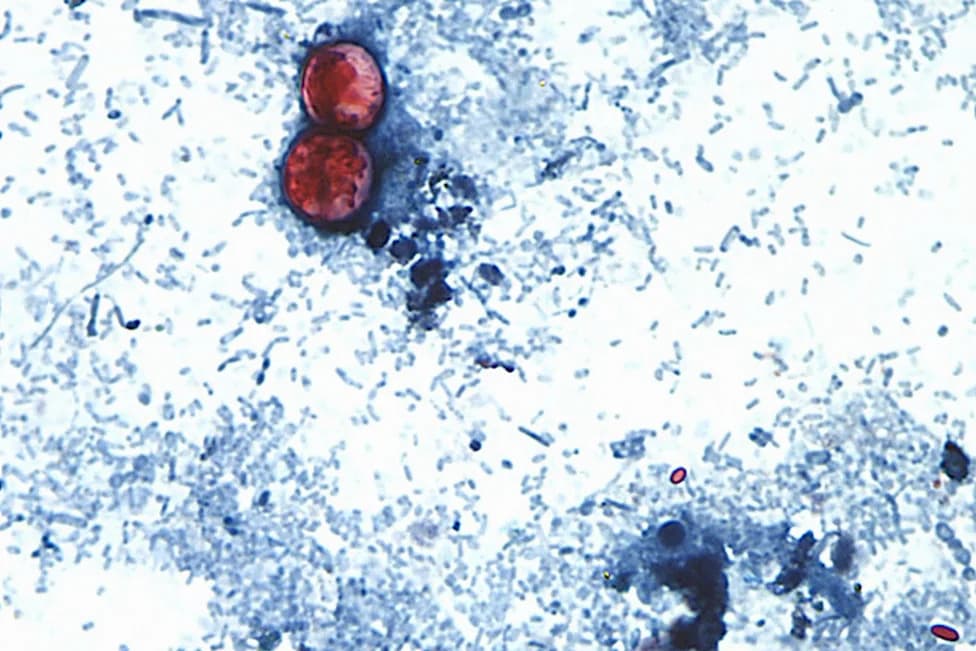
The cyclospora outbreak continues to grow: the CDC reported over 4,000 confirmed cases nationwide as of July 21, while Ohio’s total climbed above 2,500 by July 23 — more than double the prior week. Michigan reports the highest state count with more than 7,600 cases, and illnesses have been reported in 41 states. Investigators are still probing potential sources, including a produce supplier, and officials stress that cyclosporiasis results from ingesting food or water contaminated with feces and is treatable with antibiotics.
Cyclospora Outbreak Expands: Ohio Cases Top 2,500 as Officials Hunt for Source
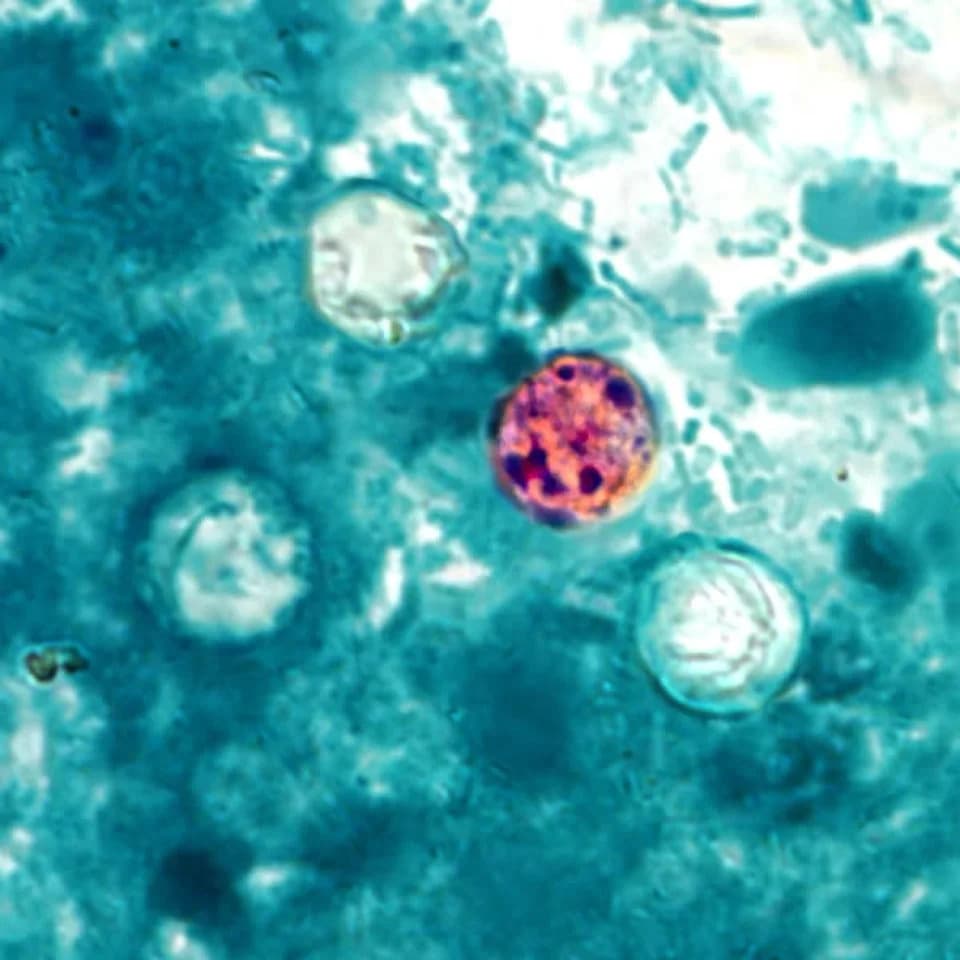
In this image taken of a stool sample from a person with cyclosporiasis, a parasitic gastrointestinal illness that causes watery, sometimes explosive diarrhea, four microscopic oocysts of cyclospora cayetanensis can be seen.
Health officials are racing to identify the source of a growing cyclospora outbreak as Ohio’s confirmed cases surpassed 2,500 on July 23 — more than double the roughly 1,200 reported the previous week.
Outbreak Status
The Centers for Disease Control and Prevention (CDC) reported more than 4,000 confirmed cases of cyclosporiasis (caused by Cyclospora cayetanensis) nationwide as of July 21. Public health agencies believe the true number of infections may be substantially higher — possibly exceeding 10,000 — as state and local health departments report additional cases. Michigan currently reports the highest state total, with more than 7,600 cases. The CDC traces the start of the Ohio outbreak to around May 1, and illnesses have now been reported in 41 states.
Investigation and Possible Sources
Federal and state investigators continue to probe potential sources of the outbreak. The U.S. Food and Drug Administration (FDA) has apologized for earlier public statements after a lettuce test linked to Taylor Farms (a produce supplier based in Mexico) was later characterized as a “false positive.” Mexican health authorities say they have not found evidence that farms there are the source, but they are taking precautions. The FDA says a false positive does not automatically clear any supplier and that its investigation is ongoing.
How Cyclospora Spreads
Cyclospora is not spread directly from person to person. Infection occurs when people ingest food or water contaminated with fecal material containing the parasite, which then infects the intestinal tract. Contamination often stems from tainted irrigation water, runoff reaching produce fields, or other breaches in sanitary practices. Columbus Water and Power has stated there is currently no risk from treated municipal water.
Symptoms and High-Risk Groups
Cyclosporiasis is known for causing sudden, severe, watery diarrhea. Other common symptoms include loss of appetite, weight loss, abdominal cramping, bloating, excess gas, nausea and fatigue. Older adults, young children, pregnant people, and people with chronic illnesses — especially those with kidney disease — may face higher risk of complications and should seek medical care promptly if symptoms appear.
Treatment and Prevention
Medical professionals recommend testing for suspected cases and, if confirmed, treatment with the standard antibiotic regimen trimethoprim-sulfamethoxazole (commonly sold as Bactrim, Cotrim, or Septra). Patients should also emphasize hydration, rest, and electrolyte replacement. Preventive steps include washing produce thoroughly, following food safety guidance, and avoiding potentially contaminated food or water when alerts are issued.
What Officials Advise
Health authorities urge anyone with persistent diarrhea or related symptoms to seek medical care so they can be tested and treated if necessary. Officials continue to investigate and will update guidance as more information becomes available.
Reporter contact: Samantha Hendrickson, [email protected]
Help us improve.