Jimothy, an unusually shaped raccoon in Seattle, became a viral sensation in July 2026 and was honored by his city. Suspected to have a vertebral malformation often called short spine syndrome, he nonetheless survived in the wild thanks to raccoons’ dense neurons, specialized von Economo cells and extraordinarily dexterous forepaws. Equally vital was months of patient teaching and protection from his mother, which likely turned potential into practical survival skills. Together, neural adaptability and maternal investment explain how Jimothy beat the odds.
How Jimothy the Raccoon Beat the Odds: Brainpower, Dexterous Hands and a Devoted Mother
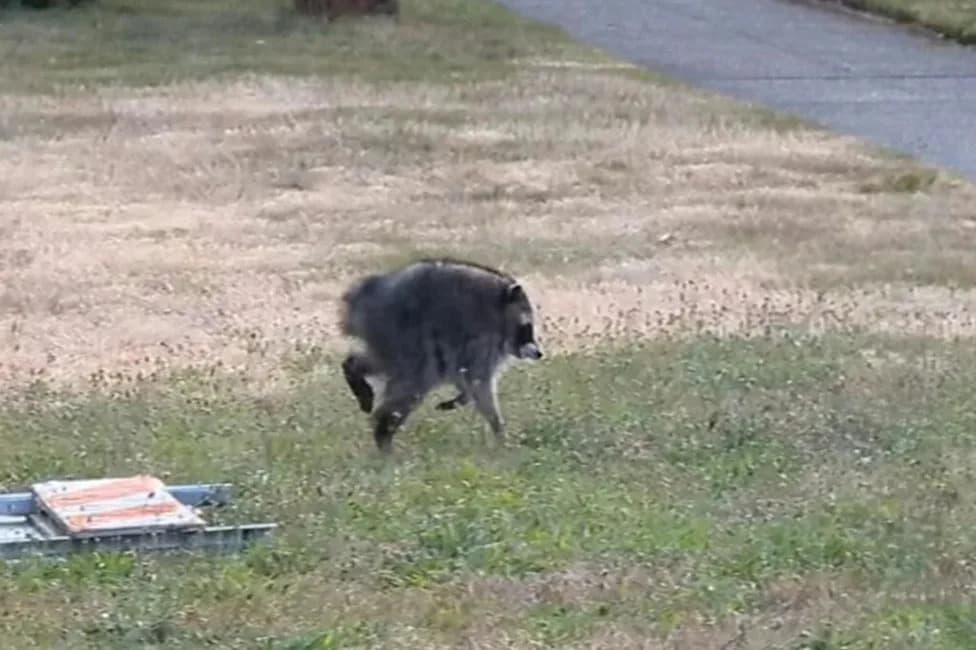
There Jimothy goes!Kiana Hall
As a neuroscientist who studies raccoons and rats, I find the viral saga of Jimothy—the oddly shaped raccoon living in Seattle—both moving and scientifically illuminating: a wild animal that appears to have overcome a physical disability to survive and even thrive.
Jimothy shot to internet fame in July 2026 after an Instagram post went viral, drawing millions of views and thousands of supportive comments. The raccoon has become a local celebrity and was even recognized with a city proclamation. Observers noticed his atypical build: a short body and tail and a curved back. Although no official veterinary exam has been published, experts suspect a cervical vertebral malformation often described as short spine syndrome. Similar developmental vertebral defects have been reported in dogs; when vertebrae fail to develop fully, the body cavity can be compressed, crowding internal organs and causing mobility or other health challenges.
How Do Animals Compensate?
Animals born with structural constraints must adapt their movements and behavior to find food, shelter and safety. That reality makes Jimothy’s persistence in the wild especially striking: surviving as a wild animal with a congenital condition is far more difficult than living with attentive human caregivers.
Raccoon juveniles already face steep odds. Up to half of newborn kits die before ever leaving the natal den. For those that do emerge, dangers continue: predators, disease, scarce resources and no guaranteed safe refuges. In the wild, raccoons often live only two to five years, compared with roughly 12 years in captivity—evidence of how hazardous outdoor life can be.
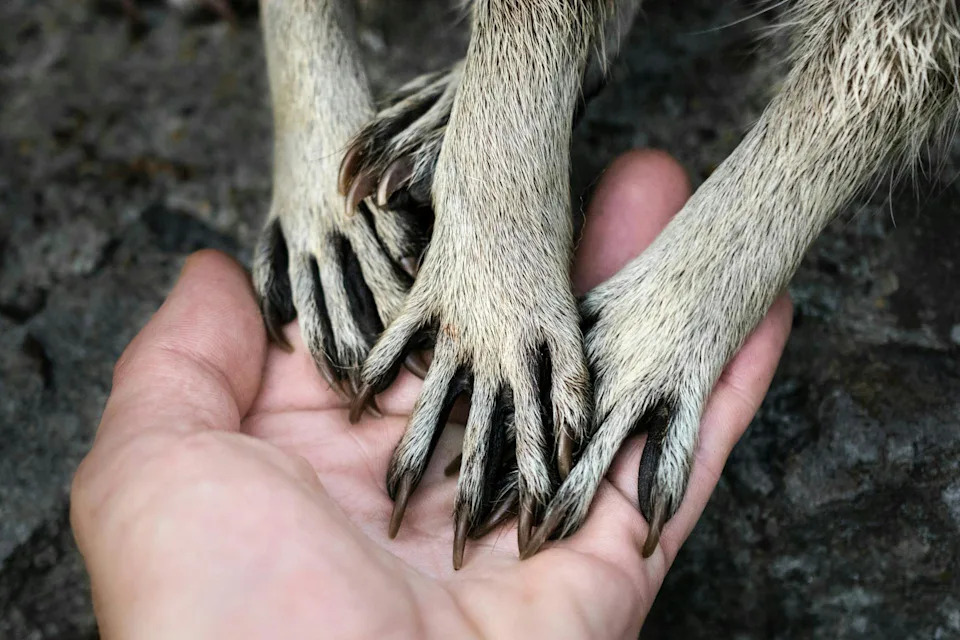
The dexterity of raccoon hands enables their humanlike escapades.Zocha_K/iStock via Getty Images Plus
Brains, Hands and Behavioral Flexibility
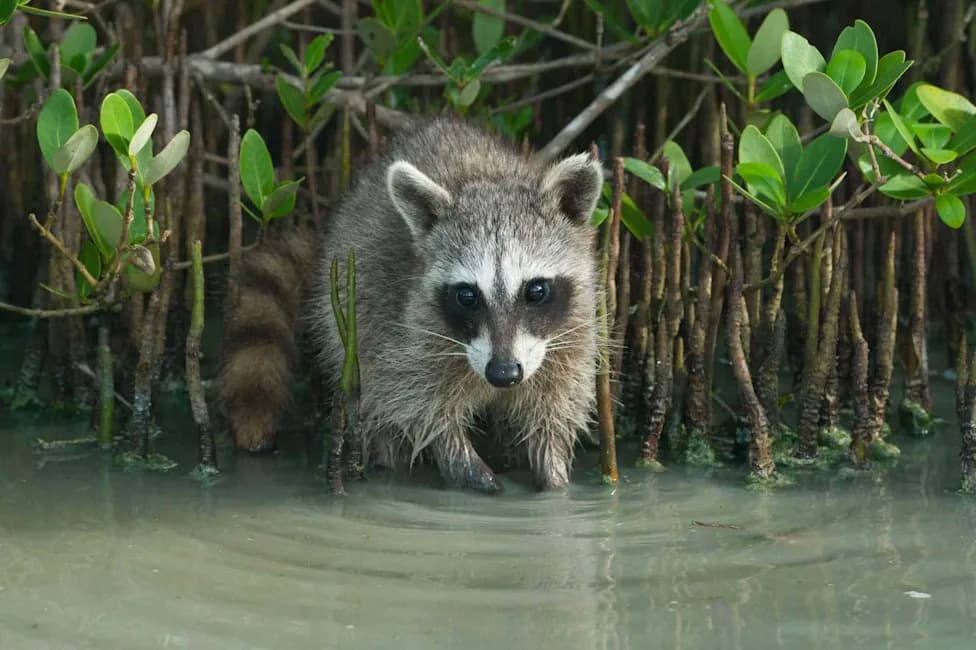
Part of Jimothy’s story likely rests on raccoons’ biological strengths. Although raccoon brains have been relatively understudied, research from my laboratory and others reveals a complex neuroarchitecture. Raccoons have very high neuron densities that approach those of small primates. A higher number of neurons generally supports behavioral flexibility—the ability to invent, refine and modify actions in response to novel challenges—which could help an individual with a shortened spine navigate fences, climb trees and locate safe resting spots.
We also identified von Economo neurons in raccoon brains. In humans and other animals, these specialized, fast-conducting cells are linked to social cognition, emotional processing and internal-state monitoring—functions that support nuanced decision-making and social behavior.
And then there are raccoons’ forepaws. Their hands are extraordinarily dexterous and somatosensorily rich, occupying a large portion of the motor cortex much like human hands do. This neural investment in manual skill boosts learning and problem-solving, explaining why cities such as Toronto have invested heavily in raccoon-proof waste systems: raccoons are adept at overcoming ordinary containers.
Role of Maternal Care
Equally important to Jimothy’s survival is the role of his mother. Raccoon mothers shoulder the vast majority of parental duties. They typically rear litters alone, often moving kits between dens to avoid males that may harm young and to reduce predator exposure. Mothers must forage efficiently while minimizing time away from vulnerable offspring and must exercise patience and teaching over many months of development.
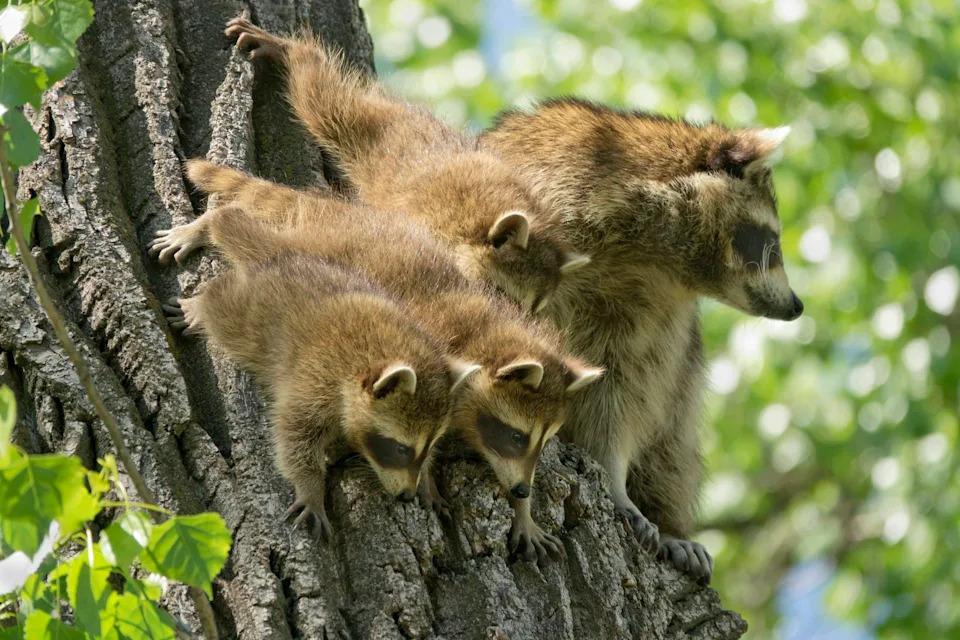
Raccoon moms teach their children the ropes.milehightraveler/E+ via Getty Images
Unlike many mammals whose young become independent soon after weaning, raccoon juveniles remain with their mothers for an extended period. Nursing often ends around 16 weeks, but kits commonly stay with their mother for up to nine months. During this time a mother functions as a hands-on teacher, guiding her young through practical skills—everything from climbing and foraging to squeezing through narrow openings.
One vivid example, shown in the PBS documentary "Raccoon Nation," captures a mother modeling how to collapse the spine and slide beneath a garage door: she repeats the maneuver, watches her kits’ attempts, catches them when they fall and nudges them to try again.
Videos of Jimothy later in life—running across fields, negotiating fences and exploring local environments—suggest his mother invested extraordinary time and effort in teaching and protecting him. That maternal investment, combined with raccoons’ neural and manual adaptations, likely enabled Jimothy to compensate for physical disadvantages and survive in the wild.
What Jimothy Teaches Us
Jimothy’s popularity celebrates difference, but the deeper takeaway is both evolutionary and social: many mammals possess brains that can adapt behavior to imperfect bodies, and many species rely on patient, skilled caregivers to convert juvenile potential into adult competence. Jimothy’s survival is a tribute both to raccoon neurobiology and to the unglamorous, crucial labor of a devoted mother.
This piece is adapted from reporting and scientific observations. Original reporting by Kelly Lambert for The Conversation is acknowledged.
Help us improve.