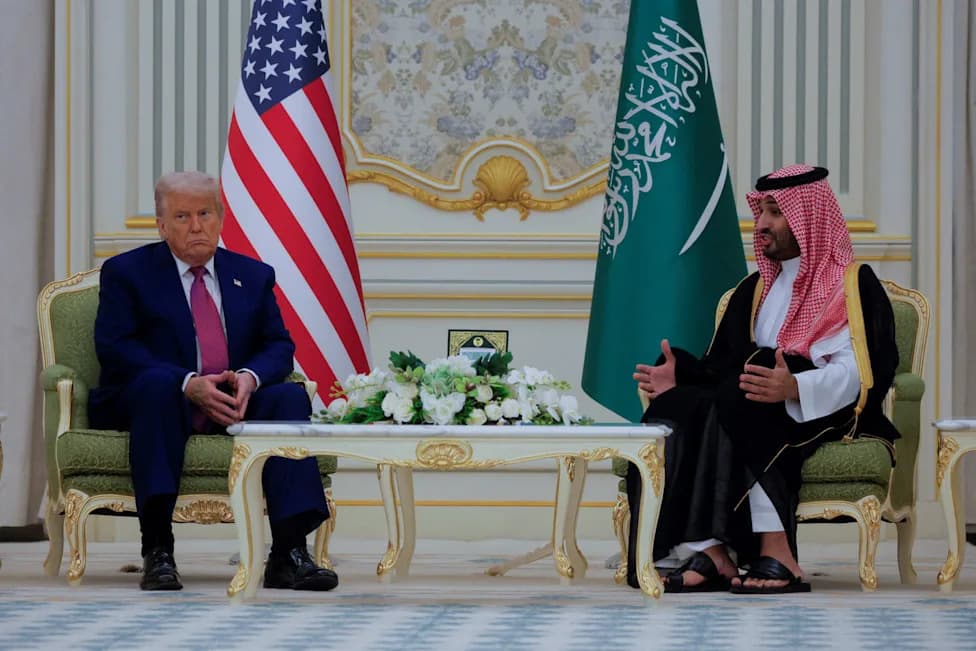
The Trump administration signed a 30-year nuclear cooperation agreement with Saudi Arabia to help build a civilian nuclear program and give U.S. firms broad commercial access. Critics warn the pact could permit domestic uranium enrichment, constrain international inspections and weaken long-standing nonproliferation norms. Supporters say the deal secures U.S. oversight and economic benefits, but the move risks fueling a regional arms race amid escalating hostilities with Iran. Congress has 90 days to review the agreement, and President Trump tied cooperation to Saudi normalization with Israel.
U.S.-Saudi 30-Year Nuclear Pact Sparks Nonproliferation Concerns as Iran Conflict Escalates
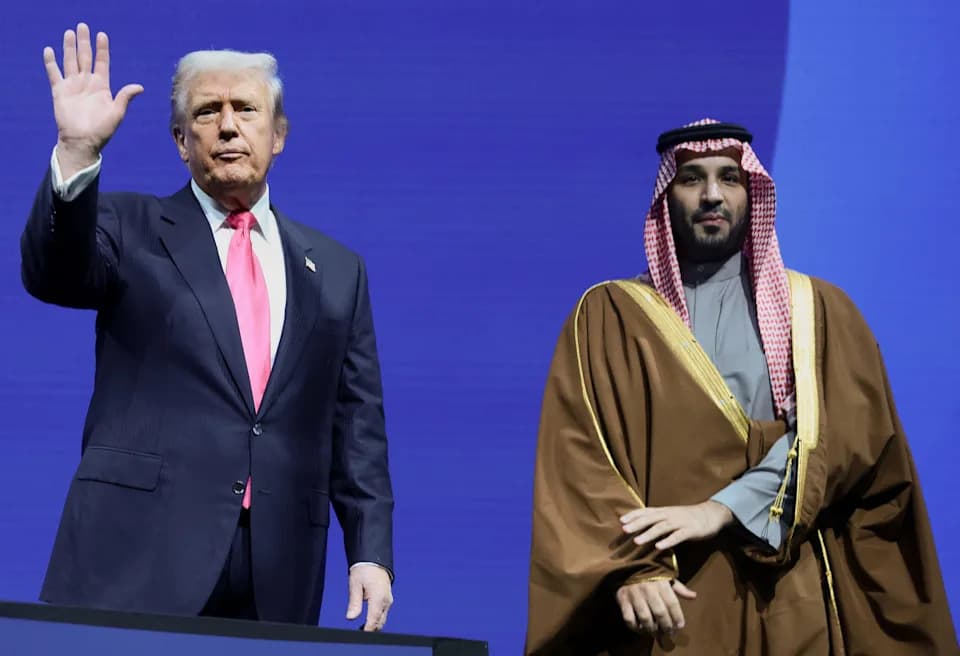
U.S. President Donald Trump and Crown Prince and Prime Minister Mohammed bin Salman of Saudi Arabia attend the U.S.-Saudi Investment Forum in Washington, DC, Nov. 19, 2025.
The Trump administration has signed a 30-year nuclear cooperation agreement with Saudi Arabia to help the kingdom build a civilian nuclear energy program, even as the United States intensifies military pressure on Iran over its nuclear activities. The pact would open substantial commercial opportunities for U.S. firms while raising fresh questions about inspection access and long-standing nonproliferation norms.
What the Agreement Would Do
According to the U.S. Department of Energy, the arrangement is intended to enable Saudi Arabia to develop a civilian nuclear sector and give American companies "great access" to commercial contracts for construction, fuel supply and technical support. Officials said the cooperation could generate billions of dollars in revenue for U.S. firms over the life of the pact.
The agreement appears to permit U.S. companies to build uranium enrichment facilities inside Saudi Arabia to supply its reactors and to provide additional technical expertise. That structure could allow the kingdom to stop importing nuclear fuel and could create a pathway for domestic enrichment in the future.
Dual-Use Risks and Inspection Concerns
Enriched uranium has dual uses: at low enrichment it fuels civilian reactors; at higher levels it can be used in nuclear weapons. Critics argue the deal weakens established nonproliferation safeguards by constraining international inspection access and departing from longstanding U.S. standards.
Thomas Countryman, former assistant secretary of state for international security and nonproliferation: 'This pact reverses 50 years of U.S. leadership in the global nonproliferation architecture.'
Laura Kennedy, a former U.S. ambassador to the International Atomic Energy Agency, warned the agreement 'would set a dangerous precedent' across the Middle East by making it easier for states to develop indigenous enrichment capabilities under civilian guises.
Regional Context
The pact arrives as the U.S. and Israel pursue military pressure against Iran's nuclear infrastructure. Saudi Arabia and Iran are long-standing regional rivals that back opposing sides in conflicts across the Middle East. Crown Prince Mohammed bin Salman has repeatedly said Riyadh does not seek nuclear weapons, but he stated in 2018 that 'without a doubt if Iran developed a nuclear bomb, we will follow suit as soon as possible.'
Observers note the contrast between U.S. efforts to help Saudi Arabia build advanced nuclear infrastructure and the simultaneous campaign to halt Iran's program — a dynamic that critics say could fuel a regional arms-race incentive.
Congressional Review and Political Conditions
The agreement has been signed but is not final. It will be transmitted to Congress for a 90-day review. Lawmakers can vote to reject the pact, but President Trump could veto such a rejection; with Republican control of Congress at the time of signing, an override would be difficult.
On July 23, President Trump added a political condition, saying U.S. nuclear cooperation with Saudi Arabia would be 'totally subject' to Riyadh normalizing relations with Israel under the Abraham Accords. Saudi officials have repeatedly declined to join those accords, citing Palestinian statehood and, more recently, objections tied to the war in Gaza.
What's At Stake
Supporters argue the pact secures U.S. influence and oversight of Saudi nuclear development while creating lucrative business for American firms. Critics counter that the deal creates a troubling double standard: one U.S. ally gains access to advanced nuclear infrastructure while another—Iran—is being targeted militarily for its nuclear activities.
Key unanswered questions include the scope of international inspections, specific safeguards against weapons development, and how U.S. policymakers will reconcile strategic partnerships with global nonproliferation commitments. The pact is likely to provoke intense debate in Washington, in the Middle East, and among international nonproliferation communities as Congress reviews the agreement.
Help us improve.