China has adopted a binding renewables plan to raise wind and solar generation by 53% in five years and boost total renewable output to 1.8 billion tce by 2030. The strategy emphasizes reliability and flexibility, adding 300+ GW of dispatchable renewable peaking capacity and expanding hydropower to 570 GW (including 160 GW pumped storage). It also targets 150 million tce of renewable use outside the power sector, including green hydrogen.
China Commits to 53% Rise in Wind and Solar Over Five Years With Binding Renewables Plan
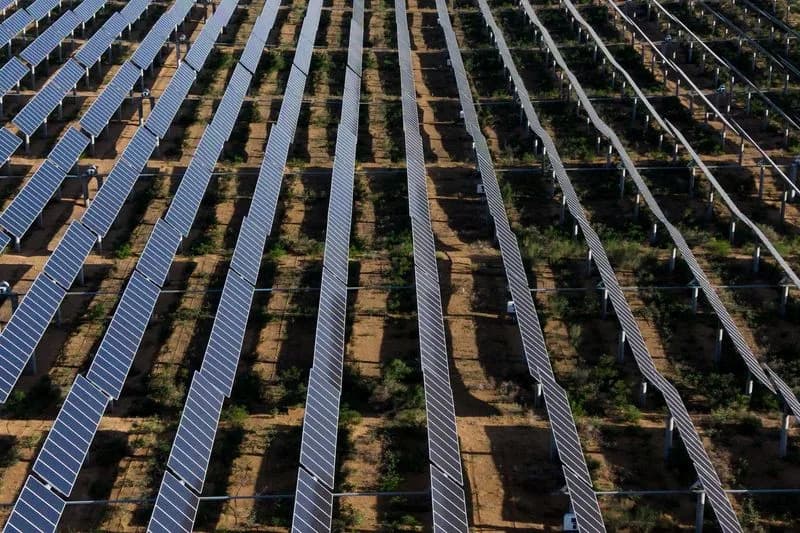
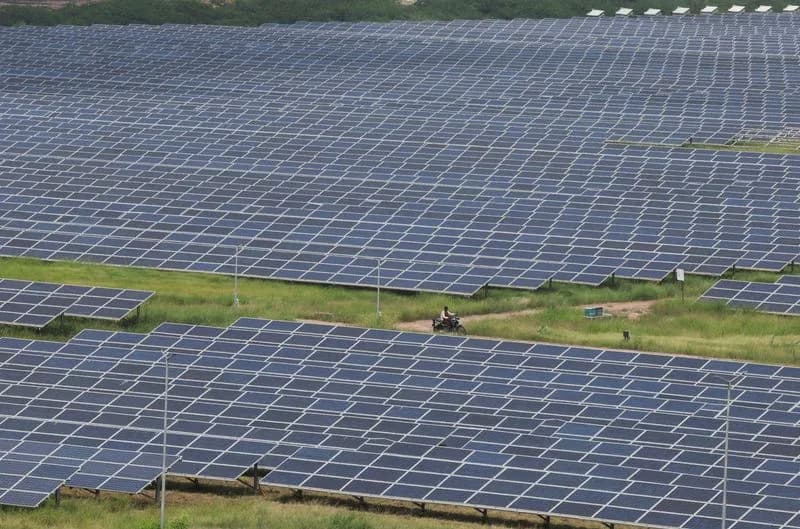
A drone picture shows solar panels at the Dalad Banner Photovaltic Base in Kubuqi desert during an organized media tour, in Ordos, Inner Mongolia Autonomous Region, China, June 12, 2026. REUTERS/Maxim Shemetov
China has unveiled a binding renewable energy plan that aims to boost wind and solar generation by 53% within five years and raise total renewable output to 1.8 billion tons of coal equivalent (tce) by 2030, up from an estimated 1.18 billion tce in 2025. The plan focuses on improving the reliability and flexibility of renewable power during demand spikes by pairing wind and solar with storage and dispatchable resources.
Key Targets and Measures
- Wind and Solar Growth: Increase wind and solar generation by 53% over five years.
- Total Renewables: Reach 1.8 billion tce of renewable generation by 2030 (from 1.18 billion tce in 2025).
- Peak Reliability: Ensure wind and solar, backed by storage, can supply 8% of installed capacity during peak-demand periods and cover 20% of electricity use during demand spikes by 2030.
- Peaking Capacity: Add more than 300 GW of renewable peaking capacity by 2030—dispatchable resources that can meet sudden demand increases.
- Hydropower Expansion: Target 570 GW of hydropower capacity by 2030 (up from 450 GW for 2025), including 160 GW of pumped-storage capacity (up from 66 GW in 2025) and improved operational flexibility.
- Non-Power Uses: Aim for 150 million tce of wind and solar use outside the power sector by 2030, covering heating, cooling and green hydrogen production (with a goal of 2 million metric tons/year of green hydrogen by 2030).
- Offshore Development: Build deep-sea offshore wind bases and explore large-scale, centralized development models for offshore projects, with proposals to integrate offshore wind with underwater data centers.
- 100% Green Megabases: Pilot renewable megabases that transmit only green electricity over the ultra-high-voltage (UHV) grid.
Context and Implementation
The plan signals a shift toward binding national targets for clean energy deployment, with an emphasis on system flexibility and storage to manage variability. Currently, wind and solar account for roughly 20% of power transmitted on China’s ultra-high-voltage network, which moves electricity from renewable "megabases" in the north and northwest to demand centers in the east. The new measures aim to increase the share and reliability of those flows.
Officials intend to accelerate investment in energy storage, pumped hydro, and dispatchable renewable peaking resources, while piloting large offshore projects and integrating them with other infrastructure such as data centers. The plan also highlights non-power-sector electrification, including heating, cooling and industrial uses, to broaden the role of renewables.
Reporting by Colleen Howe; Editing by Hugh Lawson. Data reference: Global Energy Monitor for UHV grid share.
Help us improve.