Summit Therapeutics has released extended Phase III HARMONi results showing a statistically significant PFS benefit for ivonescimab in EGFR‑mutated non-squamous NSCLC. A June 2026 cut-off produced an OS hazard ratio of 0.76 in a 165‑patient Western subgroup, improving on earlier reports. Ivonescimab — approved in China as Yi Da Fang through Akeso — maintained an acceptable safety profile. Summit has filed a BLA with the FDA and is targeting a PDUFA date of 14 November 2026.
Summit Publishes Extended Phase III Results for Ivonescimab; Western OS Hazard Ratio Improves to 0.76 Ahead of FDA Decision
Summit Therapeutics has announced longer term data from the Phase III HARMONi trial. Credit: Piotr Swat / Shutterstock.com
Summit Therapeutics has released updated Phase III data for ivonescimab in epidermal growth factor receptor (EGFR)-mutated non-squamous non-small cell lung cancer (NSCLC) as the company awaits a US regulatory decision.
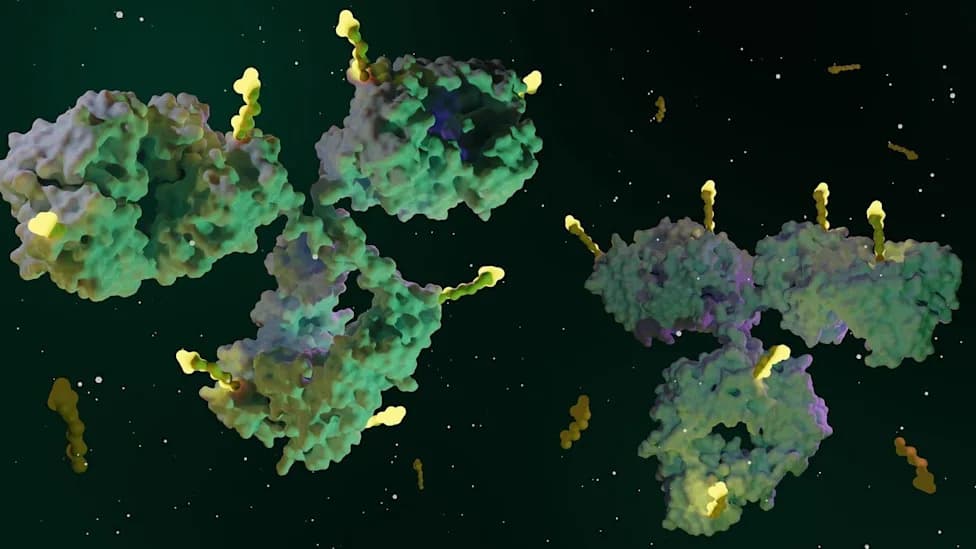
The global HARMONi study (NCT06396065) evaluated an investigational bispecific antibody, ivonescimab, given with platinum-doublet chemotherapy versus placebo plus chemotherapy in patients with EGFR-mutated, locally advanced or metastatic non-squamous NSCLC who had previously received a third-generation EGFR tyrosine kinase inhibitor (TKI).
Key Efficacy Findings
In the newly reported analysis with a data cut-off in June 2026, the trial met one of its two primary endpoints: a statistically significant improvement in progression-free survival (PFS) in the primary analysis. In a predefined Western subgroup of 165 patients, overall survival (OS) after treatment with ivonescimab plus chemotherapy produced a hazard ratio (HR) of 0.76, an improvement from the HR of 0.84 reported in September 2025. That September analysis used a 23.2-month cut-off, at which point most Western participants had either discontinued therapy or reached two years of treatment.
Earlier results published in September 2025 showed a 24% reduction in the risk of death in Asian patients, based on a longer follow-up of 32.7 months.
Safety And Regulatory Status
The latest analysis reported that ivonescimab plus chemotherapy continued to demonstrate an acceptable and manageable safety profile consistent with prior Phase III data. Ivonescimab is already approved in China through partner Akeso and is marketed there as Yi Da Fang.
Summit has submitted a Biologics License Application (BLA) to the US Food and Drug Administration (FDA) based on the HARMONi data and is working to a Prescription Drug User Fee Act (PDUFA) target action date of 14 November 2026. The company has shared the updated OS analysis with the FDA as part of its BLA package.
Dr Maky Zanganeh, President and Co-CEO of Summit, said: "The positive results from this latest overall survival analysis in the global HARMONi study continue to support the translation of the therapeutic profile of ivonescimab across the globe, including Western patients from North America and Europe. We have made this updated analysis available to the FDA as we continue to progress our BLA filing for the potential approval of ivonescimab in the US."
Competitive Landscape
The NSCLC field remains active. At the American Society for Clinical Oncology (ASCO) 2026 meeting, several large companies presented data. Notably, Bristol Myers Squibb (BMS) and BioNTech reported results for pumitamig, a PD-L1/VEGF bispecific evaluated in the ROSETTA Lung-02 study (NCT06712316). In a cohort of 40 response-evaluable patients with squamous or non-squamous disease, the overall response rate (ORR) was 70% (two complete responses and 26 partial responses); the squamous subgroup showed an ORR of 81.8% (9/11) at a 1,400 mg dose.
Market analysis from GlobalData projects that PD-1/PD-L1 and CTLA-4 inhibitors such as MSD's Keytruda (pembrolizumab) and BMS's Opdivo (nivolumab) are expected to be top sellers across the seven major markets (7MM) by 2032, with forecasted revenues of approximately $13.9 billion and $21.9 billion, respectively.
Overall, the updated HARMONi results strengthen Summit's regulatory submission and suggest a consistent safety profile and emerging OS benefit in Western patients, while the broader NSCLC treatment landscape continues to evolve rapidly.
Help us improve.