Senior diplomats from Asia, Europe and North America met in Manila at the ASEAN Regional Forum to press for de-escalation amid renewed Middle East hostilities and maritime tensions in the South China Sea. The Iran-linked conflict and blockades in the Strait of Hormuz and Red Sea have raised global energy security concerns that directly affect ASEAN economies. Attendees, including U.S. Secretary of State Antony Blinken and Russia's Sergei Lavrov, urged diplomacy while regional leaders warned against outside interference.
Top Diplomats Convene in Manila as ASEAN Forum Tackles Middle East Fallout and South China Sea Tensions
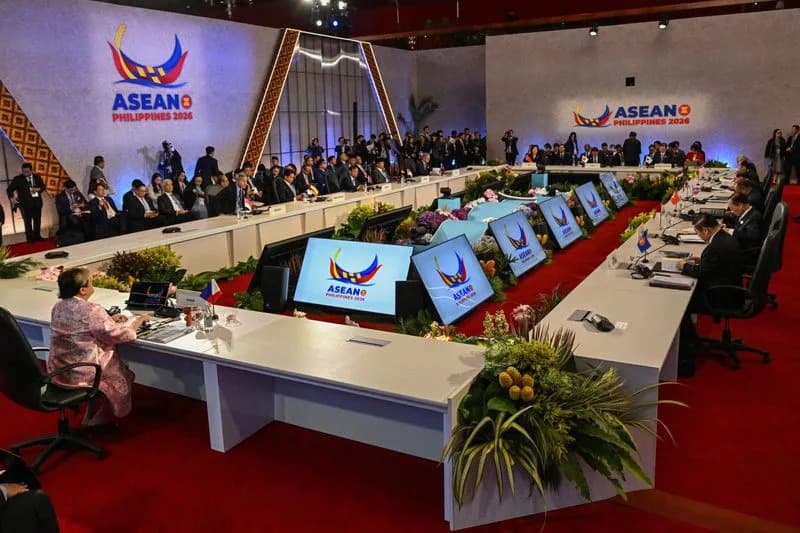
Philippine Foreign Secretary Theresa Lazaro delivers the opening statement during the 27th Association of Southeast Asian Nations (ASEAN) Plus Three Ministers’ Meeting in Pasay, Metro Manila, Philippines, July 23, 2026. JAM STA ROSA/Pool via REUTERS
MANILA, July 23 — Senior diplomats from Asia, Europe and North America met on Thursday at the security-focused ASEAN Regional Forum in Manila to press for peaceful outcomes following renewed hostilities in the Middle East and rising maritime tensions in Southeast Asia.
High-Level Attendance and Agenda
The plenary brought together senior officials including U.S. Secretary of State Antony Blinken, Russia's Foreign Minister Sergei Lavrov, European Union foreign policy chief Josep Borrell, and top diplomats from China, Australia, India, Japan, Britain and other countries. Leaders and ministers were expected to prioritize calls for de-escalation and secure supply chains amid global energy market concerns.
Middle East Fallout and Global Energy Risks
The conflict involving Iran and the related disruptions in the Strait of Hormuz and the Red Sea dominated discussions. The 11-member Association of Southeast Asian Nations — a bloc with a combined GDP of roughly $3.8 trillion — is heavily reliant on Middle East energy and is particularly exposed to the economic fallout and inflationary pressures from any prolonged disruption to oil shipments.
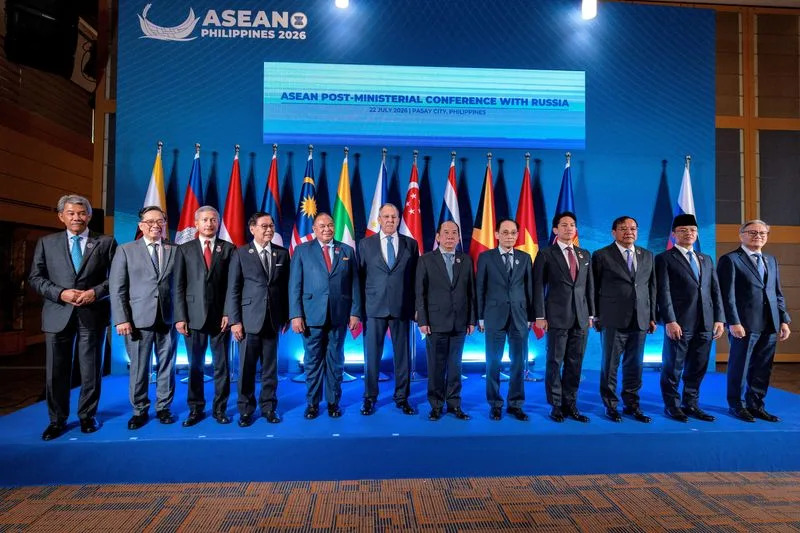
MANILA, PHILIPPINES - JULY 22: Russia Foreign Minister Sergei Lavrov poses for a group photo with ASEAN foreign ministers during the ASEAN Post-Ministerial Conference with Russia on the sidelines of the ASEAN Foreign Ministers' Meeting at the Philippine International Convention Center on July 22, 2026 in Pasay, Metro Manila, Philippines. Ezra Acayan/Pool via REUTERS
"The world has entered a new period of turbulence and transformation," China's Vice Foreign Minister Hua Chunying said in opening remarks at a concurrent forum involving ASEAN, Japan, South Korea and China. "The situation in the Middle East has spilled over into energy and food supply chains, and security and resilience have been disrupted ... demand for maintaining peace and stability has become more urgent."
Delegates noted it had been 12 days since a ceasefire collapsed in the Middle East and that U.S. forces had conducted strikes for a consecutive number of nights. Iranian-aligned Houthi militants also claimed attacks on two Saudi oil tankers, part of a blockade that risks creating an additional choke point for global oil shipments in the Red Sea alongside the Strait of Hormuz.
U.S. officials attending the forum reiterated that Washington prefers a diplomatic solution but warned that Tehran had not engaged seriously in talks, complicating mediation efforts. Secretary Blinken was scheduled to hold bilateral talks during the forum, including discussions with Russia's foreign minister on problems such as the Ukraine war and broader security cooperation.
South China Sea: Maritime Incidents and Regional Responses
Another major focus was the South China Sea, where tensions have long simmered over competing territorial claims. The forum followed a brief altercation earlier in the week between China's coast guard and Philippine navy personnel near a disputed reef inside the Philippines' exclusive economic zone, an incident that prompted both capitals to summon each other's ambassadors.
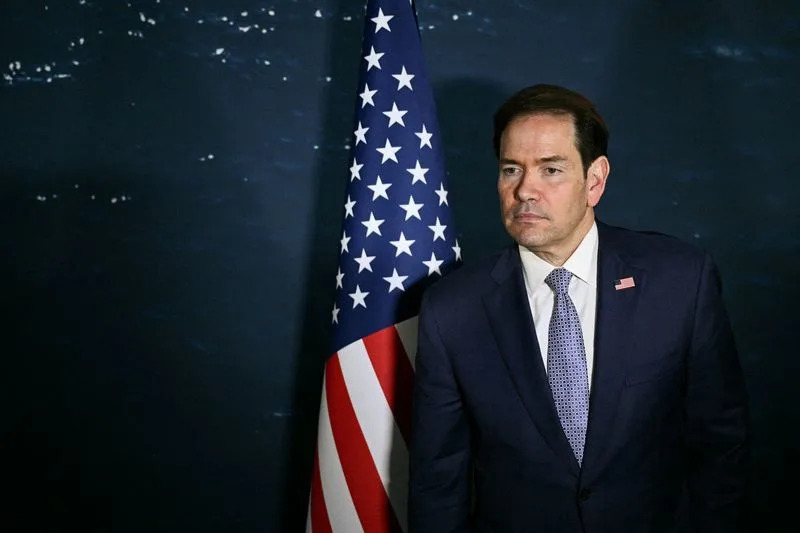
US Secretary of State Marco Rubio listens during a press conference on the sidelines of the Association of Southeast Asian Nations (ASEAN) Foreign Ministers' Meeting in Pasay, Philippines on July 22, 2026. BRENDAN SMIALOWSKI/Pool via REUTERS
Beijing asserts sovereignty over almost the entire South China Sea through a historical line that overlaps the exclusive economic zones of Brunei, Indonesia, Malaysia, the Philippines and Vietnam. China does not accept a 2016 arbitration ruling that rejected those broad maritime claims under international law.
China's Foreign Minister Wang Yi told ASEAN counterparts that the South China Sea should be treated as "our common home," urging cooperation among regional states and cautioning against outside interference. He called on regional countries to take the lead in maintaining peace and stability.
Outlook
Participants left Manila with calls for restraint and continued diplomacy, but major disagreements remain between key powers on both the Middle East conflicts and maritime disputes. The forum underscored ASEAN's strategic position as a convening platform for rival powers to manage crises that carry significant economic and security consequences for the region and the world.
(Reporting by Mikhail Flores, Karen Lema, Nestor Corrales and Michael Martina in Manila and Liz Lee in Beijing; Writing by Martin Petty; Editing by David Stanway)
Help us improve.