Elbit Systems has proposed a modular, turnkey kit to convert standard merchant cargo ships into carriers for nine to 12 Hermes 650 Spark Maritime drones. The Hermes 650 (1,433 lb / 650 kg) is STOL-capable and uses satellite links so aircraft can be controlled from shore, reducing shipboard crew and command needs. The kit avoids ship-class-specific structural work, though weight and installation time were not disclosed. The idea responds to growing demand for distributed maritime drone basing and contrasts with China’s January 2026 catapult-equipped cargo-ship demonstration.
Elbit Unveils Turnkey Kit To Turn Merchant Ships Into Hermes 650 Drone Carriers

Israeli firm unveils kit to convert any merchant ship into Hermes 650 drone carrier
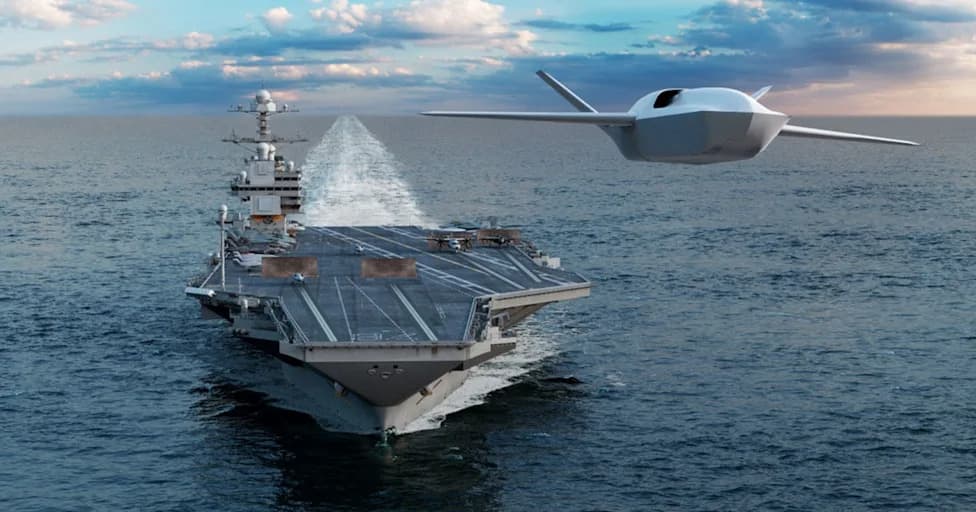
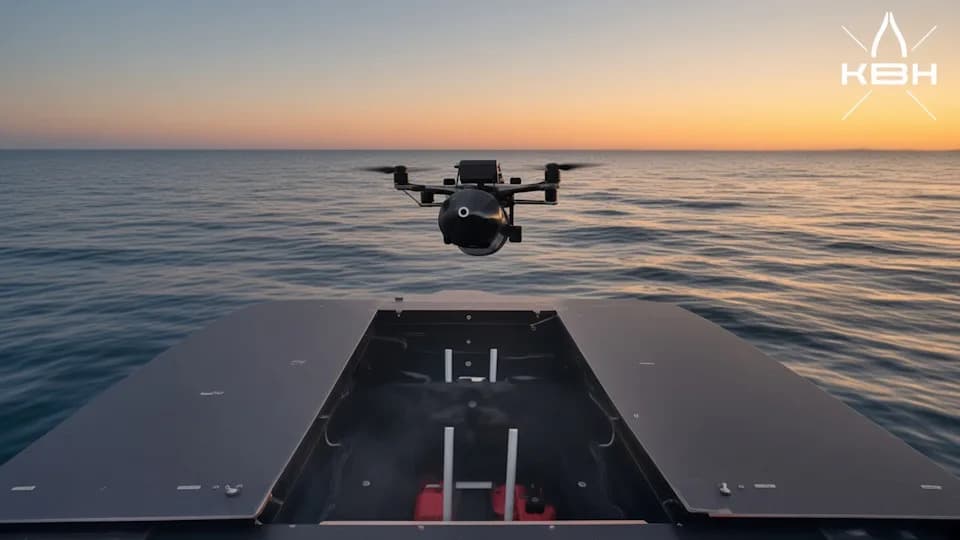
Elbit Systems on July 21 published a concept for a modular, turnkey kit that would allow standard commercial cargo vessels to operate as drone carriers for its Hermes 650 Spark Maritime unmanned aircraft. The package is designed to host and support nine to 12 Hermes 650 drones on the deck of an existing merchant ship, minimizing the need for ship-class-specific structural work.
How the Concept Works
The Hermes 650 Spark Maritime is a medium-altitude, long-endurance unmanned aircraft with a maximum takeoff weight of 1,433 lbs (650 kg). Its front-mounted engine and wide speed envelope give it strong power margins and enable short takeoff and landing (STOL) operations from a ship's deck without catapults or arresting gear.
Shore-Based Command and Logistics
A key enabler of the conversion concept is the Hermes 650 Spark’s satellite communications. Because the aircraft can be controlled entirely from shore-based ground stations, the converted vessel does not require a full onboard command-and-control center. That reduces crew requirements, onboard equipment and the structural complexity of the conversion, helping keep the kit modular and relatively simple to install.
Turnkey Package And Limits
Elbit describes the product as turnkey: the kit supplies the launch, recovery and support infrastructure for nine to 12 Hermes 650 Spark drones aboard a standard cargo ship. The company has not released the kit’s total weight, installation time or detailed engineering specifications. The STOL-based approach lowers engineering demands compared with catapult-equipped systems but also limits the size and weight of aircraft that can be deployed from converted merchant vessels.
Historical Parallel And Strategic Context
The concept intentionally echoes World War II escort carriers, when the U.S. Navy and Royal Navy converted roughly 130 cargo ships and tankers into light carriers to protect convoys. Modern merchant-ship drone carriers would operate very differently: satellite command links mean ships could host persistent unmanned air assets without full onboard air wings or large command staffs.
Military planners have identified the logistics of basing large numbers of fixed-wing drones far from shore as a growing challenge. Large drone campaigns may involve hundreds or thousands of aircraft across extended theaters, stretching the capacity of existing naval airfields and dedicated warships. Recent threats to commercial shipping in the Red Sea and elsewhere have accelerated interest in distributed maritime basing options that can provide persistent surveillance and response capabilities.
Global Developments
Elbit is not alone in exploring merchant-ship conversions. In January 2026, U.S. defense observers analyzing satellite imagery reported that China demonstrated a cargo ship converted into a drone carrier using an electromagnetic catapult to launch fixed-wing combat drones. That approach allows heavier, faster aircraft to operate from ships but requires far greater engineering and deck integration than Elbit’s STOL-focused kit.
Takeaway
Elbit’s proposal offers a lower-cost, faster option for distributed maritime basing of medium-size fixed-wing drones by leveraging widely available commercial vessels and satellite command links. The concept trades off the ability to operate larger combat aircraft for speed and simplicity of conversion—an attractive proposition for operators needing rapid, distributed surveillance and patrol coverage at sea.
Help us improve.