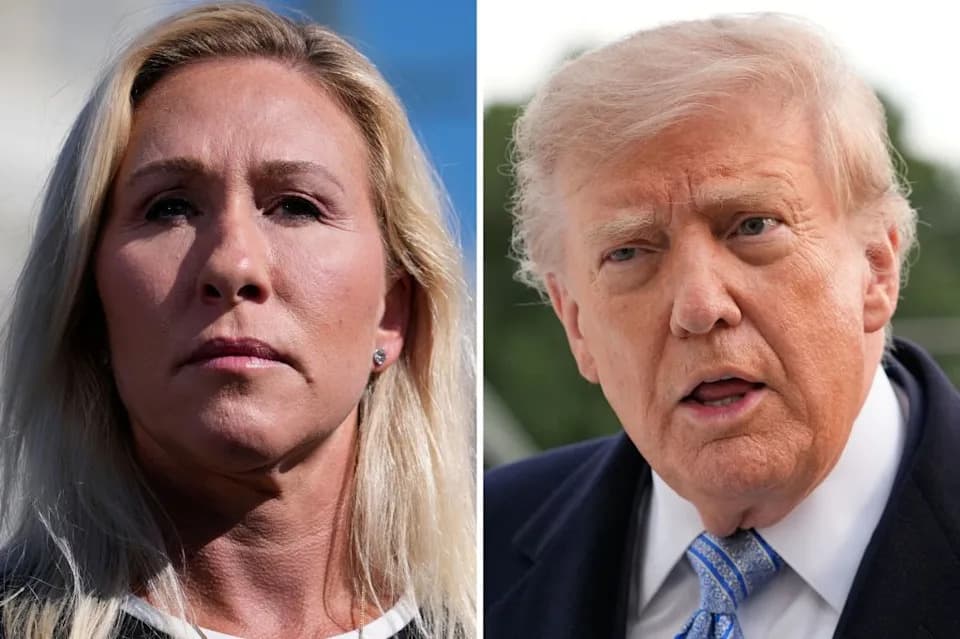
Former Rep. Marjorie Taylor Greene accused the U.S. two-party system of dividing citizens and protecting a wealthy elite, saying it has "enslaved" Americans under about $40 trillion in national debt and warning Social Security and Medicare could be insolvent by 2032. Her comments come as Tucker Carlson announced plans to pursue a new political party, and follow past third-party talk from figures like Elon Musk and Donald Trump. Experts warn creating a viable third party faces significant legal and ballot-access obstacles across states. The debate highlights wider voter frustration over economic and political power dynamics.
Marjorie Taylor Greene Says Two-Party System 'Enslaves' Americans With $40T Debt, Calls Elites The 'Real Enemy'
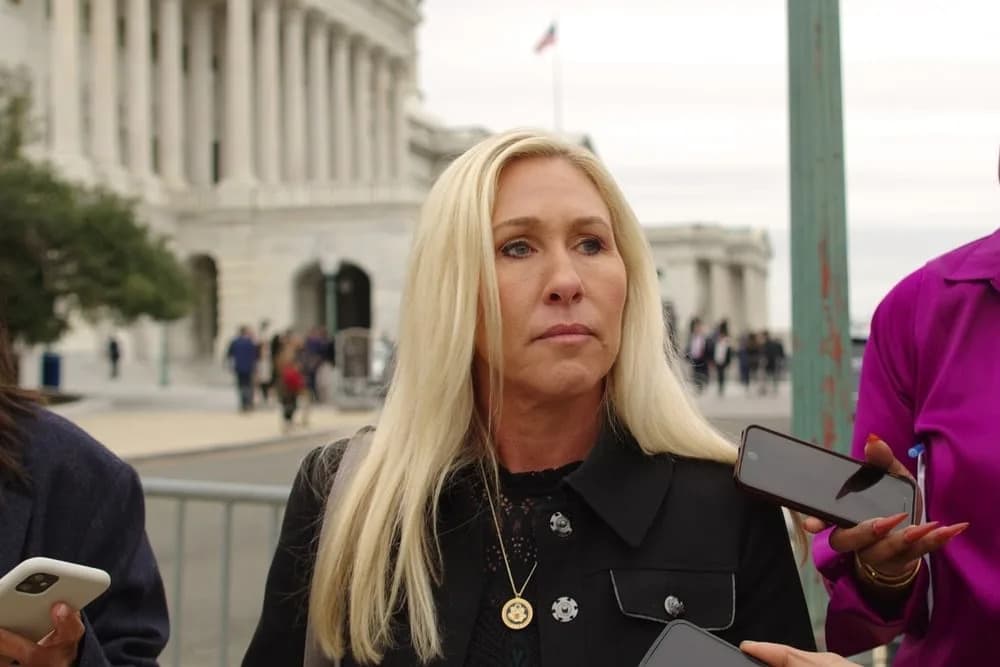
Marjorie Taylor Greene Slams Two-Party System for Enslaving 99% of Americans in Debt, While 'Ruining' the Dollar: 'The Real Enemy…'
Former Georgia congresswoman Marjorie Taylor Greene launched a broad critique of America's two-party political system, arguing that it divides ordinary citizens and protects a wealthy elite. In a post on X (formerly Twitter) late Wednesday, Greene said the system "is designed and functions to divide 99% of Americans so you see each other as the enemy and refuse to work together to overthrow the real enemy, which are the elites."
What Greene Claimed
Greene accused the political duopoly of "enslaving" Americans beneath roughly $40 trillion in national debt, and she warned that Social Security and Medicare could face insolvency by 2032 — a claim she attributes to long-term fiscal trends. She also said the system is "ruining" the value of the U.S. dollar. These are political assertions tied to long-running debates about entitlement funding, federal debt levels, and monetary policy.
"The two party political system in America is designed and functions to divide 99% of Americans so you see each other as the enemy and refuse to work together to overthrow the real enemy which are the elites, who game the system to enrich themselves, hold the power, and enslave…"
— Former Congresswoman Marjorie Taylor Greene (@FmrRepMTG), July 1, 2026
Broader Context: Third-Party Talk and Political Frustration
Greene's remarks appear amid renewed public discussion about alternatives to the Republican–Democrat duopoly. On the same day, former Fox host Tucker Carlson — once a staunch Trump ally — told the Columbia Journalism Review he plans to try to build a "new political party," saying the U.S. has become, in his view, a "one-party state." Carlson recently said he left the Republican Party after decades of support, citing disagreements over foreign policy issues.
High-profile figures have flirted with third-party ideas before: Elon Musk briefly teased the idea of an "America Party" but later stepped back, reporting concerns about alienating existing Republican supporters. And in a 1999 interview with Larry King, Donald Trump — then a businessman — said he was considering the Reform Party because he felt neither major party was "hitting the cord" for many voters.
Practical Hurdles For Third Parties
Election experts caution that forming a viable third party faces steep legal and logistical barriers. State laws differ on party recognition and ballot access, often requiring extensive petition signatures, meeting varying deadlines, and enduring possible litigation. Those practical hurdles help explain why the U.S. political system has remained dominated by two major parties for more than a century.
Why This Matters
Whether one agrees with Greene or not, her comments reflect broader voter frustration about economic insecurity, long-term fiscal challenges, and perceptions that political institutions favor well-connected interests. The debate over how to address national debt, entitlement funding, and political representation is likely to continue, especially if more prominent figures publicly pursue alternatives to the current party structure.
Source: Benzinga reporting; social posts and public statements by Marjorie Taylor Greene, Tucker Carlson, Elon Musk, and historical remarks by Donald Trump.
Help us improve.