Jamestown Island — the site of the first permanent English settlement in North America (1607) — is being threatened by accelerating sea-level rise. Local levels have risen about 1.6 feet over the last century with projections of 3+ feet by 2075, forcing archaeologists to speed excavations and prioritize finds. More than 5 million artifacts have been recovered since the fort’s 1994 rediscovery, but erosion and flooding are turning digs into triage and raising hard choices about which historic sites can be defended.
Rising Seas Threaten Jamestown: Archaeologists Race to Save America's Earliest Stories
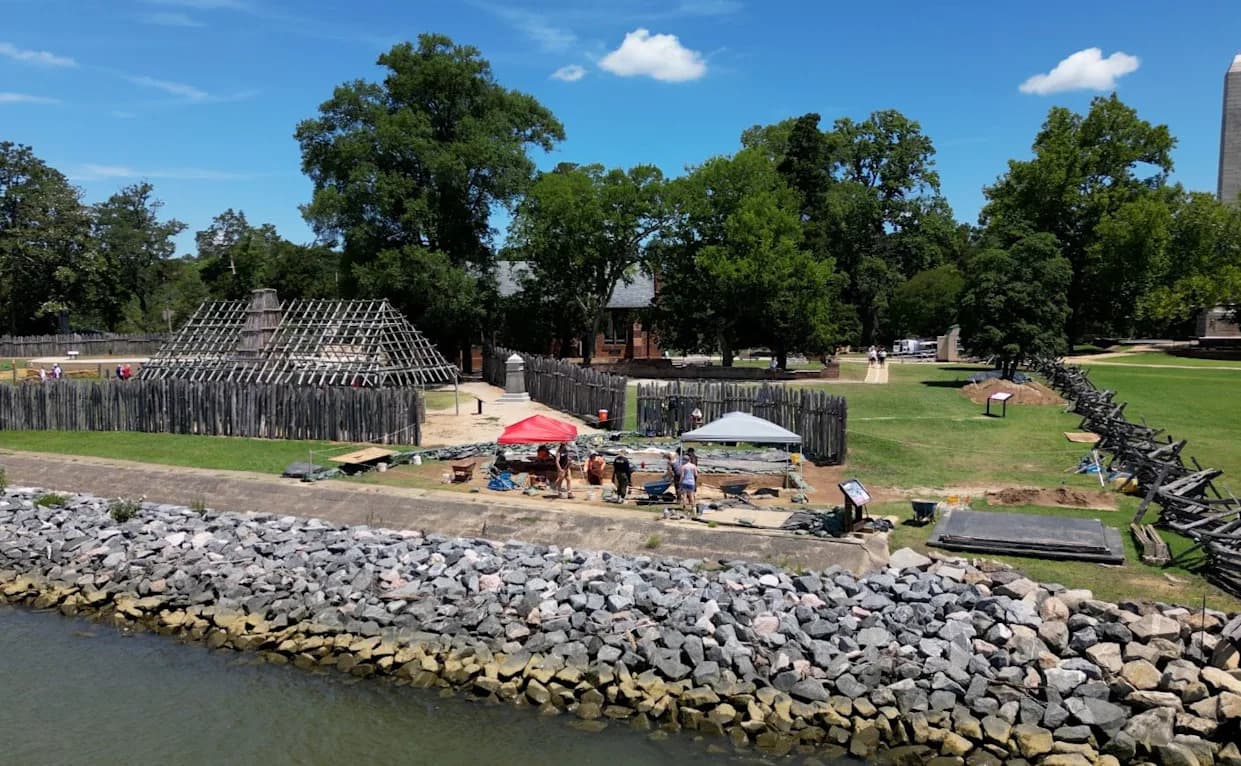
As Seas Rise, American History Could Be Washed Away
Sean Romo stops digging the moment a faint streak appears in the sandy soil of Virginia. It’s a subtle color change, but Romo, director of archaeology at Jamestown Rediscovery, believes it could be another fragment of America’s origin story. "I think it might be a gate," he says quietly.
Around him, teams work in carefully measured squares, removing earth layer by layer. The pace is deliberately slow: each inch of soil could reveal objects that have not seen daylight since the early 1600s. "You can't put a shovel in the ground without finding something," Romo says.
Why Jamestown Matters
Few places in the United States carry the weight of Jamestown Island. Founded in 1607, Jamestown was the first permanent English settlement in North America. It hosted the colony’s first representative assembly in 1619, saw the marriage of Pocahontas and John Rolfe, and was the landing site for the first Africans forced into English America—events that have shaped U.S. history.
What many thought lost to the James River was rediscovered in 1994: the original Jamestown fort. Since then, archaeologists have recovered more than 5 million artifacts — glass, pottery, tools, beads and human remains — that have deepened scholars' understanding of the English settlers, the Powhatan peoples, and the first Africans in English America.
How Rising Seas Are Affecting the Site
That landscape of preservation is now under attack from rising waters. Local sea level has risen roughly 1.6 feet over the last century and is accelerating; scientists project another three feet or more by 2075. The James River is steadily eroding one side of the island while wetlands and encroaching tides overrun the other. Excavation pits now flood after heavy rains or unusually high tides, turning digs into urgent triage operations.
"We always have to be meticulous," Romo says. "But we do need to pick the pace up, because we are under severe threat from climate change. And the real big one for us is flooding."
What Archaeologists Are Doing
Teams are using ground-penetrating radar to identify vulnerable features before they break ground, allowing them to prioritize the most at-risk areas. Every excavation now involves quick decisions about what can be recovered and documented before the water claims it. Local defenses, like Jamestown’s seawall (built in 1902 and recently reinforced with giant boulders), can buy time but are not permanent solutions.
A Broader National Dilemma
Jamestown is one of many coastal heritage sites facing similar threats. Climate Central estimates that by 2050 roughly 2.5 million Americans — and many treasured historic places — could face severe coastal flooding. Rob Young, a coastal geologist assessing risks across the National Park Service’s coastal units, warns the nation's coastline map is changing faster than it did a century ago.
Some historic structures can be moved, as engineers once relocated the Cape Hatteras Lighthouse inland in 1999. Others, Young notes, cannot be relocated — "We're not going to move Fort Sumter." Communities and policymakers will have to decide which places can realistically be defended and which may be surrendered to a changing coast.
Romo frames it plainly: "If we do nothing, we're going to go from Jamestown Island to Jamestown Islands in the next 50 years. The time to act is now, to protect this space and to make sure future generations can still learn about and experience the place where American history was made."
Reporting: Ben Tracy for Climate Central. Original piece appeared via Katie Couric Media.
Help us improve.