Archaeologists and local volunteers are urgently recovering Yup'ik artifacts at the Nunalleq excavation near Quinhagak after Typhoon Halong flooded the site and washed thousands of objects onto the beach. Coastal erosion—exacerbated by decreasing sea ice and thawing permafrost tied to climate change—now allows seawater to reach excavation pits at high tide. Since 2009 the site has produced over 100,000 artifacts, and organizers say emergency funding is needed to continue salvage and conservation work.
Race to Save Nunalleq: Storms Threaten Centuries-Old Yup'ik Artifacts on Alaska's Coast
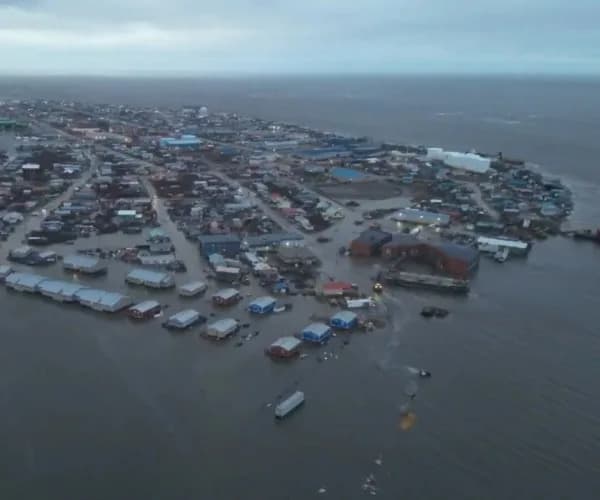
In this aerial photo provided by the Alaska Department of Transportation and Public Facilities, the city of Kotzebue, Alaska experiences flooding, Wednesday, Oct. 8, 2025. (Alaska Department of Transportation and Public Facilities via AP)
Archaeologists and community members are racing against time to recover centuries-old Yup'ik artifacts at the Nunalleq excavation near Quinhagak after a powerful storm last fall flooded the site and scattered thousands of objects along the Bering Sea shore.
Storm Damage and an Urgent Salvage
In October 2025, the remnants of Typhoon Halong slammed into western Alaska with hurricane-force winds and record flooding, forcing more than 1,000 people from their homes. The storm inundated the Nunalleq dig site and washed artifacts onto the beach, prompting an emergency recovery effort this summer.
'I said to my husband, "Look, what's that?"' recalled Quinhagak resident Jenny Matthew after she found a smooth wooden bowl carved by villagers 400 to 600 years ago on the storm-ravaged shoreline.
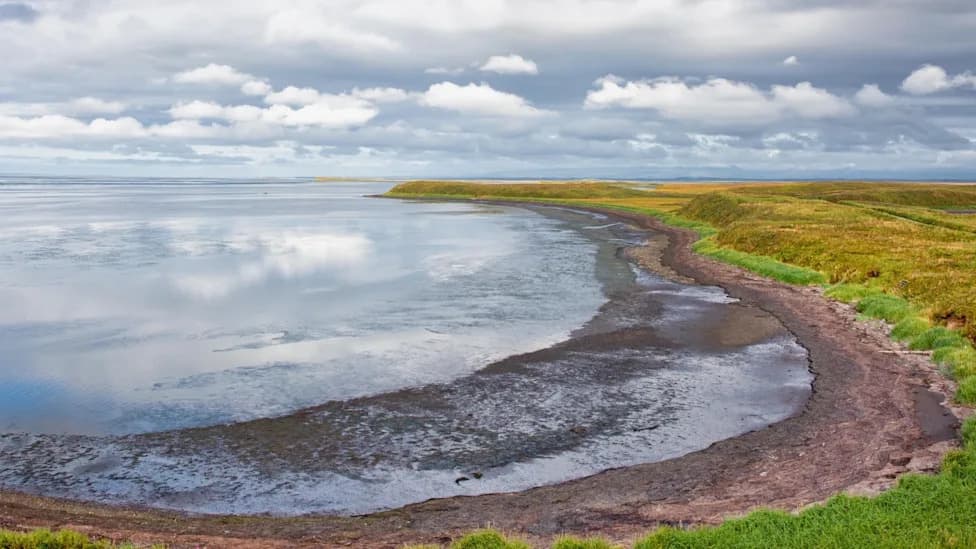
The storm also eroded the narrow strip of land separating the site from the sea. At some high tides seawater now reaches the excavation pit, increasing the risk that another storm could undo years of careful work.
'It's every bit as tough as working in front of bulldozers,' said lead archaeologist Rick Knecht, describing the fast-moving coastal erosion and the urgency of the salvage operation.
Climate Drivers and Cultural Stakes
Scientists attribute the coast's increased exposure to storm damage to decreasing sea ice and thawing permafrost—changes linked to human-caused climate warming. Those shifts accelerate erosion and make archaeological sites like Nunalleq far more vulnerable.
Excavations at Nunalleq began in 2009 after thawing permafrost revealed large caches of artifacts. The University of Aberdeen reports the site has produced more than 100,000 objects, including carved wooden masks, kayak components, sewing needles and everyday items that illuminate Yup'ik life before outside contact.
The finds are housed at the Nunalleq Culture and Archaeology Center in Quinhagak, which now holds the world's most extensive collection of precontact Yup'ik material culture.
Volunteer Effort and Funding Needs
A mostly volunteer team mounted an emergency dig this summer; Knecht said the team hopes to return next summer if funding allows. Quinhagak Heritage Inc., the local nonprofit that manages the excavation, is accepting donations and the team has launched online crowdfunding to support continued recovery and conservation work.
'They are interwoven into us as people, and we feel a great sense of responsibility to care for them well, and to take them into the future with us,' said Elizabeth Church, director of Quinhagak Heritage Inc., describing the trauma of seeing artifacts strewn across the beach and the community's drive to protect them.
With the fall storm season approaching, archaeologists and community leaders emphasize that rapid action is necessary to safeguard an irreplaceable record of Yup'ik history.
Help us improve.