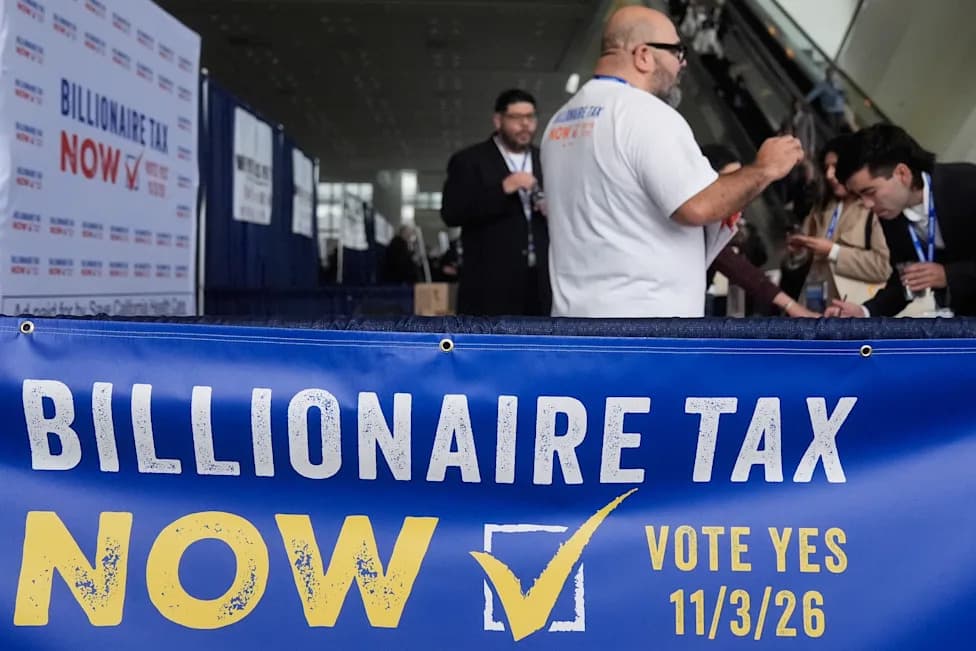
The SEIU-backed initiative would impose a one-time 5% tax on Californians with net worths above $1 billion as of Jan. 1, 2026, aiming to raise about $100 billion primarily for Medicaid. Gov. Gavin Newsom and a coalition of healthcare, education and housing groups oppose the plan, warning it could drive wealthy residents out and destabilize revenues. The Legislative Analyst’s Office expects large initial receipts but projects subsequent declines in income-tax revenue. The campaign is drawing heavy spending from opponents and would likely face legal challenges if approved.
California Ballot: One-Time 5% Tax on Billionaires to Fund Medicaid Sparks High-Stakes Battle
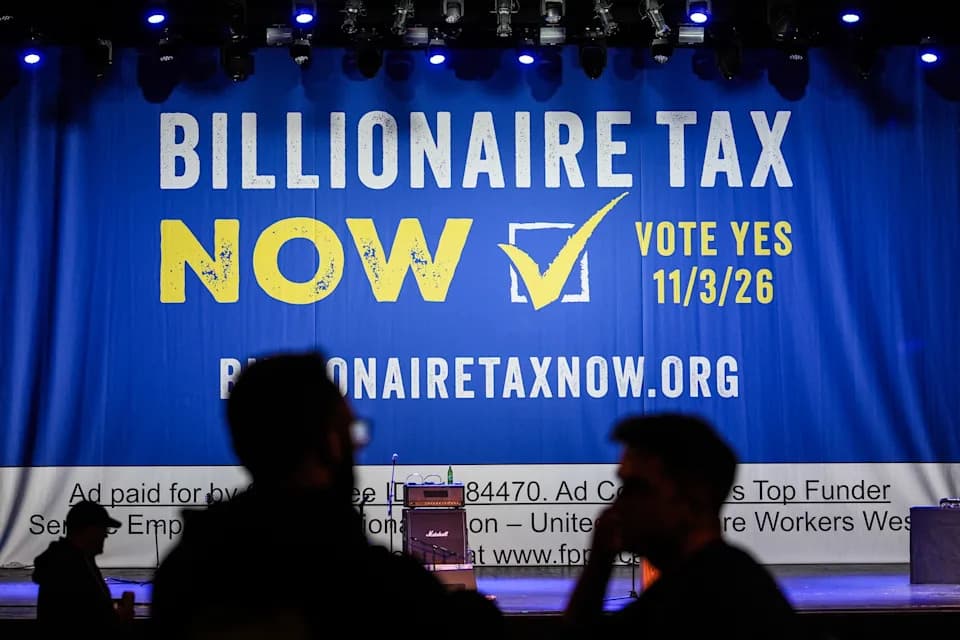
FILE - A large banner is seen at a campaign event for a proposed "billionaires tax" in Los Angeles on Feb. 18, 2026. (AP Photo/Jae C. Hong, File)(AP Photo/Jae C. Hong)
California voters will decide this November on a high-profile ballot initiative that would impose a one-time 5% tax on individuals with a net worth above $1 billion who were California residents as of Jan. 1, 2026. The measure, backed by Service Employees International Union (SEIU) Healthcare Workers West, aims to raise roughly $100 billion, with most proceeds earmarked to shore up the state’s Medicaid program after federal funding cuts.
What the Measure Would Do
The initiative would levy a single 5% surcharge on net worth above $1 billion, applied only to qualifying residents on the specified date. Supporters say the funds would be spent over multiple years to stabilize healthcare coverage and other services affected by federal reductions.
Who Supports and Who Opposes
Supporters: SEIU Healthcare Workers West and allied progressive groups argue the tax targets an extremely small, wealthy slice of Californians and would provide a major infusion for Medicaid and social services.
Opponents: Democratic Gov. Gavin Newsom and a broad coalition of healthcare, education and housing organizations — including the California Medical Association and the California School Boards Association — have criticized the proposal. They argue it is a short-term fix that could prompt wealthy residents to leave the state and destabilize long-term revenues.
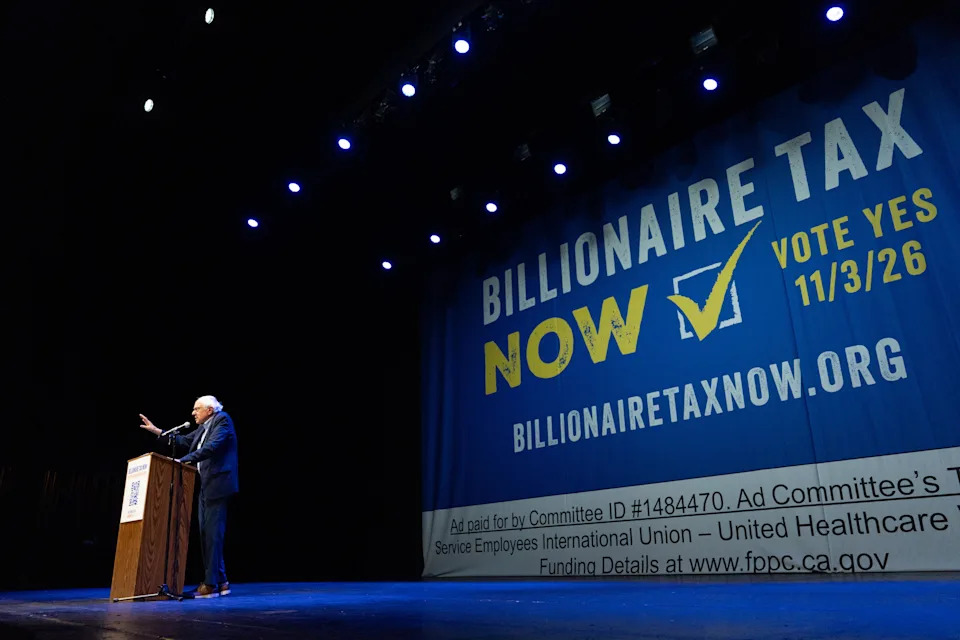
FILE - Sen. Bernie Sanders, I-Vt., addresses the crowd at a campaign event for a proposed "billionaires tax," in Los Angeles, Feb. 18, 2026. (AP Photo/Jae C. Hong, File)(AP Photo/Jae C. Hong)
“I am all in on this,” union President Dave Regan said on a Zoom call, calling opponents “totally out of touch.”
Brian Brokaw, a Newsom adviser leading an opposition committee, said the plan would “make California’s biggest challenges worse” and described it as a one-time grab that risks driving away the state’s sustainable tax base.
Fiscal Outlook and Analysis
The nonpartisan Legislative Analyst’s Office (LAO) estimates the measure could generate tens of billions of dollars in the first few years but warns that California’s ongoing income tax receipts could decline by hundreds of millions of dollars annually thereafter. Critics point to California’s heavy reliance on its top 1% of earners for nearly half of personal income tax revenue as a key vulnerability.
Money, Messaging and Legal Risks
Opponents — including many Silicon Valley executives — have already moved assets out of state or threatened to do so and have poured millions into campaigns to defeat the measure. Since the proposal was announced last October, Google co-founder Sergey Brin has donated $82 million to a political committee called Building a Better California; that committee has raised more than $118 million in total from fewer than a dozen donors.
The union briefly offered a scaled-back alternative — a 2% surcharge on billionaires — but the governor’s office said the lower rate did not change its opposition. Political analysts note that support for ballot initiatives often softens as Election Day approaches, and legal challenges are likely if the measure passes.
Next Steps
The measure will appear on the November ballot. Voters, advocacy groups and well-funded political committees will continue to debate the trade-offs between a large, one-time revenue infusion for Medicaid and the potential long-term fiscal and economic impacts on the state.
Help us improve.