Abelardo de la Espriella narrowly won Colombia's presidency and takes office on August 7 pledging investor-friendly economic reforms, mega-prisons and a hardline security agenda. He inherits an economy with higher debt, rising inflation, a suspended $9.8 billion IMF credit line and a one-third drop in foreign investment after Gustavo Petro's expanded social programs. Major challenges include powerful drug cartels, growing illegal armed groups, and the political risks of aggressive social and security policies.
What to Expect From Colombia's New President: De la Espriella’s Agenda and the Challenges Ahead
What To Expect From Colombia's New President
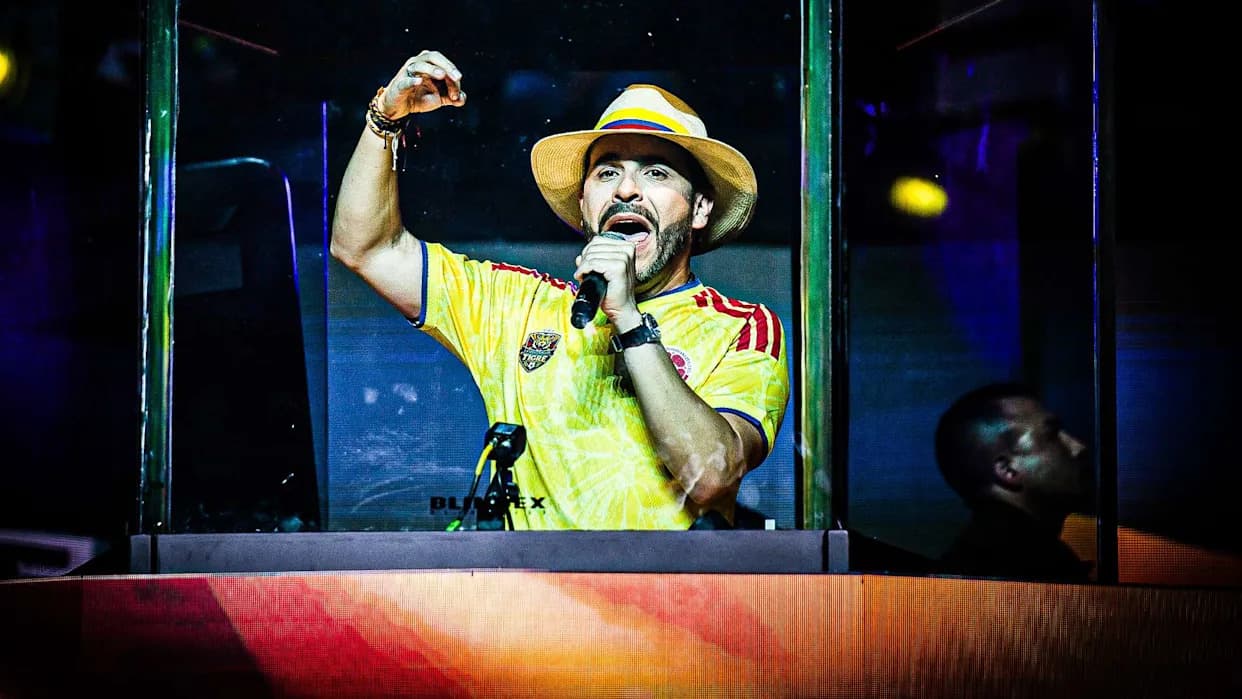
On Wednesday, left-wing lawmaker Iván Cepeda conceded the Colombian presidency to Abelardo de la Espriella, handing power to a right-leaning populist who prevailed by less than one percentage point. De la Espriella ran a high-profile campaign that blended free-market economics with socially conservative rhetoric and a promise to take a hard line on violent crime and drug trafficking.
A Borrowed Playbook
De la Espriella has openly borrowed tactics and slogans from other recent Latin American leaders. He has pledged to build large, high-security prisons—evoking El Salvador's Nayib Bukele—and promised sweeping budget cuts similar to those championed by Argentina's Javier Milei. While Milei calls himself "the lion," de la Espriella has adopted the moniker "the tiger."
Economic Context
He takes office on August 7 facing an economy that grew more dependent on the state under outgoing president Gustavo Petro. Petro expanded social programs that reduced poverty but were financed through higher borrowing and new taxes on banks, accumulated wealth and the fossil-fuel industry. Those policies coincided with a decline in foreign direct investment—falling by about one-third during Petro's term—and prompted the International Monetary Fund to suspend a $9.8 billion credit line in 2025, citing a widening fiscal deficit.
Inflation has eased from a post-pandemic peak near 13 percent but recently ticked up from 5.68% in April to 5.84% in May—the largest monthly rise since August 2024. Unemployment has fallen to below 9%, but new labor regulations enacted in June 2025 could slow formal job creation, according to Deloitte.
Security Challenges
Public security is central to De la Espriella's mandate. Although the Revolutionary Armed Forces of Colombia (FARC) signed a peace accord in 2016 and formally disarmed in 2017, other illegal armed groups have expanded. The National Liberation Army and numerous splinter organizations have filled parts of the vacuum; the BBC reports that illegal armed groups roughly doubled their membership in the past five years.
Political violence has risen: last year, right-wing presidential hopeful Miguel Uribe was assassinated. Authorities blamed a FARC splinter group, Second Marquetalia, though definitive evidence tying the organization to the killing was not publicly presented. That assassination helped galvanize De la Espriella—who returned from a year living in Florence, Italy—and propelled him to campaign behind bulletproof glass while pledging to "wage war" on militias.
Organized crime remains deeply intertwined with political violence. Colombia's cartels are estimated to produce and export nearly $200 billion in cocaine annually. Many armed groups finance themselves through the narcotics trade, which complicates efforts to separate ideological militancy from criminal enterprise.
Social and Civil Liberties
De la Espriella campaigned on culture-war issues, criticizing what he calls "gender ideology" and opposing same-sex adoption. Speaking on the campaign trail, he argued that "a child needs a father and a mother, those roles." Critics warn that his tough-on-security rhetoric combined with socially authoritarian positions could threaten civil liberties if unchecked.
What to Watch
- Fiscal Policy: Will De la Espriella roll back Petro-era taxes and reduce public spending without triggering unrest?
- Investor Confidence: Can he restore foreign direct investment and convince multilateral lenders to re-engage?
- Security Strategy: How will his promised crackdown on militias and cartels balance effectiveness with respect for human rights?
- Social Policy: Will culture-war measures affect civil liberties and minority rights?
De la Espriella vows to return Colombia to macroeconomic stability and to protect citizens from violent militias. Achieving those goals will require delivering credible fiscal management and meaningful security improvements while avoiding the authoritarian pitfalls associated with some recent populist leaders in the region.
Bottom line: The incoming administration faces an urgent trifecta—reviving investor confidence, dismantling criminal-financed armed groups, and managing social tensions—any one of which could define De la Espriella's presidency.
Help us improve.