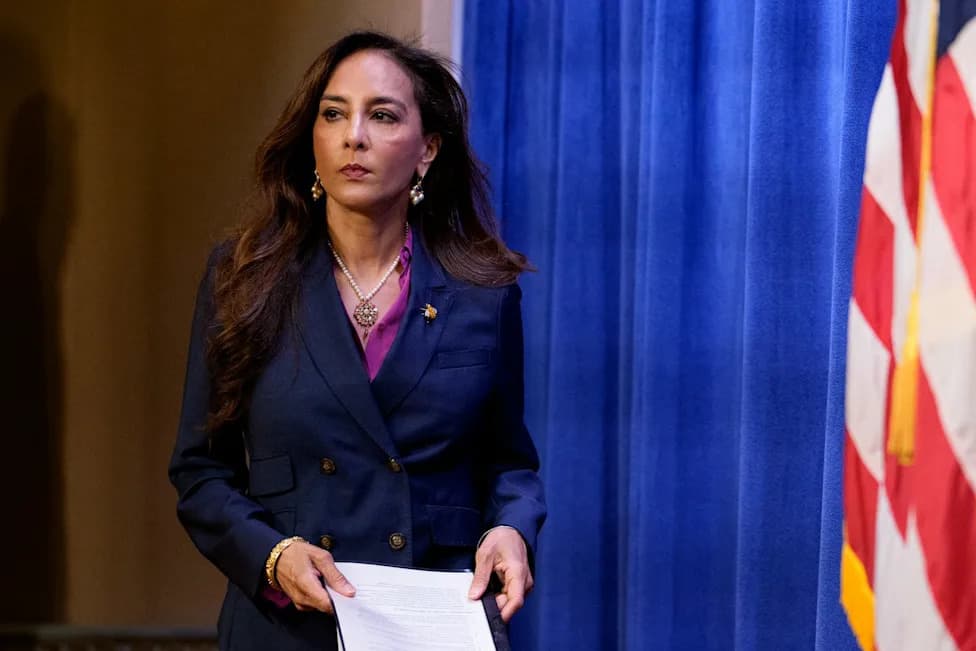
State Attorney Amit Aisman warned at the Haifa Law Conference that the Knesset-approved Mahash reform could expose sensitive investigations into police, prosecutors and public officials to political pressure. The law moves Mahash from the prosecution to the Justice Ministry and empowers a committee-determined director and a new coordinator who can assign investigations. Aisman argued these structural changes risk undermining prosecutorial independence in high-profile cases and noted petitions to the High Court. He urged that decisions remain based on evidence and law, not public campaigns.
State Attorney Warns Mahash Reform Could Subject Sensitive Probes To Political Pressure
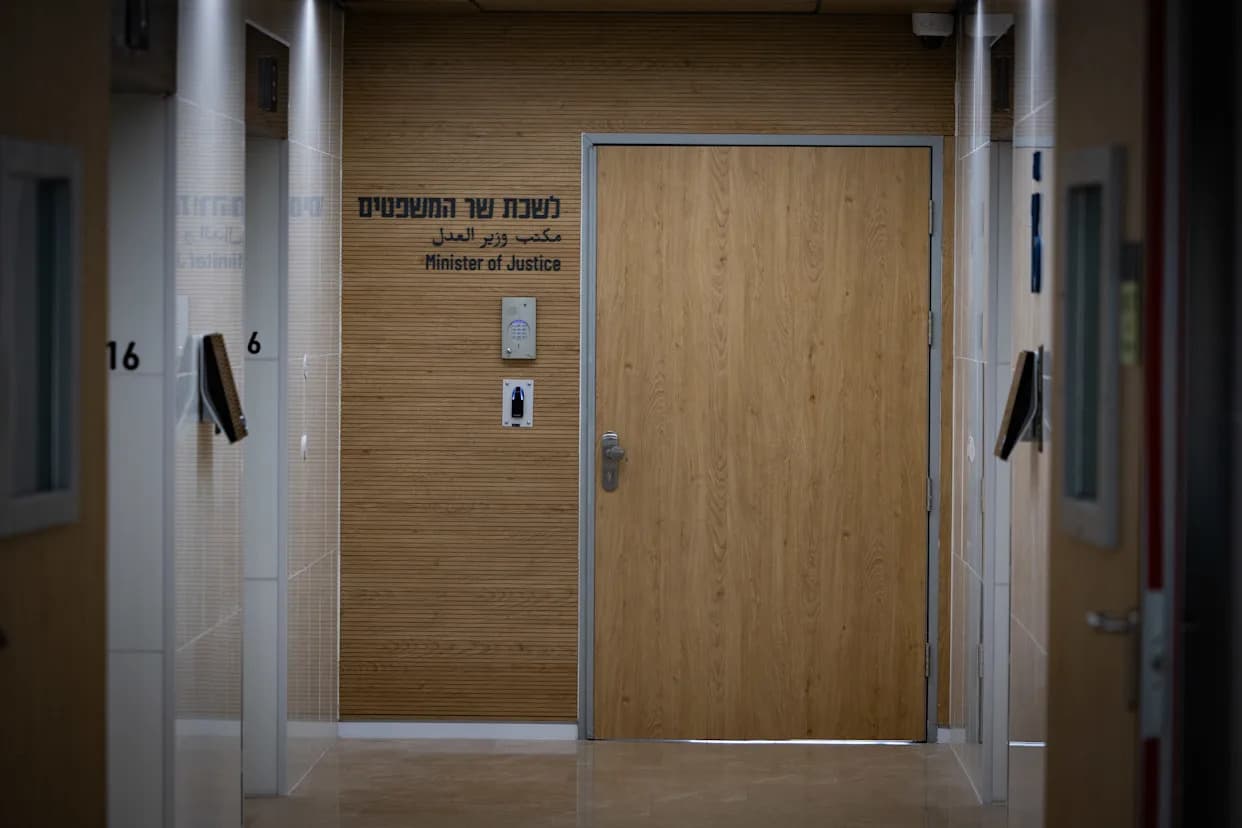
Entrance to the Office of the Minister of Justice, at the Ministry of Justice in Jerusalem, April 7, 2025. (photo credit: OREN BEN HAKOON/FLASH90)
State Attorney Amit Aisman warned that a recently passed law restructuring the Justice Ministry’s Police Investigation Department (Mahash) risks exposing sensitive investigations into police officers, prosecutors and public officials to political influence.
Speaking at the Haifa Law Conference, Aisman said investigators and prosecutors are being asked to make difficult decisions in an increasingly polarized public climate where inquiries and court proceedings can quickly become political battles.
"Noise is not evidence," he said. "A headline is not a factual basis, and likes and shares are not a legal test."
The Knesset approved the Mahash reform earlier this month by a 43-39 vote. The legislation removes Mahash from the prosecution and re-establishes it as a separate unit within the Justice Ministry. The bill was sponsored by Likud MK Moshe Saada, a former deputy head of Mahash.
Supporters, including Saada, argue the move eliminates a structural conflict that arises when the same prosecution works closely with police in ordinary criminal cases, and that relocating Mahash gives it greater formal independence.
Concerns About Structure And Appointment Powers
Aisman warned the reform creates different risks because the new structure links Mahash’s leadership and certain decision-making powers more closely to political appointees. Under the law, Mahash’s director will be selected by a five-member committee in which appointees of the justice minister and the Justice Ministry director-general hold a majority.
The statute also establishes a new coordinating official with authority to decide which investigative body handles particular cases involving police officers and other state officials, including cases that may touch on prosecutors. Aisman stressed these are not merely technical arrangements.
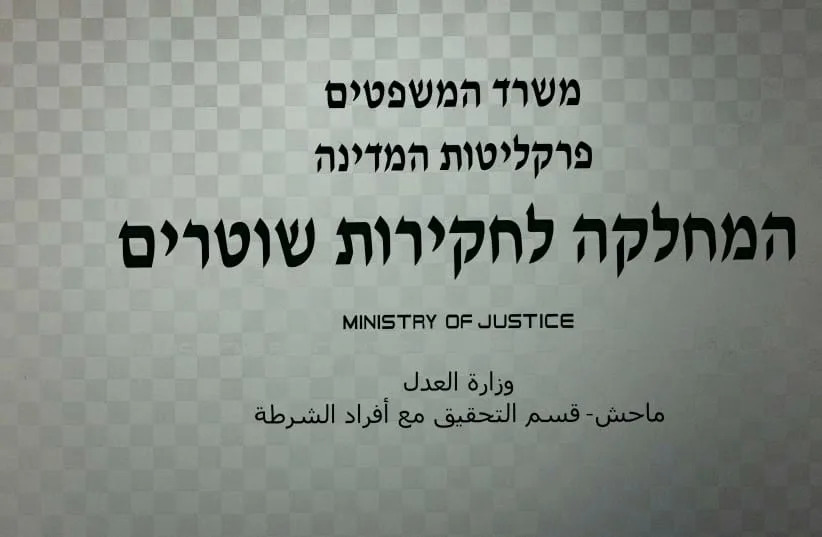
Mahash, the Police Internal Investigations Department, in Jerusalem on November 30, 2025. (credit: YONATAN SINDEL/FLASH 90)
"The decision over which body investigates can affect the way an investigation is conducted, the identity of those questioned, and its results," he said.
He added that the true test of prosecutorial and investigative independence comes in sensitive, high-profile cases involving people with power, influence, or public standing, not in routine files.
Wider Debate And Legal Challenges
Aisman acknowledged that Mahash has faced legitimate criticism over time, but said it historically operated within a professional framework that shielded decisions from political intervention. His concern is the new appointment method and expanded powers created by the law—a structural change that could make investigators feel they must "look over their shoulder" in politically charged matters.
He criticized practices that can undermine investigations and public trust—including failures to appear for questioning, immediate political backing for suspects, and deliberate disruptions of court proceedings—and warned these behaviors can erode the legitimacy of the legal system itself.
Aisman also linked the Mahash reform to a separate coalition proposal to split the attorney-general’s role, saying both initiatives raise the same question: whether the country’s legal and enforcement institutions will be able to operate independently in politically sensitive cases.
The Mahash law is already the subject of petitions to the High Court of Justice. The Movement for Quality Government and a separate group that includes former police commissioners and senior police officials argue the new appointment mechanism and transfer of authority could expose police oversight to political influence.
Despite the pressures, Aisman concluded that the prosecution service will continue to decide cases based on evidence and the law rather than on public campaigns.
Help us improve.