Robinson Helicopter and Skyryse are partnering to convert the R66 turbine helicopter into a SkyOS‑equipped Group 4 uncrewed aircraft system for military ISR, effects delivery and crewed‑uncrewed teaming. Group 4 UAS weigh more than 1,320 pounds and operate below 18,000 feet; examples include the MQ‑1 and MQ‑8B. Skyryse says SkyOS has logged roughly 2,800 flight hours and supports single‑stick, touchscreen flight controls, while Robinson emphasizes an 85% domestic parts base and a 1,300‑pound Turbinetruck cargo variant. The program aligns with Pentagon investments in autonomy and could leverage existing Army and Air Force pathways to adoption.
Robinson and Skyryse Convert R66 Into SkyOS‑Powered Group 4 UAS for Military ISR, Effects and Crewed‑Uncrewed Teaming
Robinson Helicopter Company is partnering with autonomy developer Skyryse to convert the long-serving R66 turbine helicopter into a SkyOS‑equipped Group 4 uncrewed aircraft system (UAS) tailored for defense missions. The collaboration pairs Robinson's production scale and largely domestic supply chain with Skyryse's aircraft‑agnostic SkyOS flight operating system to deliver an R66 capable of intelligence, surveillance and reconnaissance (ISR), effects delivery, and crewed‑uncrewed teaming as a collaborative combat aircraft (CCA).
What The Program Will Do
The SkyOS‑powered R66 is being developed to meet the military definition of a Group 4 UAS: aircraft that weigh more than 1,320 pounds, operate below 18,000 feet, and have no prescribed speed limit. Representative systems in this class include General Atomics' MQ‑1 Predator and Northrop Grumman's MQ‑8B Fire Scout. Robinson and Skyryse say the R66 conversion will support a wide range of missions, from persistent ISR to weapons and effects employment and integrated team operations with crewed aircraft.
Production, Integration and Sustainment
Skyryse emphasized the practical benefits of proximity: its California facilities sit roughly 30 miles from Robinson's manufacturing sites, which the companies say will accelerate integration, flight testing and scaled production. Robinson highlighted that more than 85 percent of its aircraft components are produced domestically, a factor the company argues reduces reliance on foreign supply chains and supports long‑term fleet sustainment for defense customers.
David Smith, President and CEO of Robinson Helicopter: Manufacturing the SkyOS‑powered, R66‑based Group 4 UAS is a natural extension of what Robinson does best—producing reliable, high‑quality aircraft at scale while creating a pathway for future operational capabilities.
SkyOS: Single‑Stick, Touchscreen Controls and Autonomy
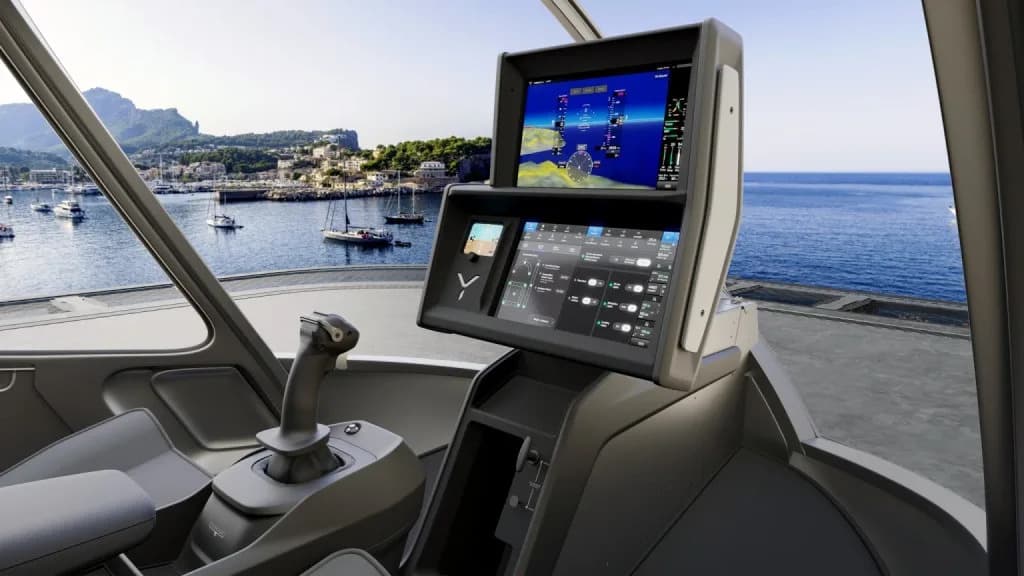
Skyryse's SkyOS replaces traditional helicopter inputs with a simplified fly‑by‑wire control layer that uses a single control stick and two touchscreen displays. To install SkyOS, the company removes conventional instrument panels, flight instruments, avionics, controls and pedals; Skyryse reports removing more than 100 controls from the R66 to create its Skyryse One demonstrator.
SkyOS is aircraft‑agnostic and has been tested on both rotorcraft and fixed‑wing platforms. As of February, pilots had logged about 2,800 hours in SkyOS‑equipped airframes. Demonstrations include touchscreen pick‑ups and touchdowns, automated engine‑out landings, and the company says some pilots have flown SkyOS helicopters after as little as 15 minutes of training.
Key Capabilities
- Operates with two pilots, a single pilot, or zero pilots under autonomous modes
- Continuous terrain, obstacle and traffic monitoring with real‑time safety alerts
- Fuel monitoring and dynamic envelope protection to reduce pilot workload and human error
- One‑tap autoland capability for rotorcraft and fixed‑wing aircraft
Related Robinson Unmanned Projects
Robinson is also developing the R66 Turbinetruck, an automated heavy‑lift cargo variant designed for defense logistics. The Turbinetruck is described as having a 1,300‑pound internal payload capacity plus a cargo hook for external loads. Robinson's Unmanned division will offer additional small UAS solutions in Group 1 and Group 2 categories.
Context: Defense Demand For Autonomy
The partnership arrives as the U.S. military expands investments in autonomy. The Air Force recently awarded manufacturing contracts for CCA designs and plans to procure about 1,000 CCA systems, while the Pentagon requested roughly $13.4 billion for autonomy and autonomous systems in the fiscal year 2026 budget. Skyryse also holds an Army contract to explore optionally piloted Black Hawk capabilities, a relationship that could help speed adoption of crewed or optionally piloted and fully uncrewed R66 variants into defense fleets.
Mark Groden, CEO of Skyryse: Defense agencies need autonomous aircraft that are reliable, affordable and available now, not years from now. Robinson gives us the production infrastructure to deliver at scale and at a cost point that meets real‑world, time‑critical needs.
With proven airframe heritage, a demonstrable autonomy stack and a production partner at hand, the SkyOS‑equipped R66 program seeks to offer armed forces a practical, rapidly fieldable Group 4 UAS option for ISR, logistics and crewed‑uncrewed teaming missions.
Help us improve.